
Femoral vein PICC placement for infants with congenital heart disease

To describe a novel real-time ultrasound (US)-guided distal superficial femoral vein (DSFV) cannulation technique for insertion of peripherally inserted central catheters (PICC) in critically ill infants with congenital heart disease” Richter et al (2016).
Incidence of CLABSI in patients receiving total parenteral nutrition

It was found that patients with a longer use of a central venous catheter (p=0.014) and those who were operated on in conjunction with total parenteral nutrition (p<0.05) were more prone to develop a catheter-associated infection” Parra-Flores et al (2016). Abstract: BACKGROUND: Central venous catheters are devices used for therapeutic, diagnostic, and monitoring purposes. Complications […]
Vessel assessment prior to central venous catheter placement

TWIST MRA enables successful identification of candidate sites for central/tunnelled line access, whilst diagnosing complications of long-term access such as venous thrombosis or congenital venous anomalies” Armstrong et al (2016). Abstract: AIM: To investigate whether time-resolved angiography with interleaved stochastic trajectories (TWIST) with GeneRalised Autocalibrating Partially Parallel Acquisitions (GRAPPA) parallel acquisition could be used successfully […]
Nurse-performed ultrasound-guided peripheral IV placement

In difficult access patients, nurses were more successful in obtaining IV access using US guidance than palpation SOC technique. Lengthier placement times were observed more frequently when the SOC IV technique was used” Bahl et al (2016). Abstract: OBJECTIVE: This study analyzed outcomes associated with nurse-performed ultrasound (US)-guided intravenous (IV) placement compared to standard of […]
Leadership and infection prevention reviewed in this article

Leadership is widely considered to be vital for infection prevention and control (IPC)” Gould et al (2016). Abstract: Leadership is widely considered to be vital for infection prevention and control (IPC). Its purpose is to maintain progress reducing risks of healthcare-associated infections especially those caused by antimicrobial-resistant organisms, and to achieve continuous quality improvement. But […]
Pharmacist impact on time to antibiotic administration in patients with sepsis

Physical presence of a clinical pharmacist in the ED decreased time to administration and increased appropriateness of IV antibiotics for adult patients with sepsis, severe sepsis, or septic shock” Moussavi and Nikitenko (2016). Abstract: Purpose: To determine if the physical presence of a clinical pharmacist in the Emergency Department (ED) would decrease antibiotic order to […]
When can you switch IV to oral antibiotics?

The iv to oral switch interventions should tailor strategies to demystify iv versus oral antibiotic efficacy, engage consumers around the negative effects of iv antibiotic overuse and examine strategies to streamline team decision-making” Broom et al (2016). Abstract: Objectives: Escalating antimicrobial resistance worldwide necessitates urgent optimization of antimicrobial prescribing to preserve antibiotics for future generations. […]
CLABSI rates in Québec intensive care units

Québec ICU CLABSI surveillance shows declining CLABSI rates in adult ICUs. The absence of a decrease in CLABSI rate in NICUs and PICUs highlights the need for continued surveillance and analysis of factors contributing to higher rates in these populations” Li et al (2016). Abstract: BACKGROUND: Following implementation of bundled practices in 2009 in Quebec […]
Pinch-off syndrome and fractured central venous catheter
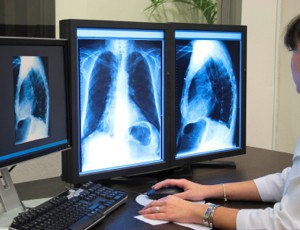
Distal embolization of a fractured indwelling central catheter is a rare complication. The pinch-off syndrome (POS) should be known, prevented and early detected” Mery et al (2016). Abstract: Distal embolization of a fractured indwelling central catheter is a rare complication. The pinch-off syndrome (POS) should be known, prevented and early detected. We present a case […]
Prevalence and risk factors associated with idle intravenous catheters

Idle intravenous catheters are common and are associated with adverse outcomes. Prospective studies incorporating uniform definitions of idle catheters to test interventions to reduce idle catheter use are urgently needed” Becerra et al (2016). Abstract: OBJECTIVE: Complications of intravenous catheters remain a major contributor to health care costs and are a patient safety problem. An […]
Intravenous versus oral antibiotics for children with complicated appendicitis

To compare treatment failure leading to hospital readmission in children with complicated appendicitis who received oral versus intravenous antibiotics after discharge” Rangel et al (2016). Abstract: OBJECTIVE: To compare treatment failure leading to hospital readmission in children with complicated appendicitis who received oral versus intravenous antibiotics after discharge. [ctt tweet=”ReTweet if useful… Intravenous versus oral […]
Review of low-cost infusion pump for use in low-resource settings

This article describes the design and evaluation of AutoSyP, a low-cost, low-power syringe pump intended to deliver intravenous (IV) infusions in low-resource hospitals” Juarez et al (2016). Abstract: This article describes the design and evaluation of AutoSyP, a low-cost, low-power syringe pump intended to deliver intravenous (IV) infusions in low-resource hospitals. A constant-force spring within […]
Preparation of intravenous medications in Intensive Care Units

This study aimed to examine the variability in the preparation of intravenous medications in ICUs” Levkovich et al (2016). Abstract: RATIONALE, AIM AND OBJECTIVE: In Australia and New Zealand, there are no established standards for the final presentations of prepared intravenous medications in Intensive Care Units (ICUs). Variability has the potential to contribute to deficiencies […]
Choosing the correct administration set for multidrug infusion

To prevent the potentially serious effects of flow-rate variability on patients, clinicians should receive instruction on the fluid dynamics of an IV administration set and so be able to take steps to minimise flow-rate changes during IV therapy” Maiguy-Foinard et al (2016). Abstract: OBJECTIVE: The aims are to identify critical parameters influencing the drug mass […]
Blood warming and the risk of haemolysis

This study was undertaken to compare the impact of temperature of blood warmers on the per cent haemolysis of packed red blood cells (RBCs) heated at different flow rates as well as non-flow conditions” Poder et al (2016). Abstract: BACKGROUND AND OBJECTIVES: Fluid warmers are routinely used to reduce the risk of hypothermia and cardiac […]
Time savings with Rituximab subcutaneous injection versus Rituximab intravenous infusion

Rituximab is a standard treatment for non-Hodgkin lymphoma. The SABRINA trial (NCT01200758) showed that a subcutaneous (SC) rituximab formulation did not compromise efficacy or safety compared with intravenous (IV) infusion. We aimed to quantify active healthcare professional (HCP) time and patient chair time for rituximab SC and IV, including potential time savings” De Cock et […]
Intravenous drug errors in intensive care units

To describe which elements of nurses’ knowledge, training, behaviour and attitude can prevent errors in intensive care units during all steps of the administration of intravenous medication” Di Simone et al (2016). Abstract: AIM: To describe which elements of nurses’ knowledge, training, behaviour and attitude can prevent errors in intensive care units during all steps […]
Accuracy of chest X-ray for positioning of umbilical venous catheter

To evaluate the accuracy of the simultaneous analysis of three radiographic anatomical landmarks – diaphragm, cardiac silhouette, and vertebral bodies – when determining the position of the umbilical venous catheter distal end using echocardiography as a reference standard” Guimarães et al (2016). Abstract: OBJECTIVES: To evaluate the accuracy of the simultaneous analysis of three radiographic […]
Willingness to participate in vascular access device research

Our survey results suggest that nephrologists believe there is equipoise surrounding the optimal vascular access strategy and that a randomized controlled study should be undertaken, but restricted to those individuals with a high risk of primary fistula failure” Poinen et al (2016). Abstract: BACKGROUND: Current guidelines favor fistulas over catheters as vascular access. Yet, the […]
Learning strategy to assist students to identify CLABSI risk and prevention

This article presents a detailed high-fidelity simulation scenario as an innovative teaching–learning strategy to assist students to identify and prevent risks associated with one common type of healthcare-associated infection (HAI), central line associated bloodstream infection (CLABSI)” Liebrecht and Lieb (2016). Extract: “A revolutionary article, To Err is Human: Building a Safer Health System, published in […]
Hemodialysis catheter-related infection risk factors

The main complication of central venous catheter (CVC) in hemodialysis is infection. Identifying CVC related infection (CVC-RI) risk factors and causative micro-organisms is important for setting prevention policies” Sahli et al (2016). Abstract: The main complication of central venous catheter (CVC) in hemodialysis is infection. Identifying CVC related infection (CVC-RI) risk factors and causative micro-organisms […]
How to access competence of central venous catheter placement

The goal of this study was to create and demonstrate validity evidence for a direct observation tool for assessing CVC insertion” Fleming et al (2016). Abstract: BACKGROUND: Pediatric critical care medicine requires the acquisition of procedural skills, but to date no criteria exist for assessing trainee competence in central venous catheter (CVC) insertion. [ctt tweet=”ReTweet […]
Strategies to increase peripheral IV first attempt success

To determine strategies associated with PIVC first attempt success in adult emergency department patients and inpatients” Parker et al (2016). Abstract: BACKGROUND: Peripheral intravenous catheterization (PIVC) is commonly performed on emergency departments and inpatient units. Unsuccessful PIVC first attempts increase pain, and lead to treatment and diagnostic delays. [ctt tweet=”ReTweet if useful… Strategies to increase […]
What is the most effective IV flush solution – Full Text

“Determining which is the most effective solution (heparin flush compared to 0.9% saline flush) for reducing the risk of occlusions in central venous catheters (CVC) in adults” Santos et al (2015).
Skin antisepsis for reducing central venous catheter-related infections

To assess the effects of skin antisepsis as part of CVC care for reducing catheter-related BSIs, catheter colonisation, and patient mortality and morbidities” Lai et al (2016). Abstract: BACKGROUND: The central venous catheter (CVC) is a device used for many functions, including monitoring haemodynamic indicators and administering intravenous medications, fluids, blood products and parenteral nutrition. […]
Flushing technique comparison for peripheral intravenous cannula

To compare the patency duration of a peripheral intravenous cannula (PIVC) using either continuous infusion with 5% dextrose or intermittent flushing with 0.9% saline” Stok and Wieringa (2016). Abstract: OBJECTIVE: To compare the patency duration of a peripheral intravenous cannula (PIVC) using either continuous infusion with 5% dextrose or intermittent flushing with 0.9% saline. [ctt […]
Treating Candida parapsilosis catheter-related infection

The effectiveness of anidulafungin versus liposomal amphotericin B (LAmB) for treating experimental Candida parapsilosis catheter-related infection by an antifungal-lock technique was assessed” Basas et al (2016). Abstract: OBJECTIVES: The effectiveness of anidulafungin versus liposomal amphotericin B (LAmB) for treating experimental Candida parapsilosis catheter-related infection by an antifungal-lock technique was assessed. [ctt tweet=”ReTweet if useful… Treating […]
Accidental intra-arterial injection of phenytoin

We report an accidental intra-arterial injection of phenytoin in a 43-year-old woman undergoing ventriculoperitoneal shunt for hydrocephalus” Khan and Faghihnassiri (2016). Abstract: We report an accidental intra-arterial injection of phenytoin in a 43-year-old woman undergoing ventriculoperitoneal shunt for hydrocephalus. To flush the arterial line with heparin, mistakenly phenytoin was injected which caused cutaneous gangrene along […]
Nursing quality indicators include extravasation rates

The aim of this study was to develop nursing-sensitive quality indicators consistent with current medical practices in Chinese neonatal intensive care units (NICUs)” Chen et al (2016). Abstract: AIMS AND OBJECTIVES: The aim of this study was to develop nursing-sensitive quality indicators consistent with current medical practices in Chinese neonatal intensive care units (NICUs). [ctt […]
Reporting sharps and needlestick injuries

Approximately 65% of respondents did not report their exposure either because of the time consuming process or the patient involved was perceived to be low-risk or both” Choi et al (2016). Abstract: BACKGROUND: The hospital is a place of high risk for sharps and needlestick injuries (SNI) and such injuries are historically underreported. METHODS: This […]