
Phlebotomy order of draw during the venipuncture procedure

Given the evidence presented in this article, the EFLM WG-PRE herein concludes that a significant frequency of sample contamination does occur if order of draw is not followed during blood collection and when performing venipuncture under less than ideal circumstances, thus putting patient safety at risk” Cornes et al (2016). Abstract: It has been well […]
Peripheral intravenous catheter-related bacteremia

Peripheral intravenous catheter-related SAB was associated with significantly longer bacteremia duration and thrombophlebitis at old PIV sites rather than current PIVs” Austin et al (2016). Abstract: Few studies have focused on the risks of peripheral intravenous catheters (PIVs) as sources for Staphylococcus aureus bacteremia (SAB), a life-threatening complication. We identified 34 PIV-related infections (7.6%) in […]
Treatment of extravasation injury with multiple slit incisions

For large-volume extravasation cases, immediate management with multiple slit incisions is safe and effective in reducing the swelling quickly, preventing patient discomfort and decreasing skin and soft tissue problems” Kim et al (2016). Abstract: In our hospital, an adverse event reporting system was initiated that alerts the plastic surgery department immediately after suspecting contrast media […]
Ultrasonography for placement of central venous catheters in children

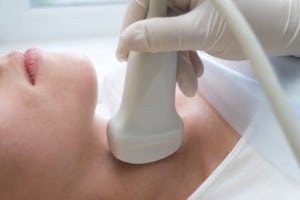
Our purpose was to determine the frequency of use of real-time ultrasonography use by pediatric surgeons during central venous catheter placement, patient and procedure factors associated with real-time ultrasonography use, and adverse event rates” Gurien et al (2016). Abstract: BACKGROUND: Recommendations for the use of real-time ultrasonography for placement of central venous catheters in children […]
Air embolism following central venous catheter removal

Air embolism (AE) is a rare, but serious complication that can occur in the practice of hemodialysis” Sahutoglu et al (2016). Abstract: Introduction: Air embolism (AE) is a rare, but serious complication that can occur in the practice of hemodialysis. In contrast to careful techniques and meticulous care during insertions and manipulations of the central […]
Herpes Zoster at the site of a peripherally inserted central catheter

We present the case of a patient who developed shingles overlying the incision site of a recently buried central venous access port, illustrating the need to consider this diagnosis as a unique imposter of localized infection or reaction at sites of recent procedural trauma” Hess et al (2016). Abstract: Herpes zoster, commonly called shingles, is […]
Impact of state-wide reporting of CLABSI rates

To examine the effect of mandated state health care-associated infection (HAI) reporting laws on central line-associated bloodstream infection (CLABSI) rates in adult intensive care units (ICUs)” Liu et al (2016). Abstract: OBJECTIVE: To examine the effect of mandated state health care-associated infection (HAI) reporting laws on central line-associated bloodstream infection (CLABSI) rates in adult intensive […]
PICC tip malposition discussed in a series of case studies

“The discussion of each case illustrates a wide range of potential aberrant PICC tip locations and offers an insight into how the aberrant tip location was resolved in each case” Jackson and Buttle (2016).
Structured learning and assessment framework for paediatric vascular access

To critically evaluate the effectiveness of the implementation of a structured learning and assessment framework for paediatric vascular access and its impact on improving the learning experience, skill acquisition and retention of health professionals” Hulse (2016). Abstract: Aim: To critically evaluate the effectiveness of the implementation of a structured learning and assessment framework for paediatric […]
Using vapocoolants for intravenous cannulation in children

This article highlights how nurses can make use of common nursing interventions to ensure that the full impact of their skills is embedded in their care—using the administration of vapocoolants as the focus of the discussion” Richardson and Oven (2016). Abstract: How nurses make a difference and influence outcome has been the subject of much […]
Evaluation of vascular access device securement devices

Since the introduction of sutureless securement products for vascular access devices (VADs), there has been a great deal of discussion of their advantages and disadvantages in comparison with sutures” Ventura et al (2016). Abstract: Since the introduction of sutureless securement products for vascular access devices (VADs), there has been a great deal of discussion of […]
Prophylactic ethanol lock therapy reduces CRBSI

To reduce the incidence of CRBSI, prophylactic ethanol lock therapy (ELT) was initiated” Kawano et al (2016). Abstract: PURPOSE: Children with intestinal failure (IF) requiring central venous catheters (CVCs) often experience frequent catheter-related bloodstream infections (CRBSIs), which is a serious and life-threatening complication. To reduce the incidence of CRBSI, prophylactic ethanol lock therapy (ELT) was […]
Chlorhexidine catheter securement IV dressings may prevent CRBSI

Central venous catheter-related bloodstream infections (CRBSI) are a frequent cause of morbidity and mortality in patients with chemotherapy-induced neutropenia. Chlorhexidine containing catheter securement dressings may prevent CRBSI” Biehl et al (2016). Abstract: BACKGROUND: Central venous catheter-related bloodstream infections (CRBSI) are a frequent cause of morbidity and mortality in patients with chemotherapy-induced neutropenia. Chlorhexidine containing catheter […]
PICC placement in terminally ill cancer patients

The purpose of this study was to investigate the safety, efficacy, and subjective satisfaction of peripherally inserted central catheters (PICCs) in terminally ill cancer patients” Park et al (2016). Abstract: PURPOSE: The purpose of this study was to investigate the safety, efficacy, and subjective satisfaction of peripherally inserted central catheters (PICCs) in terminally ill cancer […]
Using lung ultrasound to diagnose pneumothorax

Lung ultrasound can be used to diagnose pneumothorax at the bedside [3] and has a higher sensitivity for detection of pneumothorax in comparison to chest radiograph, which has traditionally been used to diagnose pneumothorax [4-6]” Markota et al (2016). Abstract: Pneumothorax is a complication occurring in 4–15% of patients who require mechanical ventilation in the […]
Bacterial transfer through different glove materials reviewed

Bacterial passage through punctures is correlated with the stiffness or elasticity of the glove material” Bardorf et al (2016). Abstract: Background: Medical examination gloves and surgical gloves protect the wearer directly and the patient indirectly from the risk of contamination. Because of concerns related to latex allergy, an increasing trend toward the use of synthetic […]
Multi chamber bags for pharmacy compounding

Multichamber bags (MCBs) may offer potential clinical, ergonomic, and economic advantages compared with (hospital) pharmacy compounded bags (COBs) and multibottle systems (MBSs)” Alfonso et al (2016). Abstract: Background: Multichamber bags (MCBs) may offer potential clinical, ergonomic, and economic advantages compared with (hospital) pharmacy compounded bags (COBs) and multibottle systems (MBSs). Methods: A systematic literature review […]
Poor hand hygiene compliance among medical students

Poor hand hygiene (HH) practices among medical students have previously been attributed to students not being exposed to sufficient teaching materials during their training” Kaur et al (2016). Abstract: Background: Poor hand hygiene (HH) practices among medical students have previously been attributed to students not being exposed to sufficient teaching materials during their training. [ctt […]
Relationship between patient safety climate and adherence to standard precautions

Standard precautions (SPs) are designed to limit bloodborne pathogen exposures among health care workers (HCWs) and health care–associated infections” Hessels et al (2016). Abstract: Background: Standard precautions (SPs) are designed to limit bloodborne pathogen exposures among health care workers (HCWs) and health care–associated infections. SP adherence is globally suboptimal; however, reasons are underexplored. This study […]
What is the patient perspective of vascular access complications

To understand the patient’s perspective on complications associated with vascular access-related interventions” Kosa et al (2016). Abstract: Purpose: To understand the patient’s perspective on complications associated with vascular access-related interventions. [ctt tweet=”ReTweet if useful… What is the patient perspective of vascular access complications http://ctt.ec/5JgAe+ @ivteam #ivteam” coverup=”5JgAe”] Methods: A multi-stage comprehensive questionnaire of over 150 […]
Central venous catheter exchange or removal?
Exchange procedures involve tunneled dialysis catheter (TDC) removal and exchange over a wire, using the same exit site and venotomy site” Wang et al (2016). Abstract: Introduction: Exchange procedures involve tunneled dialysis catheter (TDC) removal and exchange over a wire, using the same exit site and venotomy site. Diagnostic imaging or intervention was generally not […]
Clinicians debate the recent suitability of midline article

The authors did not consider ‘leak’ from the insertion site as potential thrombosis development, which is an early precursor of thrombus formation and compromised venous outflow, which has been clearly documented in literature over the last decade” Spencer and Bardin (2016). Extract: “We recently read the article ‘Safe administration of vancomycin through a novel midline […]
Midline catheter publication reply from the authors

At the time of our study, agents with pH of 9 were wrongly considered an indication for central venous access. This false indication has been removed from the 2016 Infusion Therapy Standards of Practice” Caparas and Hu et al (2016). Extract: “The authors appreciate the thoughtful letter from Spencer and Bardin (1). In addressing their […]
Infection risk associated healthcare worker contact with patient privacy curtains

To determine whether pathogenic bacteria could be transferred to health care workers by touching privacy curtains, imprints of health care workers’ fingertips were obtained when participants were approached, after hand hygiene with alcohol handrub, and directly after handling curtains” Larocque et al (2016). Abstract: To determine whether pathogenic bacteria could be transferred to health care […]
Occupational exposure to blood-borne pathogens among healthcare workers

We conducted a cross-sectional study assessing BPE among HCW at three public hospitals in Tanzania” Lahuerta et al (2016). Abstract: Background: In sub-Saharan Africa, blood-borne pathogens exposure (BPE) is a serious risk to healthcare workers (HCW). [ctt tweet=”ReTweet if useful… Occupational exposure to blood-borne pathogens among healthcare workers http://ctt.ec/n4AHR+ @ivteam #ivteam” coverup=”n4AHR”] Methods: We conducted […]
Central venous catheter insertion and brachiocephalic vein perforation
We discuss a case of a brachiocephalic vein (BCV) perforation after Tesio® central venous catheter insertion” Winkes et al (2016). Abstract: Purpose: We discuss a case of a brachiocephalic vein (BCV) perforation after Tesio® central venous catheter insertion. [ctt tweet=”ReTweet if useful… Central venous catheter insertion and brachiocephalic vein perforation http://ctt.ec/wp2D9+ @ivteam #ivteam” coverup=”wp2D9″] Method […]
Clinical relevance of Persistent Left Superior Vena Cava

We report a rare case of PLSVC with absent Right Superior Vena Cava (RSVC) (isolated PLSVC), in a 55-year-old lady who had complete heart block followed by sepsis and was diagnosed to have this condition during the permanent cardiac pacemaker implantation and central venous catheter insertion showing an abnormal path of the catheter/pacing leads” Rawal […]
Persistent Left-side Superior Vena Cava case study described in this article

Persistent Left-side Superior Vena Cava (PLSVC) is the congenital central venous anomaly draining into the right atrium in 82-90% of cases via coronary sinus produce no haemodynamically significant consequences” Prasanna et al (2016). Abstract: Persistent Left-side Superior Vena Cava (PLSVC) is the congenital central venous anomaly draining into the right atrium in 82-90% of cases […]
Malposition of subclavian central venous catheter

This case report presents timely detection of the complication after placement of CVC. Everyone should be aware of the complications and monitor consistently appropriate position of catheter tips” Kumar et al (2016). Abstract: Although Central Venous Catheter (CVC) placement is a relatively simple procedure but its insertion and maintenance are associated with significant risks. Malposition […]
Parenteral nutrition basics reviewed in this article

This article is to aid the nutrition support clinician in the safe provision of PN, including selecting appropriate patients for PN, vascular access, development of a PN admixture, appropriate therapy monitoring, recognition of preparation options, and awareness of preparation and stability concerns” Derenski et al (2016). Abstract: Parenteral nutrition (PN) is a life-sustaining therapy providing […]