Phenytoin implicated as a cause of tissue necrosis on extravasation

“Phenytoin has been implicated as a serious cause of tissue necrosis on extravasation. It is a unique complication for the anesthetist and not much is quoted in anesthesia literature” Hasija et al (2014).
Extravasation of IV contrast medium in radiological examinations

“Our data demonstrate that sex, age, and where the cannula was inserted are predictive factors for CME. We believe that CME could be prevented by proper educational program and establishment of efficient strategy” Niv et al (2014).
Management of acute cannula-related peripheral vein phlebitis

“Acute phlebitis due to peripheral vein catheter use is frequently observed in clinical practice, and requires surgical therapy in severe cases. In this retrospective study, we aimed to increase awareness, evaluate current treatment options, and develop recommendations to optimize treatment outcomes” Dunda et al (2014).
Comparison of 18-gauge and 20-gauge catheters for IV contrast infusion

“A 20-gauge fenestrated catheter performs similarly to an 18-gauge nonfenestrated catheter with respect to IV contrast infusion rates and aortic enhancement levels and can be placed in most subjects whose veins are deemed insufficient for an 18-gauge catheter” Johnson et al (2014).
Health insurance database identifies peripheral vascular catheter nosocomial infections

“Using the main French health insurance company database over a ten-year period, the preventability of catheter-related infections of patients who claimed compensation after prosecution was reviewed by a panel expert” Gagneux-Brunon et al (2014).
Retrospective analysis of a paediatric outpatient parenteral antimicrobial therapy (OPAT) service

“Although outpatient parenteral antimicrobial therapy (OPAT) is practiced internationally, there is a paucity of data regarding outcomes of paediatric OPAT. A retrospective analysis, of 3 years experience (January 2010 to 2013) was performed at a tertiary paediatric Respiratory unit” Glacklin et al (2014).
Central venous catheter infection-induced Henoch-Schönlein purpura

“A 69-year-old man, who had been dialyzed using a permanent central venous catheter for 2 years, presented with Henoch-Schönlein purpura and positive perinuclear anti-neutrophil cytoplasmic antibody (p-ANCA). He was diagnosed with catheter-related infection by Staphylococcus aureus” Gao et al (2014).
Central line associated superior vena cava (SVC) syndrome

“We report the case of a 79-year-old woman on hemodialysis through a twin catheter in the right internal jugular vein, presenting with superior vena cava (SVC) syndrome with patent SVC” Quaretti et al (2014).
Taurolidine-citrate lock solution (TCLS) reduces infection prevalence

“Totally, implantable access ports (TIAPs) are used for long standing venous catheterization. This study was designed to present our experiences of the TIAPs applications and efficacy of Taurolidine-citrate lock solution (TCLS) against catheter-related infections” Ince et al (2014).
Ultrasound-guided placement of multiple CVC in the right internal jugular vein

“We present ultrasound-guided placement of a double catheter in the right internal jugular vein in two patients that required multiple central lines for management” Montes-Tapia et al (2014).
Complications from needle penetration of plastic ports in children

“There is an unacceptably high risk of needle penetration of the posterior wall of plastic ports. We recommend utilizing ports with metal backing to avoid this complication” Sharp et al (2014).
Is it feasible to diagnose catheter-related candidemia without catheter withdrawal?

“We assessed the value of conservative techniques to evaluate catheters as the origin of candidemia in patients with CVC in a prospective cohort study” Fernández-Cruz et al (2014).
Transthoracic echocardiography to determine cvc tip placement

“There are multiple methods of determining the optimal position of central venous catheter (CVC) tips. The purpose of this study was to assess the feasibility of transthoracic echocardiography (TTE), and compare TTE and height-based method for correct positioning of CVCs in infants undergoing cardiac surgery” Park et al (2014).
Standardizing umbilical catheter care in preterm infants

“Implementation of guidelines standardizing the use of umbilical catheters in the NICU is feasible. Fewer infants were exposed to the risk of UVC or UAC, and fewer resources were used” Shahid et al (2014).
Checklists to promote compliance with aseptic technique

“There is fair evidence to recommend the use of care bundles that include a checklist during central-line insertion in intensive care unit patients to reduce the incidence of catheter-related bloodstream infections” Simpson et al (2014).
Call for more uniform OPAT practices to enhance patient safety

“Although use of OPAT is common, there is significant variation in practice patterns. More uniform OPAT practices may enhance patient safety” Lane et al (2014).
Survey of infection control practices in hemodialysis units

“We aimed to determine the infection control measures recommended and implemented in Quebec’s HD units, compliance of local protocols to infection control practice guidelines, and reasons behind the low prevalence of arteriovenous fistulas” Trépanier et al (2014).
Comparison total intravenous anaesthesia in ambulatory surgery

“With the popularity of ambulatory surgery ever increasing, we carried out a systematic review and meta-analysis to determine whether the type of anaesthesia used had any bearing on patient outcomes” Kumar et al (2014).
Hypersensitivity associated with sugammadex administration

“Awareness must be raised for the possibility of drug-induced hypersensitivity during the critical 5-min period immediately following sugammadex administration” Tsur and Kalansky (2014).
Surviving Sepsis Campaign suggests the use of a sepsis care bundle

“As a part of the recommendations, the Surviving Sepsis Campaign suggests the use of a sepsis care bundle, which is a set of elements of clinical care derived from the guidelines” Jones (2014).
Comparison of AccuCath IV catheter system with conventional catheters

“A new, proprietary coiled tip guidewire-delivered PIV demonstrated clear superiority over the conventional catheter in our study. Clinical outcome results showed statistically significant improvements in first attempt success, complications, completion of therapy, dwell time, and overall patient satisfaction” Idemoto et al (2014).
Doppler, ECG and algorithm for PICC tip placement

“Chest radiography and malpositions can be eliminated with the use of technology that includes Doppler, echocardiography (ECG), and an algorithm” Girgenti and Donnellan (2014).
Case report presents patient with persistent left superior vena cava
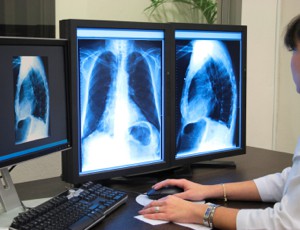
“This is a case report of an incidental diagnosis of persistent left superior vena cava (PLSVC). The diagnosis was suspected after a peripherally inserted central catheter (PICC) was placed and a postinsertion chest radiograph was conducted” Mabry et al (2014).
Evaluation of central venous port malfunction

“There are several scenarios in which imaging does not meaningfully affect management of malfunctioning central venous ports. Recognizing these inefficiencies may allow for more appropriate and cost-effective use of radiographs and line injections to evaluate the cause of port malfunction” Kansagra et al (2014).
Evidence-based red blood cell transfusion practices in ICU

“Our study identified several provider and system barriers to evidence-based transfusion practices including knowledge differences, overly optimistic estimates of current practice, and heterogeneous transfusion practice in each ICU” Murphy et al.
Ultrasound reveals an occlusive thrombus following PICC placement

“Forty-eight hours after the PICC is placed, it’s removed due to swelling of the arm. The plan to give PN peripherally is abandoned when CS complains of pain at her peripheral I.V. sites” Lee (2014).
Human T-cell lymphotropic virus type 1 (HTLV-1) occupational exposure

“We retrospectively audited hospital occupational exposure events over a 10-year period, in a human T-cell lymphotropic virus type 1 (HTLV-1)-endemic area of Central Australia, and report on 53 individuals exposed to HTLV-1 with no transmissions documented (95% confidence interval, 0%-1.5%)” Hewagama et al (2014).
Force required for needles to puncture sharps containers

“This study examined the effect on puncture force of varying 5 needle gauges, 3 temperatures, and 3 container-wall thicknesses. Puncturing was significantly easier with higher temperatures, finer needles, and thinner walls” Grimmond (2014).
Techniques to resolve occluded central venous catheters

“Among patients treated for an occluded CVC, alteplase-treated patients had lower daily and total postocclusion costs than patients receiving catheter replacement.” Ernst et al (2014).
Ultrasound- versus landmark-guided femoral catheterization

“Ultrasound (US) is the standard of care for vascular access in many clinical scenarios. Limited data exist regarding the benefits of US- versus landmark (LM)-guided femoral vascular access in the pediatric catheterization laboratory. This study aimed to compare US- and LM-guided vascular access in the pediatric catheterization laboratory” Law et al (2014).