Operating procedures for preparing intravenous compounded sterile preparations

“Those hazards can be minimized when the pharmacist thoroughly understands and complies with current standard operating procedures for preparing intravenous compounded sterile preparations and the healthcare giver uses a needle-free system for drug reconstitution and administration” Marks (2014).
Utility of electronic medical records to assess the relationship between parenteral nutrition and CLABSI

“The utility of electronic medical records for determining risk factors is limited by such things as free-text data entry. Using a hybrid between fully electronic and manual chart review, reliable data were obtained” Ippolito et al (2014).
Review of bundle implementation on CLABSI rates

“The central line associated bloodstream infection (CLABSI) rate at our medical ICU had increased steadily, with an average rate between January and May 2011 of .47%” Sung et al (2014).
Staphylococcus epidermidis isolates from patients with CRBSI

“One third of CRBSI episodes were due to isolates belonging to PFGE types that were also found on the hands of HCWs, suggesting that HCW serve as a reservoir for oxacillin resistance and transmission to patients” Cherifi et al (2014).
Pain experience and needle size reviewed for ABG sampling

“There was no significant difference in pain scores experienced by patients undertaking ABG sampling with either a 23G or 25G needle” Yee et al (2014).
Intraosseous cannulation of the tibia results in amputation

“We present a case of a newborn girl, where intraosseous cannulation of the tibia was lifesaving. Despite following most standard recommendations, the treatment resulted in transtibial amputation due to necrosis” Oesterlie et al (2014).
OPAT premature antimicrobial discontinuation reviewed

“In this retrospective cohort analysis of patients treated with either nafcillin or cefazolin for MSSA infection in the outpatient parenteral antimicrobial therapy clinic at Massachusetts General Hospital from 2007 to 2011, the frequency of premature antimicrobial discontinuation (PAD) and drug-emergent events (DEEs) was calculated” Youngster et al (2014).
Do venepuncture procedures induce cortisol responses?

“Venepuncture procedures are frequently employed to continuously monitor humoral stress markers. As such procedures are conceived as “potent psychological and physiological stressors”, there is a need to determine whether venepuncture procedures themselves elicit cortisol responses and if so, how to deal with them appropriately” Weckesser et al (2014).
Reported pain in patients who look away during venepuncture

“Almost three quarters of patients spontaneously look away during venepuncture, but their pain ratings are almost twice that of the quarter of patients who look” Vijayan et al (2014).
Net benefits of central-line associated bloodstream infection prevention efforts

“The estimated net economic benefits ranged from $640 million to $1.8 billion, with the corresponding net benefits per case averted ranging from $15,780 to $24,391. The per dollar rate of return on the CDC’s investments ranged from $3.88 to $23.85” Scottt et al (2014).
Risk factors and outcomes of patients with BSI due to Acinetobacter baumannii-calcoaceticus

“BSIs due to ABC are more common among critically ill and debilitated institutionalized patients, who are heavily exposed to health-care settings and invasive devices” Chopra et al (2014).
Femoral central venous catheter contamination and infection rates reviewed

“CRCOL and CRBSI rates in patients on CRRT are low and not influenced significantly by initial or serial femoral catheterizations with guidewire exchange or new venipuncture. CRCOL risk is higher in older and heavier patients, the latter especially so with femoral sites” Chua et al (2014).
Anemia and red blood cell transfusion in critically ill cardiac patients

“The threshold at which the risk of anemia outweighs the risk of transfusion is not known. More studies are needed to determine when RBC transfusion is indicated in hospitalized patients with cardiac disease” Du Pont-Thibodeau et al (2014).
Measurement of flow rate variability in neonatal IV therapy

“Caregivers should be aware of these findings, and optimise the delivery of IV substances by making use of check valves with low opening pressures and by minimising compliance and volume of the IV-administration set. Furthermore, changes in the relative height between pumps and catheter tip should be minimized” van der Eijk et al (2014).
Effect of in-line infusion filtering on in-line pressure monitoring

“Placement of an infusion filter does not have a significant effect on the in-line pressure monitoring and has no adverse effect on detecting pressure-related complications of IV administration” Jonkers et al (2014).
Flow rate accuracy of refilled elastomeric infusion pumps

“This study indicated that the delivery rate accuracy of elastomeric infusion pumps is preserved after repeated usage. These laboratory findings suggested that elastomeric pumps could be safely refilled in the successive days to provide postoperative analgesia” Mohseni and Ebneshahidi (2014).
Strategies for management of contrast media extravasation

“In this article, we review the incidence, risk factors, clinical manifestations, and options for preventing and treating contrast medium extravasation in soft tissues. Finally, we present the protocol we use to manage extravasation at our hospital” Pacheco Compaña et al (2014).
Patient experience of central line care helps to standardise practice

“Although many participants expressed confidence in their knowledge of line care, some were uncertain about what to do if the dressing became loose or wet, or how to recognize an infection. Patients seemed to be astute observers of their own care and offered insights into practice variation” Weingart et al (2014).
Recommendations from CDC for the prevention of catheter-related infections

“The aim of this work is to show and emphasize the last updated recommendations collected in the 2011 Guidelines for the Prevention of Intravascular Catheter-Related Infections to nursing staff” Casanova Vivas (2014).
Complex regional pain syndrome (CRPS) associated with needle procedures

Complex regional pain syndrome (CRPS), previously known as reflex sympathetic dystrophy, is attracting more public attention in Japan which is likely a result of the recent upsurge in lawsuits filed against medical institutes. A recent court ruling over a case of injection-needlestick-injury induced CRPS has touched off serious debates among both medical practitioners and legal professionals” Hirata (2014).
Complications associated with parenteral nutrition in the neonate
“To improve neonatal care, future research on optimizing the content of PN and decreasing the incidence IFALD and CLASBIs is required” Calkins et al (2014).
Microbiocidal effects of taurolidine containing catheter lock solution

We have recently shown that a catheter lock solution containing taurolidine dramatically decreases catheter-related bloodstream infections (CRBSI) in patients on home parenteral nutrition (HPN) when compared to heparin” Olthof et al (2014).
Central line infection definition influences surveillance outcomes

“A simpler definition, central line-associated bloodstream infection (CLABSI), is recommended for surveillance purposes. Because exclusion of all other infection sources is difficult, CRBSI cases may be overestimated by using the CLABSI definition” Chen et al (2014).
Risk factors for contracting CRBSI in surgical ICU

“The epidemiologic data of catheter related blood stream infections (CRBSI) is different in each type of Intensive Care Unit (ICU). The objectives were to identify microbiological patterns, risk factors and mortality analysis in the surgical intensive care unit (SICU)” Cheewinmethasiri et al (2014).
Skin disinfection and the effect of biofilm-forming skin microflora bacteria

“These results demonstrate that the biofilm-forming capability of the skin microflora reduces the bactericidal efficiency of blood donor skin disinfectants” Taha et al (2014).
Review of blood product recalls in the United States

“We analyzed recalls of all blood products for 2010 and categorized the reason for the recall, the organizations producing the recalled products, and the Food and Drug Administration (FDA) district in which the blood was collected” McCullough et al (2014).
Leg ischemia complicating the intraosseous infusion of epinephrine

“It can be used to administer the same treatments as intravenous infusion. It does, nonetheless, present some rare complications, such as acute leg ischemia by extravasation of epinephrine, as we report here” Maurin et al (2014).
Ultrasound-guided technique versus a landmark-guided technique for CVAD placement
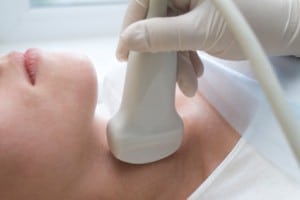
“The purpose of this study was to compare the landmark-guided technique to the ultrasound-guided technique for internal jugular vein cannulation in cardiovascular surgery patients” Dolu et al (2014).
Invasive vascular access device related infections reviewed

“The most important HAIs are those related to invasive devices: central line-associated bloodstream infections (CLABSI), catheter-associated urinary tract infections (CAUTI), ventilator-associated pneumonia (VAP) as well as surgical site infections (SSI)” Al-Tawfiq and Tambyah (2014).
Vincristine mini-bags and the subsequent risk of extravasation

“We carried out a study with the aims of establishing the incidence of reported extravasation of vincristine administration to paediatric and adult patients in mini-bags; here we describe motivating factors and barriers faced by clinical staff. The secondary aim was to support the need for change and implementation of the international recommendations” Nurgat et al (2014).