Ethanol lock therapy dramatically reduces CRBSI

We report the use of ethanol lock therapy to dramatically reduce the incidence of catheter-related bloodstream infections (CRBSIs) in a long-term adult home parenteral nutrition (HPN) patient” Colvine et al (2015). Abstract: We report the use of ethanol lock therapy to dramatically reduce the incidence of catheter-related bloodstream infections (CRBSIs) in a long-term adult home […]
Current flushing practices for vascular access devices

“The aim of the study was to improve our understanding of current flushing practices for vascular access devices through a survey of practice” Keogh et al (2015).
Out of hospital emergency intravenous access

“Decisions should be made regarding the necessity of IV access while considering cost-benefit of the procedure in terms of delayed evacuation times” Nadler et al (2015).
Replacing peripheral intravenous catheters when clinically indicated

The aim of this study was to examine levels I and II evidence to determine if replacing peripheral intravenous catheters only when clinically indicated compared to every 72-96 hr increases the adult patient’s risk for infection or phlebitis” Morrison and Holt (2015). Abstract: BACKGROUND: Current clinical guidelines from the Centers for Disease Control and Prevention […]
Bicep tear following peripheral intravenous catheter infiltration

We present the case of a 21-year-old male with a history of cystic fibrosis, bilateral lung transplant, and chronic corticosteroid use, with longitudinal tear of the biceps brachii muscle as a complication of PIV infiltration” Nagpal et al (2015). Reference: Nagpal, A.S., Benfield, J.A. and Dy, R.T. (2015) Longitudinal tear of the biceps brachii from […]
Preventing extravasation associated with peripheral intravenous catheters

Intravenous catheters are ubiquitous among modern medical management of patients, yet misplaced or tissued cannulas can result in serious iatrogenic injury due to infiltration or extravasation of injectate” Keidan et al (2015). Reference: Keidan, I., Sidi, A., Ben-Menachem, E., Derazne, E. and Berkenstadt, H. (2015) A simple diagnostic test to confirm correct intravascular placement of […]
Intraosseous access for fluid resuscitation in Ebola virus disease

The authors present a case of a 9-month-old patient with EVD in Sierra Leone in whom an intraosseous line was lifesaving” Paterson and Callahan (2015). Reference: Paterson, M.L. and Callahan, C.W. (2015) The Use of Intraosseous Fluid Resuscitation in a Pediatric Patient with Ebola Virus Disease. The Journal of Emergency Medicine. August 14th. [epub ahead […]
Calming premature infants during and after venipuncture

The main purpose of this study was to investigate the calming effects of breastmilk odor and vanilla odor preterm infants during and after venipuncture” Jebreili et al (2015). Reference: Jebreili, M., Neshat, H., Seyyedrasouli, A., Ghojazade, M., Hosseini, M.B. and Hamishehkar, H. (2015) Comparison of Breastmilk Odor and Vanilla Odor on Mitigating Premature Infants’ Response […]
Methods of completing portal venous sampling

The purpose of this study was to compare two different percutaneous image-guided techniques: transhepatic ultrasound guided portal vein access and transsplenic fluoroscopy guided splenic vein access for ease of access, safety, and evaluation of temporal kinetics of insulin and zinc release into the venous effluent from the pancreas” Pillai et al (2015). Reference: Pillai, A.K., […]
Effect of venipuncture timing on protein biomarker concentrations
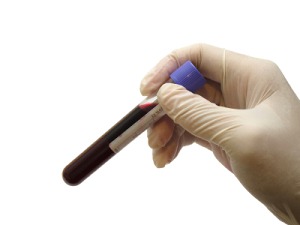
In this study we show the unexpectedly marked influence of blood withdrawal timing (before vs. after anesthesia) and procedure (venous versus arterial vessel puncture) has on the concentration of the protein biomarker SCC and to a less extent upon CYFRA21-1” Kahn et al (2015). Reference: Kahn, N., Riedlinger, J., Roeßler, M., Rabe, C., Lindner, M., […]
Frequency and type of procedures performed by emergency practitioners

These data highlight the frequency with which EMS providers perform procedures across the United States. This may help to guide future EMS training and education efforts by highlighting the relative frequency and infrequency of specific procedures” Carlson et al (2015). Refereece: Carlson, J.N., Karns, C., Mann, N.C., E Jacobson, K., Dai, M., Colleran, C. and […]
Calcified central venous catheter fibrin sheath

We present a 6-year-old girl with acute lymphoblastic leukemia who demonstrated on chest X-ray a radiopacity in the superior vena cava after removal of an implanted venous access device” Keehn et al (2015). Reference: Keehn, A., Rabinowitz, D., Williams, S.K. and Taragin, B.H. (2015) Calcified central venous catheter fibrin sheath: case report and review of […]
Postoperative fluid management explained

Management of postoperative fluid therapy should be done considering both patients’ status and intraoperative events. Reference: Kayilioglu, S.I., Dinc, T., Sozen, I., Bostanoglu, A., Cete, M. and Coskun, F. (2015) Postoperative fluid management. World Journal of Critical Care Medicine. 4(3), p.192-201. [ctt tweet=”ReTweet if useful… Postoperative fluid management explained http://ctt.ec/BQ9le+ @ivteam #ivteam” coverup=”BQ9le”] Abstract: Postoperative […]
Is renal vascular access difficult in patients with diabetes?

Diabetics with stage V chronic kidney disease (CKD) on hemodialysis (HD) are considered as “difficult patients”, because of problems with creation of the vascular access. There is controversy regarding the results and recommendations for preparation of the vascular access in these patients” Gołębiowski et al (2015). Reference: Gołębiowski, T., Weyde, W., Kusztal, M., Porażko, T., Augustyniak-Bartosik, […]
Venipuncture robot described and evaluated in this study

To improve the rate of first-stick success, we have developed a portable autonomous venipuncture device that robotically servos a needle into a suitable vein under image guidance” Balter et al (2015). Reference: Balter, M.L., Chen, A.I., Maguire, T.J. and Yarmush, M.L. (2015) The System Design and Evaluation of a 7-DOF Image-Guided Venipuncture Robot. IEEE Transactions […]
Methods of in vitro testing of needleless IV connectors

Our purpose was to create an in vitro model lasting long enough to be used for the comparison of the efficacy between various connectors against contamination simulating the real daily handling” Guembe et al (2014). Reference: Guembe, M., Pérez-Granda, M.J., Alcalá, L., Martín-Rabadán, P. and Bouza, E. (2014) A simple and easy in vitro model […]
Clinically-indicated replacement of peripheral intravenous catheters

To assess the effects of removing peripheral IV catheters when clinically indicated compared with removing and re-siting the catheter routinely” Webster et al (2015). Reference: Webster, J., Osborne, S., Rickard, C.M. and New, K. (2015) Clinically-indicated replacement versus routine replacement of peripheral venous catheters. The Cochrane Database of Systematic Reviews. August 14th. 8:CD007798. [epub ahead […]
Cadavers and ultrasound training in medical education

The objective of our study was to describe a unique fresh cadaver preparation model, and to determine the impact of a procedure-focused ultrasound training session” Hoyer et al (2015). Reference: Hoyer, R., Means, R., Robertson, J., Rappaport, D., Schmier, C., Jones, T., Stolz, L.A., Kaplan, S.J., Adamas-Rappaport, W.J. and Amini, R. (2015) Ultrasound-guided procedures in […]
How to implement care bundles in ICU

A systematic review was conducted to determine the strategies used to implement care bundles in adult intensive care units and to assess the effects of these strategies when implementing bundles” Borgert et al (2015). Reference: Borgert, M.J., Goossens, A. and Dongelmans, A. (2015) What are effective strategies for the implementation of care bundles on ICUs: […]
Next generation vascular access devices

As second and third generation devices become commercially available, we anticipate that 89% of cases will be preformed using a TF approach” Basir et al (2015). Reference: Basir, M.B., Velez, C., Fuller, B., Wyman, J., Paone, G., Wang, D.D., Guerrero, M., Greenbaum, A. and O’Neill, W. (2015) Rates of vascular access use in transcatheter aortic […]
Using the external jugular vein for totally implantable port insertion

The authors report a prospective evaluation of 83 consecutive external jugular vein cut-down approaches for totally implantable venous access devices implantation” Cavallaro et al (2015). Reference: Cavallaro, G., Iorio, O., Iossa, A., De Angelis, F., Avallone, M., Massaro, M., Mattia, C. and Silecchia, G. (2015) A prospective evaluation on external jugular vein cut-down approach for […]
Long-term central venous catheter complications reviewed

This study’s objectives were to assess the extent of variation in use of long-term CVCs in a cohort of commercially insured women with breast cancer, and to assess risks of associated complications” Lipitz-Snyderman et al (2015). Reference: Lipitz-Snyderman, A., Ma, Q., Pollack, M.F., Barron, J., Elkin, E.B., Bach, P.B. and Malin, J.L. (2015) Complications Associated […]
Choosing between PICC or tunnelled central venous catheters

The aim of the present study was to compare complication rates between the two types of catheters” Christensen et al (2015). Reference: Christensen, L.D., Holst, M., Bech, L.F., Drustrup, L., Nygaard, L., Skallerup, A., Rasmussen, H.H. and Vinter-Jensen, L. (2015) Comparison of complications associated with peripherally inserted central catheters and Hickman™ catheters in patients with […]
The role of central venous catheter exchange in access preservation

For children with critical venous access requirements, direct line exchange procedures are a robust and reproducible means of vein preservation” Davidson et al (2015). Reference: Davidson, J., Paul, A., Patel, S., Davenport, M. and Ade-Ajayi, N. (2015) Central Vein Preservation in Critical Venous Access. European Journal of Pediatric Surgery. August 11th. [epub ahead of print]. […]
Intraosseous infusion site options reviewed
This study was conducted to determine a quick intraosseous infusion method that could be an alternative to the tibial route in neonates during emergency situations” Mogale et al (2015). Reference: Mogale, N., Van Schoor, A.N. and Bosman, M.C. (2015) A theoretical alternative intraosseous infusion site in severely hypovolemic children. African Journal of Primary Health Care […]
Safety and feasibility of a rituximab rapid infusion protocol

We sought to assess the safety and feasibility of a rituximab rapid infusion protocol in the outpatient treatment area of a comprehensive cancer center” Dotson et al (2015). Reference: Dotson, E., Crawford, B., Phillips, G. and Jones, J. (2015) Sixty-minute infusion rituximab protocol allows for safe and efficient workflow. Supportive Care in Cancer. August 14th. […]
Safety certification for medical device embedded software

Center of Strategic Technology for Healthcare (NUTES) medical device embedded software certification is based on a solid safety quality model and has been tested with reasonable success against the Class I risk device Generic Infusion Pump (GIP)” Neto et al (2015). Reference: Neto, J.A., Figueiredo Damásio, J., Monthaler, P. and Morais, M. (2015) Product-based Safety […]
Insulin pens and safety needles in a hospital setting

…to assess costs and safety of insulin pen devices and safety needles as compared to vial/syringes in hospitalized patients requiring insulin therapy” Bossi et al (2015). Reference: Bossi, A.C., Veronesi, G., Poerio, C.S., Braus, A., Madaschi, S., Destro, M., Ferraro, B., Gilberti, L., Sganzerla, P. and Davis, E.M. (2015) A Prospective Study for Introducing Insulin […]
The effect of saline lock on infusion phlebitis rates

The results of this study showed that the use of saline lock in the intervention group compared to the control group, in which saline lock was not used, can have a significant impact on reducing the incidence of phlebitis and its degree” Eghbali-Babadi et al (2015). Reference: Eghbali-Babadi, M., Ghadiriyan, R. and Hosseini, S.M. (2015) […]
Evidence for flushing and locking peripheral venous catheters

A prospective randomized, controlled, single-blinded trial to compare the effectiveness and safety of heparin saline (HS) to those of normal saline (NS) as flushing and locking solutions for peripheral venous catheter (PVC) in decompensated liver cirrhosis (DLC) patients” Wang et al (2015). Reference: Wang, R., Zhang, M.G., Luo, O., He, L., Li, J.X., Tang, Y.J., […]