Which medical devices are used in a hospice for symptom management

In conclusion, the study highlights medical device use in home hospice care for end-of-life symptom management. It noted the significant use of IV infusion pumps and patient controlled analgesia” Shah et al (2015). Abstract: BACKGROUND: Home health services in the United States(US) have been on a rise. Hospice patients cope with diverse physical and pain […]
Risk propensity and safe medication administration

This study is among the first to demonstrate a relationship between risk propensity and safe medication administration” Gonzales (2015). Abstract: Objective: To examine the relationship between risk propensity and safe medication administration, while also providing additional evidence of validity and reliability on the Safe Administration of Medication (SAM) Scale. [ctt tweet=”ReTweet if useful… Risk propensity […]
Migration of plasticizers from PVC infusion devices

Alternatives to DEHP plasticizers are used in various PVC medical devices (MD) for infusion. As they are able to migrate from these MDs into infused solutions, they may come into contact with patient. Abstract: Alternatives to DEHP plasticizers are used in various PVC medical devices (MD) for infusion. As they are able to migrate from […]
Inventory of potential risks associated with infusion therapy

Under cover of an institutional approach for the improvement of the quality and safety of patient healthcare, a risk mapping infusion practices was performed” Pignard et al (2015). Abstract: OBJECTIVES: Infusion in care units, and all the more in intensive care units, is a complex process which can be the source of many risks for the […]
Innovative approaches to phlebotomy among people who inject drugs
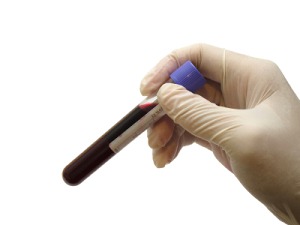
They discuss the reasons why people who inject drugs might not be accessing healthcare services, especially in relation to treatment for hepatitis C” Ferguson et al (2015). Abstract: In their recent paper on patient experiences of accessing phlebotomy services in hospital outpatient clinics, Clements and colleagues state that there is a real need to better […]
Intraosseous access an option for rapid vascular access

Repeated attempts at venous cannulation in patients with difficult vascular access wastes valuable time which in some situations could prove fatal” Benson (2015). Abstract: In many emergency situations rapid vascular access is a priority, particularly in cases involving haemodynamic compromise. Traditional vascular access through the use of an intravenous cannula, although the preferred first line […]
Complications of cuffed-tunneled catheters in pediatric patients

This study aims to evaluate the outcome and complications of cuffed-tunneled catheters in pediatric patients” Wang et al (2015). Abstract: This study aims to evaluate the outcome and complications of cuffed-tunneled catheters in pediatric patients. Between January 2010 and December 2013, 16 pediatric patients with end-stage renal disease (ESRD) were included. 21 cuffed-tunneled hemodialysis catheters […]
Differential diagnoses for arm swelling associated with dialysis vascular access

The purposes of this pictorial essay are as follows: (1) Review a systematic approach to using sonography in the initial evaluation of patients with acute arm swelling and permanent dialysis access” Reddy et al (2015). Abstract: The purposes of this pictorial essay are as follows: (1) Review a systematic approach to using sonography in the […]
Patient experience of peripheral intravenous cannulation

The intent of this qualitative study was to understand patients’ experience of venous access, with the aim of bringing forth their voices about the experiences of repeated venous access/cannulation attempts” Robinson-Reilly et al (2015). Abstract: INTRODUCTION: The evolution of venous access via peripheral cannulation, particularly in relation to the risks and the benefits of this […]
Infraclavicular axillary central vein cannulation using ultrasound

The technique of US-guided axillary CVC access can be undertaken successfully in ventilated intensive care patients, even in challenging circumstances” Glen et al (2015). Abstract: Central venous catheter (CVC) insertion is commonly undertaken in the ICU. The use of ultrasound (US) to facilitate CVC insertion is standard and is supported by guidelines. Because the subclavian […]
Which intravenous fluids for septic shock resuscitation

Our objective was to present a narrative review of the literature regarding the major types of fluids and their main drawbacks in the initial resuscitation of the septic shock patients” Corrêa et al (2015). Abstract: Early resuscitation of septic shock patients reduces the sepsis-related morbidity and mortality. The main goals of septic shock resuscitation include […]
PICC care standards in skilled nursing facilities

Quality improvement efforts that seek to benchmark practice, identify gaps, and institute efforts to improve PICC care and practice in SNFs appear necessary” Chopra et al (2015). Abstract: OBJECTIVES: To describe patterns of use, care practices, and outcomes related to peripherally inserted central catheter (PICC) use in skilled nursing facilities (SNFs). [ctt tweet=”ReTweet if useful… […]
Syringe pump use in palliative care

Syringe pumps offer an alternative route for delivering medicine when the oral route cannot be used” Mukoreka and Sisay (2015). Abstract: Syringe pumps offer an alternative route for delivering medicine when the oral route cannot be used. This is particularly important for patients receiving palliative care, for whom a continuous infusion of medication can improve […]
Development of a novel infusion pump using an electrochemical actuator

A novel infusion system (PatchPump®) has been developed using an electrochemical actuator and a semi-flexible container to deliver liquid formulations through an infusion set” Shaked et al (2015). Abstract: PURPOSE: A novel infusion system (PatchPump®) has been developed using an electrochemical actuator and a semi-flexible container to deliver liquid formulations through an infusion set. In […]
Intravenous catheter securement systems reviewed

Our purpose was to compare the strength of catheter securement achieved with two investigational adhesive securement devices to two securement products and also to sutures using an in vivo animal model” Rutledge et al (2015). Abstract: BACKGROUND: Catheter securement is critical for the success of infusion therapy and to prevent complications. Our purpose was to […]
Anatomical variables associated with the internal jugular vein
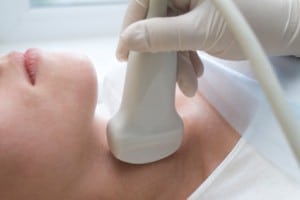
The anterior position of the internal jugular vein relative to the common carotid artery increases gradually with age” Umaña et al (2015). INTRODUCTION: The internal jugular vein locates anterior or anterolateral to the common carotid artery in two-thirds of the subjects studied by ultrasound when the head is in a rotated position. AIM: To identify […]
PICC dressing that reduces oozing of blood from the insertion site

The aim of this study is to observe hemostatic effects of alginate dressing after using seldinger PICC catheter in tumor patients” Yang and Lei (2015). Abstract: The aim of this study is to observe hemostatic effects of alginate dressing after using seldinger PICC catheter in tumor patients. Sixty tumor patients with PICC receiving chemotherapy were […]
OPAT treatment of patients with acute tonsillopharyngitis
We aimed to review the treatment of patients with acute tonsillopharyngitis at the OPAT health care clinic in the Bahrain Defense Force Royal Medical Services” Al Alawi et al (2015). Abstract: BACKGROUND: Outpatient parenteral antimicrobial therapy (OPAT) is the administration of intravenous antimicrobial therapy to patients in an outpatient setting. It may be used for patients […]
Key obstacles to HAI surveillance identified in this article

Healthcare-associated infection (HAI) surveillance data can be used to estimate the scope, spread and location of infections, monitor trends, evaluate preventive efforts, and improve practices, policy and facility planning” Ridelberg and Nilsen (2015). Abstract: Introduction: Healthcare-associated infection (HAI) surveillance data can be used to estimate the scope, spread and location of infections, monitor trends, evaluate preventive […]
Central venous catheter management in children

Central venous catheters (CVC), used for the management of children with hemato-oncological disorders, are burdened by a significant incidence of mechanical, infective, or thrombotic complications” Giordano et al (2015). Abstract: Central venous catheters (CVC), used for the management of children with hemato-oncological disorders, are burdened by a significant incidence of mechanical, infective, or thrombotic complications. […]
Risks associated with neonatal intraosseous access

Gaining vascular access in a neonate during cardiopulmonary resuscitation is crucial and challenging. Intraosseous (IO) access can offer a fast and reliable method for achieving emergency access for fluids and drugs when venous access fails in a critically ill child” Suominen et al (2015). Abstract: Gaining vascular access in a neonate during cardiopulmonary resuscitation is crucial […]
OPAT therapy evaluation research planned

The study will use a mixed methods approach, to evaluate patient preferences for and the cost-effectiveness of OPAT service models” Czoski Murray et al (2015). Abstract: INTRODUCTION: Outpatient parenteral antimicrobial therapy (OPAT) is used to treat a wide range of infections, and is common practice in countries such as the USA and Australia. In the […]
Evidence base for collection and handling of blood cultures

The literature identified diverse and complex issues surrounding blood culture practices, including the impact of false-positive results, laboratory definition of contamination…” Garcia et al (2015). Abstract: BACKGROUND: A literature search was conducted using keywords for articles published in English from January 1990 to March 2015. Using criteria related to blood culture collection and handling, the […]
Prevention of central line–associated bloodstream infections

This study evaluated the questionnaire testing nurses’ knowledge about the maintenance of a central venous catheter (CVC)…” Dedunska and Dyk (2015). Abstract: This study evaluated the questionnaire testing nurses’ knowledge about the maintenance of a central venous catheter (CVC) and assessed it with regard to age, work experience, type of ward, frequency of trainings, and […]
Broviac catheter placement in extremely low birth weight neonates

Ultrasound guidance has emerged as a potentially beneficial method for obtaining central venous access in children and is being applied to smaller and smaller infants” Dambkowski et al (2015). Abstract: As medical and surgical interventions to support premature infants have evolved, the need for long-term vascular access in extremely low birth weight infants has increased. The […]
Case of blindness secondary to central venous catheterization

Blindness secondary to central venous catheterization is very rare; possible mechanisms are venous thrombosis with paradoxical emboli, air emboli, or accidental arterial puncture” Agarwal et al (2015). Abstract: BACKGROUND: Parenteral nutrition (PN) via a central venous catheter is routinely used for surgical patients without a functioning gastrointestinal tract. Complications of PN can be metabolic and […]
Wire-in-needle (WIN) technique for central venous catheter placement

Here, a needle is “preloaded” with a guidewire that is then advanced toward the tip of needle. The vein is then cannulated using long-axis ultrasound guidance” Becker et al (2015). Abstract: BACKGROUND: Dynamic ultrasound guidance reduces complications associated with central venous catheter placement. However, successful central venous cannulation often remains challenging, particularly in hypotensive patients. […]
Pinch-off syndrome described in this case study

We report the case of a patient with rupture and central catheter and embolization secondary to intermittent mechanical compression by the subclavian and the first rib (pinch-off syndrome) and its resolution through a percutaneous device” Morales-Victorino et al (2015). Abstract: Central venous catheterization is a common procedure in the emergency and intensive-care units. Rupture of […]
Sherlock 3CG ® tip confirmation system reviewed by NICE
The Sherlock 3CG ® Tip Confirmation System (TCS) allows magnetic tracking of the PICC tip during insertion and confirmation of the final location using ECG, meaning that most patients will not require a chest X-ray or fluoroscopy” Dale et al (2015). Abstract: In current clinical practice, peripherally inserted central catheters (PICCs) are typically inserted using […]
How to choose entry vessel for intravenous port implantation

The goal of this study is to analyze the treatment results of the standard algorithm used to choose the entry vessel for intravenous port implantation” Wei et al (2015). Abstract: Vascular cutdown and echo guide puncture methods have its own limitations under certain conditions. There was no available algorithm for choosing entry vessel. A standard […]