Clinically indicated replacement of peripheral IV cannula

The updated epic3 guidelines recommend to change cannulas when clinically indicated, rather than routinely. The objective in a local NHS trust, was to look at the evidence for this, with an aim to change local policy and practice to reflect the new recommendation” Bolton (2015). Abstract: Insertion of peripheral venous cannulas is one of the […]
Understanding the impact of needle-related medical procedures in younger children

Needle-related medical procedures (NRMPs) are often frightening and cause children anxiety and pain. Only a few studies have examined the perspectives of younger children” Karlsson et al (2015). Abstract: Background: Needle-related medical procedures (NRMPs) are often frightening and cause children anxiety and pain. Only a few studies have examined the perspectives of younger children. More […]
Midline catheters radically reduce peripheral venous catheter associated complications

The midline catheters radically reduce PVC associated complications, are preferred by patients and the higher costs should be weighted against the complications avoided” De Prospo et al (2015). Abstract: INTRODUCTION: From 30 to 80% of hospitalized patients is inserted a peripheral venous catheter (PVC). The PVC may be associated to several infective and non infective […]
Impact of infusion administration set replacement every seven days

The impact of closed system and 7 days intravascular administration set replacement on catheter related infections in a general intensive care unit: a before-after study” Lucchini et al (2015). Abstract: INTRODUCTION: The incidence of catheter related Bloodstream infections (BSI) is high in intensive care units (ICU). AIM: To evaluate the BSI rate in a population […]
Risk factors for needlestick and sharps injuries in operating rooms

In this study, we examined risk factors for and circumstances of injuries in operating rooms by combining and analyzing incidence reports and electronic records of every surgery in Kurume University Hospital (Kurume, Japan)” Yonezawa et al (2015). Abstract: Healthcare workers are exposed to serious infectious diseases via needlestick and sharps injuries. The operating room is […]
How to check tip placement in dysfunctional central venous catheters

…using dilute sodium bicarbonate injection and the resultant rise in measured end-tidal carbon dioxide tracing can confirm correct intravascular placement of a dysfunctional CVC in children at the bedside” Keidan et al (2015). Abstract: BACKGROUND: In children undergoing intravenous chemotherapy, partial dysfunction of the central venous catheter (CVC) is common. Fluids can be infused into the […]
Quality indicators and data assessment strategies for CRBSI prevention

The number of catheter related bloodstream infections (CRBSI) could be reduced and the outcome improved if specific standards in the quality of care were maintained” Bramesfeld et al (2015). Abstract: BACKGROUND: The number of catheter related bloodstream infections (CRBSI) could be reduced and the outcome improved if specific standards in the quality of care were […]
Routine failures in reporting blood test results

Despite the importance of diagnostic testing in provision of care, this complexity renders the process vulnerable in the face of increasing demand, stretched resources and a lack of supporting guidance” Litchfield et al (2015). Abstract: Background: The testing and result communication process in primary care is complex. Its successful completion relies on the coordinated efforts […]
Multi-country CLABSI improvement collaborative

In developing countries, CLABSI are usually the result of a failure to follow evidence-based, standardized health practices” Arrieta et al (2015). Abstract: Background: Central line-associated bloodstream infections (CLABSI) are the leading cause of healthcare-associated bloodstream infections, prolonging hospitalizations, and increasing morbidity, healthcare costs and mortality. The CLABSI rate has been estimated at 7.6 episodes per 1,000 […]
Patient safety and phlebotomy test results in general practice

Unfortunately, this laisser-faire attitude about test results has led to clinical offices where missing and lost test results, no patient notifications and lack of follow-up constitute the norm” Elder (2015). Extract: “Physicians order a lot of tests in primary care. We use tests to diagnose patients’ complaints, monitor chronic diseases, check medication levels and screen […]
Novel educational module for subclavian central venous catheter insertion

…standardized curriculum to offer healthcare providers a means to attain increased competency and confidence in US-guided SCV CVC insertion” Bayci et al (2015). Abstract: OBJECTIVE: Given increasing evidence supporting a real-time ultrasound (US)-guided approach for subclavian vein (SCV) central venous catheter (CVC) insertion as compared with the traditional landmark approach, we sought to develop a […]
Effect of intraosseous versus intravenous epinephrine on return of spontaneous circulation

The purpose of this prospective, experimental study was to determine the effects of humeral IO (HIO) and IV epinephrine administration during cardiac arrest on pharmacokinetics, ROSC, and odds of survival” Johnson et al (2015). Abstract: Cardiopulmonary Resuscitation (CPR), defibrillation, and epinephrine administration are pillars of advanced cardiac life support (ACLS). Intraosseous (IO) access is an […]
Direct observation of procedural skills to teach central venous catheter care

As shown by our data DOPS furnish high performance of clinical skills and work well in the undergraduate setting” Profanter and Perathoner (2015). Abstract: OBJECTIVE: Sufficient teaching and assessing clinical skills in the undergraduate setting becomes more and more important. In a surgical skills-lab course at the Medical University of Innsbruck fourth year students were […]
What difference does intraosseous injection site make to resuscitative outcome

It is unknown if the anatomical distance of intraosseous (IO) epinephrine injection from the heart affects resuscitative outcome” Burgert et al (2015). Abstract: INTRODUCTION: It is unknown if the anatomical distance of intraosseous (IO) epinephrine injection from the heart affects resuscitative outcome. The purpose of this study was to explore the relationships between the anatomical […]
Blood sampling from central venous catheters is a 2-ml discard volume sufficient

To determine the reliability of complete blood test results in blood samples obtained from the proximal lumen of a triple-lumen CVC using a 2-mL discard volume” Villalta-García et al (2015). Abstract: Background: Intensive care patients require a high frequency of blood testing, which results in a significant amount of blood loss. When blood is obtained […]
How to increase first pass peripheral venous catheter success rates

This study compares first pass success rates and patient and physician satisfaction scores of using a guide wire-associated peripheral venous catheter (GAPIV) vs a traditional peripheral venous catheter in difficult to obtain venous access patients” Chiricolo et al (2015). Abstract: STUDY OBJECTIVE: This study compares first pass success rates and patient and physician satisfaction scores […]
Heparinized saline or saline only to prevent VAD occlusion

The current study aimed to compare the efficacy of normal saline with that of heparinized one to maintain patency of arterial and central venous catheters after cardiac surgery” Ziyaeifard et al (2015). Abstract: BACKGROUND: Heparinized saline solution is used to prevent occlusion in the arterial catheters and central venous pressure monitoring catheters. Even at low […]
How to achieve zero CLABSI in hemodialysis
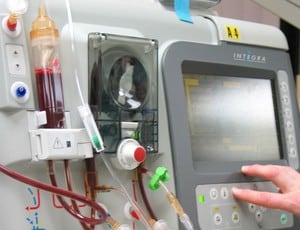
We describe two measures adopted in hemodialysis outpatient population in order to reduce Central Venous Catheter (CVC) related infections” Leonardi et al (2015). Abstract: INTRODUCTION: We describe two measures adopted in hemodialysis outpatient population in order to reduce Central Venous Catheter (CVC) related infections. The first is a nurse staff training in the field project […]
CLABSI diagnosis, management and prevention

This new CMS regulation makes CLABSI reporting a national requirement to receive full Medicare inpatient payments; facilities that fail to report will not receive the annual 2% Medicare payment increase” Exile and Sopirala (2015). Extract: “Over the past decade-plus, acceptance of HAIs as “business as usual” gave way to a string of initiatives that demonstrated success […]
Proactive placement of peripherally inserted central catheters

…all patients who could potentially receive infusional chemotherapy in the outpatient setting, would be proactively booked for a peripherally inserted central catheter (PICC) before their first cycle of treatment” Harold et al (2015). Extract: “A decision was made within the authors’ cancer centre that all breast cancer patients receiving adjuvant anthracycline chemotherapy, and all patients […]
Article describes OPAT PICC placement

Out patient antimicrobial therapy (OPAT) services provide intravenous treatments for patients in the community who would otherwise be admitted to hospital. However, from the authors’ experience, vascular access is not always considered a priority when commissioning OPAT services” Waterhouse and Atkinson (2015). Extract: “Out patient antimicrobial therapy (OPAT) services provide intravenous treatments for patients in […]
Using closed systems to control exposure to cytotoxic drugs

The UK Health and Safety Executive (HSE) (2015) recommend the use of totally enclosed systems where reasonably practicable to control exposure to cytotoxic drugs” Simons and Toland (2015). Extract: “It is widely documented that exposure to hazardous drugs, including cytotoxic chemotherapy, poses a significant health risk to all healthcare workers involved in their preparation and […]
IV dressing associated medical adhesive-related skin injury

There is limited literature regarding skin integrity associated with vascular access devices and in particular peripherally inserted central catheters (PICCs)” Hitchcock and Savine (2015). Extract: “Optimal skin integrity in association with the securement of vascular access devices is often overlooked, with primary emphasis being the prevention of infection at insertion site and catheter-related blood stream infections. […]
Competency based training in vascular access device securement

We are all aware that the ultimate successful outcome for any vascular access device is that it remains in place for the duration of treatment” Kelly (2015). Extract: “During my years in clinical practice and nurse education, a large part of my role has involved teaching the skills of maintaining vascular access devices. Recently there […]
Effect of ethanol-based locks on central venous catheters

Ethanol-based catheter locks may provide a better alternative; however, there are limited data on the long-term integrity of dialysis catheters exposed to ethanol” Landry et al (2015). Abstract: Purpose: Antibiotic locks in catheter-dependent chronic hemodialysis patients reduce the rate of catheter-related bloodstream infections (CRBSIs), but may be associated with the development of resistant bacteria. Ethanol-based […]
Multimedia presentations to improve consent for vascular access procedures

As vascular procedures become more complex, patient understanding of their treatment(s) can become more difficult. We wished to evaluate the utility of multimedia presentations (MPs) to improve patient understanding of their vascular interventions” Bowers et al (2015). Abstract: OBJECTIVE: As vascular procedures become more complex, patient understanding of their treatment(s) can become more difficult. We […]
Failure to remove central venous catheters

We report on the failure to remove CV catheters in 2 patients” Kawashima et al (2015). Abstract: The use of a central venous(CV)port system has become common for the treatment of patients with tumors. We report on the failure to remove CV catheters in 2 patients. The first patient was a 50 years woman with […]
Pediatric central venous catheter associated thromboembolism

With increased awareness of central venous line-related thromboembolism, measures should be taken to reduce the number and duration of central line placements, and further studies addressing the need for thromboprophylaxis should be conducted” Wisecup et al (2015). Abstract: OBJECTIVES: With the apparent increase in venous thromboembolism noted in the pediatric population, it is important to […]
Clinical outcomes and cost savings associated with OPAT services

The use of outpatient parenteral antibiotic therapy (OPAT) programs has become more frequent because of benefits in costs with equivalent clinical outcomes compared with inpatient care” Ruh et al (2015). Abstract: PURPOSE: The use of outpatient parenteral antibiotic therapy (OPAT) programs has become more frequent because of benefits in costs with equivalent clinical outcomes compared […]
Ultrasound-guided peripheral catheterization of the internal jugular vein

We describe the feasibility of inserting an ultrasound (US)-guided peripheral IV catheter into the internal jugular vein (IJ) in such populations” Butterfield et al (2015). Abstract: Vascular access is necessary in patients admitted to the intensive care unit and the medical ward. Currently, there are multiple modalities to achieve adequate vascular access, each with their […]