Central venous access device complications in children

Reduction of catheter-related bloodstream infections is realized with use of ethanol locks, single lumens when appropriate, and prudent adherence to insertion and maintenance bundles” Duesing et al (2016). Abstract: Central venous catheters are often necessary in the pediatric population. Access may be challenging, and each vessel presents its own unique set of risks and complications. […]
What is the impact of reducing the number of PICC lumen

The number of peripherally inserted central catheter (PICC) lumens is associated with thrombotic and infectious complications. Because multilumen PICCs are not necessary in all patients, policies that limit their use may improve safety and cost” Ratz et al (2016). Abstract: BACKGROUND: The number of peripherally inserted central catheter (PICC) lumens is associated with thrombotic and […]
CLABSI conversations: Peer-to-peer assessments reduce CLABSI rates

This article describes the development of a peer-to-peer assessment process (CLABSI Conversations) and the practical, actionable practices we discovered that helped intensive care unit teams achieve a CLABSI rate of less than 1 infection per 1000 catheter-days for at least 1 year” Pham et al (2016). Abstract: A national collaborative helped many hospitals dramatically reduce […]
What are the economic aspects of needlestick and sharps injury

To provide an overview of the economic aspects of needlestick and sharps injury (NSI) management among healthcare personnel (HCP) within a Health Technology Assessment project to evaluate the impact of safety-engineered devices on health care” Mannoccia et al (2016). Abstract: OBJECTIVE: To provide an overview of the economic aspects of needlestick and sharps injury (NSI) […]
What happens to emergency department placed peripheral intravenous cannula

Concern arises when ED-inserted PIVCs are used exclusively for blood sampling because this may lead to unused PIVCs being left in situ after patients are transferred to the wall, increasing risk of infection” carr et al (2016). Extract: It has been reported that the peripheral intravenous cannula (PIVC) is the first choice of vascular access device […]
Ultrasound-guided venipuncture from a gel-free puncture area

US-guided blood sampling from a brachial and antebrachial vein was possible with a 100% success rate, while ensuring a dry and gel-free venipuncture area on one side and the transducer on the other side of a sterile barrier” Thorn et al (2016). Abstract: PURPOSE: Vein punctures are performed daily to sample blood. Ultrasound (US) offers […]
Effects of intraosseous epinephrine in a cardiac arrest situation

Tibial intraosseous (TIO) access may be a faster alternative to intravenous (IV) access for delivery of vasoactive medications” Wong et al (2016). Abstract: BACKGROUND: Interruptions in cardiopulmonary resuscitation (CPR) to obtain vascular access reduces blood flow to vital organs. Tibial intraosseous (TIO) access may be a faster alternative to intravenous (IV) access for delivery of […]
Incidence and management of intravenous chemotherapy extravasation

We confirm that the adopted standardized approach to this event resulted in a satisfactory outcome and could be suggested as appropriate for managing extravasation in a large clinical context” Ferrari et al (2016). Abstract: PURPOSE: The incidence and management of antitumoral compound extravasation that occurred in our medical day hospital unit were registered in a […]
Iatrogenic Calcinoshs Cutis following chemotherapy extravasation

We experienced a case of an 18-year-old man who had been diagnosed with acute lymphoblastic leukemia (ALL) as a child and developed iatrogenic calcinosis cutis due to the extravasation of intravenous anticancer drugs” Chung and Kim (2016). Extract: “We experienced a case of an 18-year-old man who had been diagnosed with acute lymphoblastic leukemia (ALL) […]
Intraosseous access devices in adult patients under resuscitation

The 2015 American Heart Association guidelines for CPR suggest that rescuers establish intraosseous (IO) access if an intravenous line is not easily obtainable” Szarpak et al (2016). Abstract: Obtaining intravascular (IV) access is one of the key procedures during cardiopulmonary resuscitation (CPR), particularly during nondefibrillation rhythms, in which the rapid delivery of epinephrine is one […]
Potassium adsorption filter use with irradiated red cell transfusion

The irradiation of red blood cells (RBCs) causes damage of the RBC membrane with increased potassium (K) leak during storage compared with nonirradiated RBC units of similar age” Cid et al (2016). Abstract: BACKGROUND: The irradiation of red blood cells (RBCs) causes damage of the RBC membrane with increased potassium (K) leak during storage compared […]
How to treat the long-term symptoms of Lyme Disease

The condition of most patients with Lyme disease improves after initial antibiotic therapy; however, 10 to 20% of treated patients may have lingering symptoms of fatigue, musculoskeletal pains, disrupted sleep, and lack of customary mental functions” Melia and Auwaerter (2016). Extract: The condition of most patients with Lyme disease improves after initial antibiotic therapy; however, […]
Polyurethane or silicone catheter material for implantable arm ports

We aimed to analyse short and long-term complications of polyurethane (PU) versus silicone catheters used in totally implantable venous-access ports (TIVAPs) implanted at the forearm” Wildgruber et al (2016). Abstract: PURPOSE: We aimed to analyse short and long-term complications of polyurethane (PU) versus silicone catheters used in totally implantable venous-access ports (TIVAPs) implanted at the […]
Infected long-term central venous catheter and thrombosis risk

Catheter-associated thrombosis (CAT) in patients with infected long-term central venous catheter (LTCVC) has been poorly studied” Galy et al (2016). Abstract: BACKGROUND: Catheter-associated thrombosis (CAT) in patients with infected long-term central venous catheter (LTCVC) has been poorly studied. METHODS: We prospectively included patients with infected LTCVC and collected clinical data. Doppler ultrasound was systematically performed […]
How safe are PICC lines for chemotherapy administration

PICC is a safe venous device for chemotherapy delivery. Nevertheless, a 15% rate of failure has to be taken in account when planning PICC insertion for chemotherapy purposes” Bertoglio et al (2016). Abstract: BACKGROUND AND OBJECTIVES: The increasing use of peripherally inserted central venous catheters (PICCs) for chemotherapy has led to the observation of an […]
Case study describes how 2% chlorhexidine was mistaken for local anaesthetic

We report a case where 2% chlorhexidine (CHX) gluconate was mistaken for an anesthetic solution and infiltrated into the buccal vestibule during routine root canal treatment” Hiremath et al (2016). Abstract: We report a case where 2% chlorhexidine (CHX) gluconate was mistaken for an anesthetic solution and infiltrated into the buccal vestibule during routine root […]
Evaluation of direct-to-consumer laboratory tests

Concerns with these test have been raised regarding the uncertainty of testing methods used in these venues and a lack of open, scientific validation of the technical accuracy and clinical equivalency of results obtained through these services” Kidd et al (2016). Abstract: BACKGROUND: Clinical laboratory tests are now being prescribed and made directly available to […]
Commentary on the use of chlorhexidine and alcohol for CLABSI prevention

International guidelines for the prevention of intravascular CRIs favor using chlorhexidine-alcohol (CHG-OH) solutions for skin preparation before insertion of central venous catheters and peripheral arterial catheters…” Camacho-Ortiz and Román-Mancha (2016). Extract: “One of the fundamental interventions that we as clinicians perform on critically ill patients is vascular access. Fluid resuscitation, drug administration, intravascular pressure monitoring, […]
Implantable vascular access device associated fibrin sheath removal

The presented case describes an endovascular technique which includes stripping, capture, and removal of fibrin sheath using a novel filter device” Sotiriadis et al (2016). Abstract: With the increased use of implanted venous access devices (IVADs) for continuous long-term venous access, several techniques such as percutaneous endovascular fibrin sheath removal, have been described, to maintain […]
Central venous catheter associated cardiac tamponade
Several complications are known to be related to central venous catheter, of which the uncommon cardiac tamponade (CT), hardly recognized and associated with high mortality” Azevedo et al (2016). Abstract: The extensive use of central venous catheters (CVC) in a hospital environment leads to increased iatrogenic complications, as more catheters are used enclosed and its […]
Intravenous infusion infiltration associated compartment syndrome

We present a case of acute compartment syndrome resulting from intravenous infusion due to proximal placement of a patient identification bracelet” Zafar et al (2016). Abstract: Acute compartment syndrome is a serious condition requiring immediate medical care. A lack of urgent medical treatment can result in serious complications such as loss of function and even […]
Mixed outpatient-inpatient autologous stem cell transplant

Although administration of chemotherapy prior to autologous stem cell transplantation in the outpatient setting has been reported as safe and cost-effective, many limitations exist with previously reported methods of transitioning out of the hospital ward” Clemmons and Anderegg (2016). Abstract: BACKGROUND: Although administration of chemotherapy prior to autologous stem cell transplantation in the outpatient setting […]
Managing infusion-related reactions associated with Obinutuzumab

The focus of this article is to provide oncology nurses and physicians with advice for obinutuzumab IRR management based on clinical trial data and nursing experience” Dawson et al (2016). Abstract: BACKGROUND: In patients with previously untreated chronic lymphocytic leukemia (CLL) and comorbidities, treatment with the glycoengineered, type II anti-CD20 monoclonal antibody obinutuzumab (Gazyva®) (GA101) […]
Spontaneous correction of a malpositioned PICC line

An X-ray repeated the next day showed the catheter redirected to the desired position in the superior vena cava without any intervention” Rajan et al (2016). Extract: “A 3-year-old female child diagnosed with acute lymphoid leukaemia was scheduled for peripherally inserted central catheter (PICC) insertion for chemotherapy. [ctt tweet=”ReTweet if useful… Spontaneous correction of a […]
Peripheral intravenous catheter complications in neonates

To evaluate the incidence of complications related to the use of peripheral intravenous catheter in neonates and identify the associated risk factors” Danski et al (2016). Abstract: OBJECTIVE To evaluate the incidence of complications related to the use of peripheral intravenous catheter in neonates and identify the associated risk factors. [ctt tweet=”ReTweet if useful… Peripheral […]
OPAT outcomes and reasons for failure to complete
Factors that are most frequently associated with OPAT failure include advanced age, recent hospitalization and isolation of multiresistant microorganisms” Candel et al (2016). Abstract: Outpatient parenteral antimicrobial therapy (OPAT) programs are a current and widely spread trend in clinical practice because of it´s a cost-effective option, it´s associated with a greater comfort for the patient, […]
Monitoring and surveillance of vascular access related thrombosis
In this study, the authors review monitoring and surveillance measures in place, and their associated merits and limitations to detect stenosis and prevent incidences of vascular access thrombosis” Koirala et al (2016). Abstract: Access surveillance using invasive or noninvasive methods with an objective to improve access patency and decrease hospital admissions for access dysfunction in […]
Ultrasound-guided right subclavian vein central venous access

We explored the feasibility of an ultrasound-guided right subclavian vein (RScV) CVC tip positioning via a right supraclavicular approach using a microconvex probe” Kim et al (2016). Abstract: PURPOSE: The ultrasound-guided central venous catheter (CVC) guidewire tip positioning has been demonstrated for catheterization of the right internal jugular vein. We explored the feasibility of an […]
Jugular central venous catheter placement in tortoises

We describe placement of 4 Fr. 13-cm polyurethane catheters in three chelonians with the use of a modified Seldinger technique” Pardo and Divers (2016). Abstract: Long-term or repeated venous access in chelonians is difficult to obtain and manage, but can be critically important for administration of medications and blood sampling in hospitalized patients. [ctt tweet=”ReTweet […]
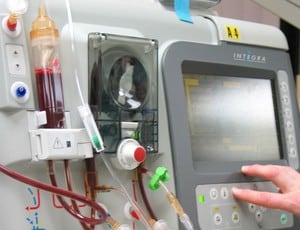
Update on complications of central venous catheters for hemodialysis

This review covers insertion and complications of central venous catheters for hemodialysis, and the social and economic impact of the use of catheters for initiating dialysis is reviewed” Bream (2016). Abstract: Central venous catheters are a popular choice for the initiation of hemodialysis or for bridging between different types of access. Despite this, they have […]