
Central line associated superior vena cava (SVC) syndrome

“We report the case of a 79-year-old woman on hemodialysis through a twin catheter in the right internal jugular vein, presenting with superior vena cava (SVC) syndrome with patent SVC” Quaretti et al (2014).
Taurolidine-citrate lock solution (TCLS) reduces infection prevalence

“Totally, implantable access ports (TIAPs) are used for long standing venous catheterization. This study was designed to present our experiences of the TIAPs applications and efficacy of Taurolidine-citrate lock solution (TCLS) against catheter-related infections” Ince et al (2014).
Ultrasound-guided placement of multiple CVC in the right internal jugular vein

“We present ultrasound-guided placement of a double catheter in the right internal jugular vein in two patients that required multiple central lines for management” Montes-Tapia et al (2014).
Complications from needle penetration of plastic ports in children

“There is an unacceptably high risk of needle penetration of the posterior wall of plastic ports. We recommend utilizing ports with metal backing to avoid this complication” Sharp et al (2014).
Is it feasible to diagnose catheter-related candidemia without catheter withdrawal?

“We assessed the value of conservative techniques to evaluate catheters as the origin of candidemia in patients with CVC in a prospective cohort study” Fernández-Cruz et al (2014).
Transthoracic echocardiography to determine cvc tip placement

“There are multiple methods of determining the optimal position of central venous catheter (CVC) tips. The purpose of this study was to assess the feasibility of transthoracic echocardiography (TTE), and compare TTE and height-based method for correct positioning of CVCs in infants undergoing cardiac surgery” Park et al (2014).
Standardizing umbilical catheter care in preterm infants

“Implementation of guidelines standardizing the use of umbilical catheters in the NICU is feasible. Fewer infants were exposed to the risk of UVC or UAC, and fewer resources were used” Shahid et al (2014).
Checklists to promote compliance with aseptic technique

“There is fair evidence to recommend the use of care bundles that include a checklist during central-line insertion in intensive care unit patients to reduce the incidence of catheter-related bloodstream infections” Simpson et al (2014).
Call for more uniform OPAT practices to enhance patient safety

“Although use of OPAT is common, there is significant variation in practice patterns. More uniform OPAT practices may enhance patient safety” Lane et al (2014).
Survey of infection control practices in hemodialysis units

“We aimed to determine the infection control measures recommended and implemented in Quebec’s HD units, compliance of local protocols to infection control practice guidelines, and reasons behind the low prevalence of arteriovenous fistulas” Trépanier et al (2014).
Comparison total intravenous anaesthesia in ambulatory surgery

“With the popularity of ambulatory surgery ever increasing, we carried out a systematic review and meta-analysis to determine whether the type of anaesthesia used had any bearing on patient outcomes” Kumar et al (2014).
Hypersensitivity associated with sugammadex administration

“Awareness must be raised for the possibility of drug-induced hypersensitivity during the critical 5-min period immediately following sugammadex administration” Tsur and Kalansky (2014).
Surviving Sepsis Campaign suggests the use of a sepsis care bundle

“As a part of the recommendations, the Surviving Sepsis Campaign suggests the use of a sepsis care bundle, which is a set of elements of clinical care derived from the guidelines” Jones (2014).
Comparison of AccuCath IV catheter system with conventional catheters

“A new, proprietary coiled tip guidewire-delivered PIV demonstrated clear superiority over the conventional catheter in our study. Clinical outcome results showed statistically significant improvements in first attempt success, complications, completion of therapy, dwell time, and overall patient satisfaction” Idemoto et al (2014).
Doppler, ECG and algorithm for PICC tip placement

“Chest radiography and malpositions can be eliminated with the use of technology that includes Doppler, echocardiography (ECG), and an algorithm” Girgenti and Donnellan (2014).
Case report presents patient with persistent left superior vena cava
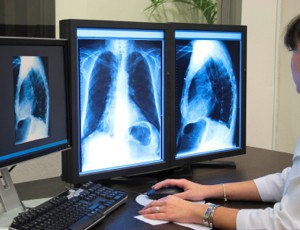
“This is a case report of an incidental diagnosis of persistent left superior vena cava (PLSVC). The diagnosis was suspected after a peripherally inserted central catheter (PICC) was placed and a postinsertion chest radiograph was conducted” Mabry et al (2014).
Evaluation of central venous port malfunction

“There are several scenarios in which imaging does not meaningfully affect management of malfunctioning central venous ports. Recognizing these inefficiencies may allow for more appropriate and cost-effective use of radiographs and line injections to evaluate the cause of port malfunction” Kansagra et al (2014).
Evidence-based red blood cell transfusion practices in ICU

“Our study identified several provider and system barriers to evidence-based transfusion practices including knowledge differences, overly optimistic estimates of current practice, and heterogeneous transfusion practice in each ICU” Murphy et al.
Ultrasound reveals an occlusive thrombus following PICC placement

“Forty-eight hours after the PICC is placed, it’s removed due to swelling of the arm. The plan to give PN peripherally is abandoned when CS complains of pain at her peripheral I.V. sites” Lee (2014).
Human T-cell lymphotropic virus type 1 (HTLV-1) occupational exposure

“We retrospectively audited hospital occupational exposure events over a 10-year period, in a human T-cell lymphotropic virus type 1 (HTLV-1)-endemic area of Central Australia, and report on 53 individuals exposed to HTLV-1 with no transmissions documented (95% confidence interval, 0%-1.5%)” Hewagama et al (2014).
Force required for needles to puncture sharps containers

“This study examined the effect on puncture force of varying 5 needle gauges, 3 temperatures, and 3 container-wall thicknesses. Puncturing was significantly easier with higher temperatures, finer needles, and thinner walls” Grimmond (2014).
Techniques to resolve occluded central venous catheters

“Among patients treated for an occluded CVC, alteplase-treated patients had lower daily and total postocclusion costs than patients receiving catheter replacement.” Ernst et al (2014).
Ultrasound- versus landmark-guided femoral catheterization

“Ultrasound (US) is the standard of care for vascular access in many clinical scenarios. Limited data exist regarding the benefits of US- versus landmark (LM)-guided femoral vascular access in the pediatric catheterization laboratory. This study aimed to compare US- and LM-guided vascular access in the pediatric catheterization laboratory” Law et al (2014).
Percutaneous central line extravasation masquerading as an abscess

“A preterm baby, who had a percutaneous central line inserted developed an erythematous swelling over the infraclavicular area” Govind et al (2014).
Central line tip microbiological analysis techniques reviewed
“This prospective randomized controlled study with 975 non-tunneled central venous catheters (CVCs) showed that the semiquantitative roll-plate technique (SQC) was as accurate as the sonication method for diagnosis of catheter-related infections” Erb et al (2014).
Article offers hypothesis why central line locking solutions leak

“However, the use of the locking fluid is associated with known risks due to “leakage” of the lock. A new hypothesis is proposed here to explain the lock fluid leakage; that the leakage is due to advective and diffusive mass transfer by blood flow around the catheter tip in situ” McGah et al (2014).
Which cancer patients are at a greater risk of catheter-associated venous thrombosis?

“Cancer patients undergoing catheter placement who develop CVC-associated VTE have a shorter aPTT and aPTT ratio than those who do not develop VTE” Senthil et al (2014).
Infection risk associated with syringe manipulation: Human factors solution?

“We present a case of infection risk associated with syringe manipulation that could easily be solved by introducing user-centered design solutions” Clack et al (2014).
CLABSI reduction with simulation training, kit consolidation and electronic documentation

“Combined simulation training, standardized all-inclusive kits, and EMR-guided documentation were associated with greater documented compliance with sterile precautions and reduced CLABSI rate in our MICU” Allen et al (2014).
Restriction of clindamycin lowers Clostridium difficile infection rates

“Clindamycin was reduced 92.61% without an increase in other antibiotics. We identified high consumption of clindamycin as a risk factor for CDI” Cruz-Rodríguez et al (2014).