
Estimating CLABSI rates by sampling denominator data

For locations with a higher number of CLDs per month, sampling 1 d/wk is a valid and accurate alternative to daily collection of CLABSI denominator data” Thompson et al (2015). Reference: Thompson, N.D., Edwards, J.R., Bamberg, W., Beldavs, Z.G., Dumyati, G., Godine, D., Maloney, M., Kainer, M., Ray, S., Thompson, D., Wilson, L. and Magill, […]
Central venous catheters for hemodialysis
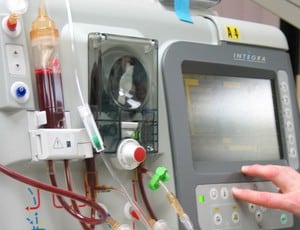
Application of a central venous catheter (CVC), as a temporary or permanent vascular access for hemodialysis, has been continuous practice at the Sarajevo Pediatric Clinic, Department of Pediatric Intensive Care. The main goal of the article is to present our experiences with central venous catheters in the treatment of these patients” Misanovic et al (2015). […]
The impact of vascular access on dialysis outcomes

The purpose of this research is to show the demographic structure of the hemodialysis center in Konjic, and also demonstrate the impact of vascular access to the adequacy and the outcome of dialysis treatment” Mutevelic et al (2015). Reference: Mutevelic, A., Spanja, I., Sultic-Lavic, I. and Koric, A. (2015) The impact of Vascular Access on […]
Mortality in hemodialysis patients over 65 years of age
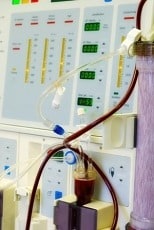
The most common cause of hemodialysis mortality relates to cardiovascular diseases (60.2%), regardless of frequent innovations and improvement of hemodialysis procedures” Coric et al (2015). Reference: Coric, A., Resic, H., Celik, D., Masnic, F., Ajanovic, S., Prohic, N., Beciragic, A., Grosa, E., Smajlovic, A. and Mujakovic, A. (2015) Mortality in hemodialysis patients over 65 years […]
Review of vascular access related thrombosis in France

We aimed to determine a better understanding of the current practice patterns around vascular access thrombosis in France, with 4 axes: incidence, surveillance protocol, treatment, and time to treatment” Sadaghianloo et al (2015). Reference: Sadaghianloo, N., Jean-Baptiste, E., Islam, M.S., Dardik, A., Declemy, S. and Hassen-Khodja, R. (2015) Vascular Access Thrombosis in France: Incidence and […]
High-performance work practices to prevent central line-associated blood stream infections

In this study, we sought to explore the potential role HPWPs may play in explaining differences in the success of CLABSI reduction efforts involving otherwise similar organizations and approaches” McAlearney et al (2015). Reference: McAlearney, A.S., Hefner, J., Robbins, J. and Garman, A.N. (2015) Toward a high-performance management system in health care, part 4: Using […]
Risk factors for central line-associated venous thrombosis in children

Identifying risk factors related to central venous line (CVL) placement could potentially minimize central line-associated venous thrombosis (CLAVT). We sought to identify the clinical factors associated with CLAVT in children” Shah et al (2015). Reference: Shah, S.H., West, A.N., Sepanski, R.J., Hannah, D., May, W.N. and Anand, K.J. (2015) Clinical risk factors for central line-associated […]
Optimal angle of head rotation for internal jugular cannulation

The aim of this study was to determine the degree of head rotation that creates the maximal anatomic separation between the right internal jugular vein and the carotid artery” DeAngelis et al (2015). Reference: DeAngelis, V., Denny, J., Chyu, D., Jan, T., Lemaire, A., Chiricolo, A. and Solina, A. (2015) The Optimal Angle of Head […]
Voiceover interactive PowerPoint catheter care education for home parenteral nutrition

“In home infusions via tunneled catheter/peripherally inserted central catheter (TC/PICC) the risk of catheter-related bloodstream infection (CRBSI) and complications contribute to rehospitalization and costs. It is unknown if voiceover interactive PowerPoint (VOIPP) via digital video disc education improves clinical outcomes” Emery et al (2015).
Incidence and predictive factors of central line associated thrombosis

“The aim of this study is to determine the incidence of venous thrombosis from small bore internal jugular (SBIJ) and PICC line placement” Hammes et al (2015).
Hospital-associated venous thromboembolism in pediatrics

The objective of this work was to systematically review literature on pediatric hospital-acquired venous thromboembolism risk factors and risk-assessment models, to inform future prevention research” Mahajerin et al (2015). Reference: Mahajerin, A., Branchford, B.R., Amankwah, E.K., Raffini, L., Chalmers, E., van Ommen, C.H. and Goldenberg, N.A. (2015) Hospital-associated venous thromboembolism in pediatrics: a systematic review […]
Vascular access and medication safety in pediatric emergencies

Beside implementation of simplified technical skill devices (e.g., intraosseous vascular access system, supraglottic airway devices, and alternative approaches for drug administration), there have been many efforts in recent years to improve patient safety” Heimberg et al (2015). Reference: Heimberg, E., Heinzel, O. and Hoffmann, F. (2015) Typical problems in pediatric emergencies : Possible solutions. Medizinische […]
Reliability of vascular access site bruise measurement

The extent of VAS bruising is underreported because of the lack of reliable measurement methods. This study examined the reliability of linear measurement and planimetry to measure VAS bruise size” Cosman et al (2015). Reference: Cosman, T.L., Arthur, H.M., Bryant-Lukosius, D. and Strachan, P.H. (2015) Reliability of vascular access site bruise measurement. Journal of Nursing […]
Risk of air embolism after intravenous contrast administration

Radiologists as well as referring physicians should be aware of vascular air embolism, which can occur after contrast injection in patients undergoing CT scan” Sodhi et al (2015). Reference: Sodhi, K.S., Saxena, A.K., Chandrashekhar, G., Bhatia, A., Singhi, S., Agarwal, R. and Khandelwal, N. (2015) Vascular air embolism after contrast administration on 64 row multiple […]
Hospital readmission among patients with Central Line-Associated Bloodstream Infections

Our analysis found a statistically significant association between CLABSI status and readmission, suggesting that CLABSI may have adverse health impact that extends beyond hospital discharge” Khong et al (2015). Reference: Khong, C.J., Baggs, J., Kleinbaum, D., Cochran, R. and Jernigan, J.A. (2015) The Likelihood of Hospital Readmission Among Patients With Hospital-Onset Central Line-Associated Bloodstream Infections. […]
Is zero central line-associated bloodstream infection sustainable?

High-quality training, strict compliance with evidence-based guidelines, and thorough documentation is associated with significant reductions in CLABSIs” Erdei et al (2015). Reference: Erdei, C., McAvoy, L.L., Gupta, M., Pereira, S. and McGowan, E.C. (2015) Is Zero Central Line-Associated Bloodstream Infection Rate Sustainable? A 5-Year Perspective. Pediatrics. May 18th. [epub ahead of print]. [ctt tweet=”Is zero […]
Evaluation of Ceftaroline against device associated biofilm formation

S. aureus, a primary pathogen, is capable of biofilm production allowing organism persistence in harsh environments, offering antimicrobial protection” Barber et al (2015). Reference: Barber, K.E., Smith, J.R., Ireland, C.E., Boles, B.R., Rose, W.E. and Rybak, M.J. (2015) Evaluation of Ceftaroline Alone and in Combination Against Biofilm-producing Methicillin-resistant Staphylococcus aureus (MRSA) with Reduced Susceptibility to […]
Assessment of venous blood circulation during long duration spaceflight

To determine if 6 months in microgravity resulted in significant changes in the major central and peripheral veins indicating a redistribution of venous blood flow” Arbeille et al (2015). Reference: Arbeille, P., Provost, R., Zuj, K. and Vincent, N. (2015) Measurements of jugular, portal, femoral, and calf vein cross-sectional area for the assessment of venous […]
Central venous catheters for haemophilia patients undergoing surgical procedures

In this paper, we present our results on using a short-term CVC in haemophilia patients during major surgical operations” Boban et al (2015). Reference: Boban, A., Lambert, C. and Hermans, C. (2015) The use of short-term central venous catheters for optimizing continuous infusion of coagulation factor concentrate in haemophilia patients undergoing major surgical procedures. Haemophilia. […]
Review of self-cannulation for haemodialysis

The aim of this study is to better understand self-cannulation preferences and factors which define them in end stage renal disease (ESRD)” Jayanti et al (2015). Reference: Jayanti, A., Foden, P., Wearden, A., Morris, J., Brenchley, P. and Mitra, S. (2015) Self-Cannulation for Haemodialysis: Patient Attributes, Clinical Correlates and Self-Cannulation Predilection Models. PLoS One. 10(5), […]
Literature review of radiology-implanted arm ports

The high technical success rate of arm port implantation and the elimination of the potential for pneumothorax, hemothorax, catheter pinch-off syndrome, and subclavian and carotid artery injury are strengths of the arm implantation strategy” Burbridge et al (2015). Reference: Burbridge, B., Stoneham, G., Lim, H.J. and Lee, C-H. (2015) Radiology-Implanted Arm Ports: A Review of […]
Examining the role of IV securement and dressing products

CVAD securement and dressing products provide important, multifaceted functions to prevent CVAD failure and complication” Ullman et al (2015). Reference: Ullman, A.J., Cooke, M. and Rickard, C.M. (2015) Examining the Role of Securement and Dressing Products to Prevent Central Venous Access Device Failure: A Narrative Review. The Journal of the Association of Vascular Access. 20(2), […]
Synthetic vein bypass to treat superior vena cava obstruction

We present a case of a 43-year-old patient with history of renal impairment and repeated bilateral central venous cannulation for dialysis. The patient experienced superior vena cava syndrome with bilateral total occlusion of the internal jugular veins and both subclavian veins (with an occluded previously inserted stent) along with the superior vena cava” Zaki et […]
Hypnoanesthesia for ultrasound-guided vascular access
A case is presented wherein hypnosis alone provided anesthesia for the ultrasound-guided placement of a device into right basilic vein. This is the first reported case of hypnoanesthesia for ultrasound-guided vascular access” Bierman and Sivieri (2015). Reference: Bierman, S.F. and Sivieri, I.S. (2015) Hypnoanesthesia in Vascular Access. The Journal of the Association of Vascular Access. […]
Highlights of health care: The Kingdom of Saudi Arabia

The Kingdom of Saudi Arabia (KSA), often referred to as simply Saudi Arabia, is the largest Arab state in western Asia, with borders on the Persian Gulf and the Red Sea…” Armes and Stone (2015). Reference: Armes, S. and Stone, J. (2015) Highlights of Health Care: The Kingdom of Saudi Arabia. The Journal of the […]
Expansion of vascular access team skills base

We describe the service improvement process of expanding a vascular access team (VAT) practice to include the placement of CVCs and arterial lines…” Girgenti and Donnellan (2015). Reference: Girgenti, C. and Donnellan, E. (2015) A Vascular Access Team’s Journey to Central Venous Catheter and Arterial Line Placement. The Journal of the Association of Vascular Access. […]
Review of flushing and locking solutions for vascular access devices

Flushing and locking of intravenous catheters are thought to be essential in the prevention of occlusion. The clinical sign of an occlusion is catheter malfunction and flushing is strongly recommended to ensure a well-functioning catheter” Goossens (2015). Reference: Goossens, G.A. (2015) Flushing and Locking of Venous Catheters: Available Evidence and Evidence Deficit. Nursing Research and […]
Effect of multimodal training program and traditional lecture method on nurses’ hand hygiene knowledge

This study compared the effect of a multimodal training program and lecturing method on nurses’ hand hygiene knowledge, belief, and practice” Ghezeljeh et al (2015). Reference: Ghezeljeh, T.N., Abbasnejad, Z., Rafii, F. and Haghani, H. (2015) Effect of a multimodal training program and traditional lecture method on nurses’ hand hygiene knowledge, belief, and practice: A […]
Review of coated antiseptic tip (CAT) syringe

Colonization of connector hubs and contaminated syringes are thought to increase the risk of CR-BSI. The Coated Antiseptic Tip (CAT) syringe was developed to decontaminate connector hubs, thereby reducing the risk of CR-BSI” Mariyaselvam et al (2015). Reference: Mariyaselvam, M., Hodges, E., Richardson, J., Steel, A., Moondi, P. and Young, P. (2015) The coated antiseptic […]
Review of central vein catheterization during trauma resuscitation

Our primary objective compared subclavian versus femoral CVC complications during initial trauma resuscitations” Choron et al (2015). Reference: Choron, R.L., Wang, A., Van Orden, K., Capano-Wehrle, L. and Seamon, M.J. (2015) Emergency Central Venous Catheterization during Trauma Resuscitation: A Safety Analysis by Site. The American Surgeon. 81(5), p.527-31. [ctt tweet=”Review of central vein catheterization during […]