
Real-time PICC placement confirmation improves patient experience

This article describes how a tracking and tip confirmation system (Sherlock 3CG Tip Confirmation System, CR Bard) was used to improve the patient experience during PICC placements by preventing malposition and delays in the start of treatment” Bidgood et al (2016). Abstract: Peripherally inserted central catheters (PICCs) are now widely used in health care. The […]
Impact of job satisfaction on CLABSI bundle compliance

This study examined whether greater job satisfaction for critical care nurses has a relationship with higher levels of adherence to the central line (CL) bundle interventions and lower central line-associated bloodstream infections (CLABSI) in the VA” Gilmartin et al (2016). Abstract: Job satisfaction is a measure of an employee’s feelings toward his or her job. […]
Association between Hospital Survey on Patient Safety Culture and CLABSI

Examine the association between hospital units’ results for the Hospital Survey on Patient Safety Culture (HSOPS) and catheter-associated infection rates” Meddings et al (2016). Abstract: BACKGROUND: The Agency for Healthcare Research and Quality (AHRQ) has funded national collaboratives using the Comprehensive Unit-based Safety Program to reduce rates of two catheter-associated infections-central-line-associated bloodstream infection (CLABSI) and […]
Line-rounding principles reduces CLABSI rates

The purpose of this quality improvement initiative was to reduce the CLABSI rate in the neonatal intensive care unit from 3.9 per 1000 line days in 2011 by at least 50% in 2014” Wilder et al (2016). Abstract: BACKGROUND: Central line-associated bloodstream infections (CLABSIs) are the most common hospital-acquired infections costing hospitals millions of dollars […]
Complications and outcomes of paediatric implantable ports

According to the published data and this experience, the most common complications in TIVAP are infection and catheter malfunction” Esfahani et al (2016). Abstract: BACKGROUND: Peripheral blood vessels, due to availability are used for many years in cancer patients, however in patients with potentially harmful drugs to skin (vesicant drugs) or difficult accessibility to vessels, […]
Differences in CLABSI rates by central line type

Understanding the differences in CLABSI rates by central line (CL) type is important to inform clinical decisions” Hord et al (2016). Abstract: Background: Central line associated bloodstream infections (CLABSIs) are a significant cause of morbidity and mortality in pediatric hematology/oncology (PHO) patients. Understanding the differences in CLABSI rates by central line (CL) type is important […]
Central venous catheter biofilm depends on multiple environmental factors

This study characterized the phenotype (strong versus weak biofilm-producers) of S. epidermidis from CVCs in four different in vitro biofilm models, covering differences in material type (glass versus polymer) and nutrient presentation (static versus continuous flow)” Van Kerckhoven et al (2016). Abstract: Central venous catheter (CVC)-related infections are commonly caused by Staphylococcus epidermidis that is […]
Vascular access for extracorporeal life support

The selection of the ECLS technique-and therefore the vascular access to implant the device-for a given nosological context trends to be defined according an evidence-based medicine” Reeb et al (2016). Abstract: In thoracic surgery, extracorporeal life support (ECLS) techniques are performed to (I) provide a short to mid term extracorporeal mechanical support; (II) realize the […]
Complicated catheter-related bloodstream infections with MSSA

We investigated the prognostic role of high MICs for antistaphylococcal agents in patients with methicillin-sensitive Staphylococcus aureus catheter-related bloodstream infection (MSSA CRBSI)” San-Juan et al (2016). Abstract: We investigated the prognostic role of high MICs for antistaphylococcal agents in patients with methicillin-sensitive Staphylococcus aureus catheter-related bloodstream infection (MSSA CRBSI). We prospectively reviewed 83 episodes from […]
How effective are PICC lines in burn patient care?

Although the use of peripherally inserted central catheters (PICCs) has increased in burn patient treatment, little is known about the subjective experiences of these patients with PICCs” Song and Oh (2016). Abstract: PURPOSE: Although the use of peripherally inserted central catheters (PICCs) has increased in burn patient treatment, little is known about the subjective experiences […]
Do working hours influence needlestick injury rates?

Our goal is to determine the effect of the work-hour limitation on the rates of needlestick and eyesplash injuries” Drazin et al (2016). Abstract: BACKGROUND : The most recent work-hour restrictions were implemented in July 2011 for training physicians. The impact of these regulations on workplace injuries is not yet fully understood. Our goal is […]
Home intravenous antibiotic therapy successfully treats cellulitis

The objective of the study is to evaluate whether patients with cellulitis can be safely discharged from a 24-hour clinical decision unit (CDU) with home infusion of intravenous (IV) antibiotics” Rentala et al (2016). Abstract: OBJECTIVES: The objective of the study is to evaluate whether patients with cellulitis can be safely discharged from a 24-hour […]
Simulation-based curriculum for ultrasound-guided central venous catheter placement

To develop a simulation-based curriculum for residents to learn ultrasound-guided (USG) central venous catheter (CVC) insertion, and to study the volume and type of practice that leads to technical proficiency” McGraw et al (2016). Abstract: OBJECTIVE: To develop a simulation-based curriculum for residents to learn ultrasound-guided (USG) central venous catheter (CVC) insertion, and to study […]
Obtaining vascular access directly through the superior vena cava

To our knowledge, it is the first case ever reported on the successful establishment of vascular access through superior vena cava under such a complicated condition of vascular exhaustion” Diao et al (2016). Abstract: The patency of vascular access is of vital importance to dialysis patients. Access dysfunction is largely caused by vessel stenosis and […]
Central venous catheter associated superior vena cava perforation

We describe a very rare case of an indwelling central venous catheter (CVC) through the left internal jugular vein that perforated the superior vena cava (SVC) wall postoperatively, although the CVC was placed in the appropriate position preoperatively” Kurabe et al (2016). Abstract: We describe a very rare case of an indwelling central venous catheter […]
PICC patient education improves vascular access outcomes

Peripherally Inserted Central Catheter (PICC) is a central venous catheter suitable for patients who receive chemotherapy in Day Hospital regimen. The patient must be educated to a proper home management of the PICC through targeted education” Fusco et al (2016). Abstract: BACKGROUND: Peripherally Inserted Central Catheter (PICC) is a central venous catheter suitable for patients […]
What is the impact of heparin locks for hemodialysis catheters
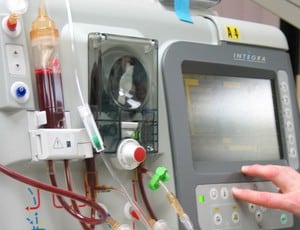
Low-dose heparin lock could decrease the incidences of catheter-related infections and bleeding-related complications without influencing the catheter retention time or the incidence of catheter thrombosis/occlusion or catheter dysfunction” Han et al (2016). Abstract: BACKGROUND: Low-dose heparin lock has been suggested as an effective and safe catheter lock in hemodialysis. However, whether a low-dose lock is […]
Central venous catheters are the greatest risk factor for upper-extremity DVT development

Upper-extremity deep-vein thrombosis (UEDVT) causes significant morbidity and mortality and is not well characterized in the existing literature, particularly in underrepresented minorities such as African Americans” Stone et al (2016). Abstract: BACKGROUND: Upper-extremity deep-vein thrombosis (UEDVT) causes significant morbidity and mortality and is not well characterized in the existing literature, particularly in underrepresented minorities such […]
Ultrasound-guided peripheral intravenous access learner assessment

Ultrasound-guided peripheral intravenous line (USGPIV) placement is becoming an important tool in current clinical practice” Rice et al (2016). Abstract: Background: Ultrasound-guided peripheral intravenous line (USGPIV) placement is becoming an important tool in current clinical practice. Many residency programs utilize unstructured clinical observation to evaluate residents in this and other procedural skills. Simulation-based assessment permits educators […]
Candida albicans outbreak associated with total parenteral nutrition

According to results of the molecular methods, we thought that a C. albicans outbreak had occurred in the neonatal pediatric unit, due to contamination of TPN solution” Guducuoglu et al (2016). Abstract: BACKGROUND: The most frequently isolated fungi in patients using TPN belongs to the Candida genus. Various infections including venous catheter infections, fungemia, endocarditis […]
How to determine if a blood culture isolate is likely to be a contaminant in neonatal care

This article describes the methodology used by ANISA to determine whether a blood culture isolate is likely to be a true pathogen or a contaminant in neonatal sepsis” Hossain et al (2016). Abstract: The multisite community-based study, Aetiology of Neonatal Infection in South Asia (ANISA), uses blood culture as the gold standard for identifying the […]
Blood culture contaminations rates are reduced by more effective team communication
The results show that reducing blood culture contamination rates through the use of a structured plan and teamwork is feasible in the fast-paced emergency department” Bowen et al (2016). Abstract: Healthcare providers rely heavily on blood culture results for developing the patient’s plan of care. Contaminated blood cultures can lead to unnecessary treatment, unnecessary hospitalization, […]
What are the IV flow rates through modern intravenous catheters?

We aimed to investigate flow rates through modern intravenous access devices using an in vitro system” Khoyratty et al (2016). Abstract: STUDY OBJECTIVE: Fluid administration using intravenous (IV) access devices is required in many settings. There are a lack of quantitative data comparing traditional cannulas and modern access devices. We aimed to investigate flow rates […]
Hemothorax caused by replacement of hemodialysis catheter
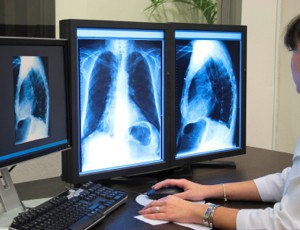
We report a long-term dialysis catheter accidentally inserted into the mediastinum via the right jugular vein in a hemodialysis patient” Zhang et al (2016). Abstract: Central venous catheters (CVC) are widely used in clinics to gain vascular access, but the risk and prevalence of catheter-related complications remains a serious issue. We report a long-term dialysis […]
Long term vascular access outcomes for haemodialysis patients

Therefore, the aim of this study was to determine, in a multivariate analysis, the long-term outcome of HD patients, with respect to vascular access (VA)” Pašara et al (2016). Abstract: OBJECTIVES: Studies have reported that the tunnelled dialysis catheter (TDC) is associated with inferior haemodialysis (HD) patient survival, in comparison with arteriovenous fistula (AVF). Since […]
CUSP implementation was associated with CLABSI decrease

Prompted by the high number of central line-associated bloodstream infections (CLABSIs), our institution joined the national On the CUSP: Stop BSI initiative” Miller et al (2016). Abstract: BACKGROUND: Prompted by the high number of central line-associated bloodstream infections (CLABSIs), our institution joined the national On the CUSP: Stop BSI initiative. We not only report the […]
In-line intravenous filters and CLABSI rates in a hematological setting

Our study revealed that the cessation of in-line filters from CVCs does not significantly influence the incidence of BSIs and mortality in patients with hematological disease. To confirm our results, however, a large-scale randomized controlled study is warranted” Tanaka et al (2016). Abstract: Objective: The use of intravenous in-line filters is effective for the mechanical […]
NHS performance in the prevention and management of sharps injuries

An inspection initiative was carried out in 2015/16 to identify any common causes of non-compliance with legislation designed to protect staff from the risk of exposure to BBVs” HSE (2016). Introduction: This report describes the findings of an HSE inspection initiative delivered in 2015/16 by inspectors and occupational health specialist inspectors. Its main purpose was […]
Choice of intravenous fluid therapy following cardiac surgery

Even modest increases in chest drain losses after surgery are associated with an increased risk of death, higher reoperation rates, an increased need for blood products, and prolonged requirements for intensive care” Reddy et al (2016). Abstract: Abnormal bleeding, defined as diffuse oozing after cardiopulmonary bypass, occurs in more than 10% of patients who undergo […]
Intravenous manganese overdose due to compounding error

We present a unique case of acute intravenous manganese poisoning with a systematic evaluation of hemodialysis efficacy” Hines et al (2016). Abstract: CONTEXT: Manganese-associated parkinsonism is well described in occupational settings, in chronic methcathinone users, and in patients receiving long-term total parenteral nutrition. We present a unique case of acute intravenous manganese poisoning with a […]