
Device-associated healthcare-associated infections in PICU

The primary objective of this study was to identify the most common DA-HAIs in the pediatric intensive care unit (PICU) at the American University of Beirut Medical Center (AUBMC)” Ismail et al (2016). Abstract: INTRODUCTION: Device-associated healthcare-associated infections (DA-HAIs) are the principal threat to patient safety in intensive care units (ICUs). The primary objective of […]
Variables for adherence to the central line bundles

Variables for adherence to the central line bundle, organizational context, and central line-associated bloodstream infections (CLABSIs) were selected for this secondary data analysis from 614 US hospitals that participated in the Prevention of Nosocomial Infection and Cost-effectiveness-Refined study” Gilmartin and Sousa (2016). Abstract: OBJECTIVE: To test the Quality Health Outcomes Model to investigate the relationship […]
How effective is simulation-based training in improving CVC insertion knowledge and competency

Simulation-based medical education training was effective in improving short and long-term competency in, and knowledge of CVC insertion” Cartier et al (2016). Abstract: BACKGROUND: Multimodal educational interventions have been shown to improve short-term competency in, and knowledge of central venous catheter (CVC) insertion. [ctt tweet=”ReTweet if useful… How effective is simulation-based training in improving CVC […]
Unusual study describes anatomical tip location for neonatal PICC

The upper end of the pericardial reflection in neonates at autopsy lies below the middle of the 3rd thoracic vertebra. The tip of an upper inserted catheter should not extend below the level of the 3rd intercostal space” Eifinger et al (2016). Abstract: BACKGROUND: Central venous cannulation is widely used in neonatal critical care. Pericardial […]
Complications of central venous catheters in pediatric liver transplant patients

By removing ICVC in a select number of patients at six months post-insertion, we might avoid as much as 60% of complications” Cousin et al (2016). Abstract: In pLT recipients, the advantages of ICVCs need to be weighed against the risk of complications. This single-center retrospective study aimed to review ICVC complications in our cohort […]
Outpatient parenteral antimicrobial therapy use in Italy

This study aimed to assess the extent and nature of recent changes in the management of outpatient parenteral antimicrobial therapy (OPAT) in Italy” Esposito et al (2016). Abstract: This study aimed to assess the extent and nature of recent changes in the management of outpatient parenteral antimicrobial therapy (OPAT) in Italy. We reviewed our previously […]
OPAT patient characteristics and outcomes described in this article

The objective of this study was to describe the OPAT experience at a Canadian tertiary academic centre in the absence of a formal OPAT program” Yan et al (2016). Abstract: Outpatient parenteral antimicrobial therapy (OPAT) is a safe and effective alternative to hospitalization for many patients with infectious diseases. The objective of this study was […]
Peripherally inserted central catheter-related upper extremity DVT

This study had 2 objectives: to estimate the incidence of upper extremity venous thrombosis associated with PICCs in oncology patients and to evaluate the role of Doppler sonography in antithrombotic prophylaxis” Luo et al (2016). Abstract: OBJECTIVES: Peripherally inserted central catheters (PICCs) are associated with an increased risk of venous thrombosis. This study had 2 […]
Central-line bundles need a multimodal implementation strategy

Their review [8] assessed the effectiveness of central-line bundles (insertion and maintenance or both) in preventing CLABSIs. It is the largest—and, in our opinion, the best—completed review in its scientific field” Zingg and Pittet (2016). Extract: In this issue of The Lancet Infectious Diseases, Erwin Ista and colleagues present the results of their systematic review […]
Association of thrombophilia and catheter-associated thrombosis in children

We sought to evaluate whether among children with central venous catheter, thrombophilia increases the risk of CADVT” Neshat-Vahid et al (2016). Abstract: BACKGROUND: The association between thrombophilia and deep venous thrombosis associated with central venous catheter (CADVT), the most important pediatric risk factor for thrombosis, is unclear in children. Pediatric studies with small sample sizes […]
Central venous catheter associated right atrial thrombosis

We report the case of a young woman affected by Hodgkin lymphoma with CVC-related right atrial thrombosis diagnosed during routine echocardiography” Lanza et al (2016). Abstract: Central venous catheters (CVC) are commonly used in clinical practice. Although long-term complications are uncommon, catheter-related right atrial thrombosis is a rare but potentially life-threatening one. The optimal management […]
Central venous catheters used for acute extracorporeal treatment

The most common cause for CVC removal or exchange was catheter dysfunction (50%). CVCs were mostly inserted in the femoral vein, which is the preferred site of insertion in acute HD/PE because of the smaller number of complications” Rus et al (2016). Abstract: Renal replacement treatment (RRT) is required in severe acute kidney injury, and […]
Cutting corners in central venous catheter care is common practice

Corners were cut in patient assessment, essential nursing care, the care of central venous catheters and medication administration” Jones et al (2016). Abstract: AIMS AND OBJECTIVES: The aim of this study is to report on a key finding of a larger study investigating the ‘gaps’ in patient care that registered nurses encounter during the course […]
Ultrasound-guided RIJV cannulation in low birth weight newborns

Ultrasound-guided RIJV cannulation with real-time visualization to gain access to the central venous circulation in low birth weight newborns is effective and safe” Montes-Tapia et al (2016). Abstract: BACKGROUND: Central venous catheterization is not the first choice of vascular access in neonates. Success depends on the size of the vessel and the skill of the […]
Ultrasound comparison of left and right internal jugular vein
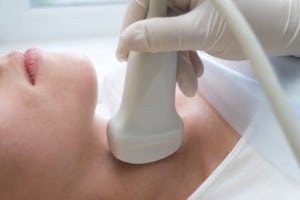
Possible explanations for the higher complication rate include a smaller diameter and more anterior position relative to the corresponding carotid artery (CA) of the LIJV compared with the RIJV. In this study, the RIJV and LIJV were examined in mechanically ventilated patients to determine the validity of these possible explanations” Bos et al (2016). Abstract: […]
Implementation of a central line infection prevention bundle in neonates

This central line infection bundle was effective in reducing CVC use, dwell time, and central line-associated bloodstream infections” McMullan and Gordon (2016). Abstract: OBJECTIVE: To compare central line use and central line-associated bloodstream infection in newborn infants before and after the introduction of a central line infection prevention bundle in order to determine the effectiveness […]
Tigecycline use in the outpatient parenteral antibiotic therapy setting

In the context of globally increasing antimicrobial resistance, tigecycline appears to be a useful therapeutic option. The need for prolonged courses for complex infections has prompted consideration of its use via outpatient parenteral antibiotic therapy (OPAT) programmes, although clinical outcomes when used in this setting remain unknown” Ingram et al (2016). Abstract: In the context […]
The role of intravenous antibiotic self-administration in OPAT

Its practice, involving especially self-administration, seems to be safe, efficacious and cost-effective, as long as international good practice recommendations are applied” Moulin et al (2016). Abstract: With the increase of infections without option for an oral treatment, the systematic use of hospitalization overloads the healthcare system and causes growing political concern. For carefully selected patients, […]
Persistent left-sided SVC draining to right atrium via coronary sinus

Postinsertion chest radiograph revealed the position of the catheter in the left para mediastinal location [Figure 1]. This raised suspicion of a left-sided superior vena cava (SVC)” Saini et al (2016). Extract: “He was admitted in view of massive intraoperative blood loss leading to hemodynamic instability and long duration of surgery. His stay was further […]
Malposition of the central venous catheter in the hemiazygos vein

Post-procedural chest radiograph was done, but the misplacement of the CVC tip was not detected initially” Li Cavoli et al (2016). Extract: “A 48-year-old man for 2 years on long- term HD was admitted to the hospital for thrombosis of arterovenous fistula. A tunnelled double-lumen CVC to achieve emergency vascular access for HD was inserted […]
Poster describes CLABSI prevention in poor countries

Although much has been done in recent years in order to lower the incidence of CVC infections, not all the means are available in poor countries” Jukic et al (2015). Extract: Introduction: Central venous catheter (CVC) infections are a major cause of nosocomial infections and patient mortality. Although much has been done in recent years […]
ICU and ward CLABSI rates discussed in this poster presentation

Analyze the number and indication for insertion of central venous catheters (CVCs), the incidence of catheter-related bloodstream infection (CRBSI) and the mortality in the intensive care unit (ICU), and after discharge to ward, in patients requiring CVCs in the ICU” Martín et al (2015). Extract: Objectives: Analyze the number and indication for insertion of central […]
Head mounted ultrasound-guided central venous catheterization

We examined the feasibility of using a head-mounted display (HMD) to improve the ergonomics of sonographic-guided interventional procedures” Kaneko et al (2016). Abstract: PURPOSE: We examined the feasibility of using a head-mounted display (HMD) to improve the ergonomics of sonographic-guided interventional procedures. [ctt tweet=”ReTweet if useful… Head mounted ultrasound-guided central venous catheterisation http://ctt.ec/1MUVy+ @ivteam #ivteam” […]
Ultrasound-guided placement of difficult-to-place peripheral venous catheters

Patients with difficult intravenous access (DIVA) often experience discomfort because of failed attempts to place peripheral venous catheters (PVCs); however, ultrasound guidance may improve this problem with catheter placement” Partovi-Deilami et al (2016). Abstract: Patients with difficult intravenous access (DIVA) often experience discomfort because of failed attempts to place peripheral venous catheters (PVCs); however, ultrasound […]
Intravenous fluid resuscitation approaches in intensive care units

Fluid resuscitation is a cornerstone of intensive care treatment, yet there is a lack of agreement on how various types of fluids should be used in critically ill patients with different disease states” Miller et al (2016). Abstract: BACKGROUND: Fluid resuscitation is a cornerstone of intensive care treatment, yet there is a lack of agreement […]
Central venous catheter associated invasive Candida bloodstream infections

To characterize the epidemiology of candidemia in a hospital setting in Costa Rica” Villalobos et al (2016). Abstract: BACKGROUND: Invasive Candida bloodstream infections are frequent and display high mortality in clinical practice. There is scarce published on this topic in Central America. [ctt tweet=”ReTweet if useful… Central venous catheter associated invasive Candida bloodstream infections http://ctt.ec/8g9TK+ […]
Management of catheter-associated upper extremity deep venous thrombosis

The body and quality of literature evaluating catheter-associated (CA) UEDVT have increased, yet strong evidence on screening, diagnosis, prevention, and optimal treatment is limited” Crawford et al (2016). Abstract: Central venous catheters or peripherally inserted central catheters are major risk factors for upper extremity deep venous thrombosis (UEDVT). The body and quality of literature evaluating […]
Rivaroxaban improves patency in a mouse model of catheter thrombosis

Dysfunction of indwelling central venous catheters (CVC) due to tissue ingrowth or clotting is common. The study objective was to determine if the oral anticoagulant rivaroxaban (RIVA) improved CVC patency and inflammation in mice” Terry et al (2016). Abstract: INTRODUCTION: Dysfunction of indwelling central venous catheters (CVC) due to tissue ingrowth or clotting is common. […]
Home parenteral nutrition in adult patients with chronic intestinal failure

This study reports the epidemiological data from the largest Danish IF center. As one of the pioneering centers in treating IF with home parenteral nutrition (HPN), this study documents the HPN evolution and describes the demographics and outcome in one of the world’s largest single-center cohorts” Brandt et al (2016). Abstract: BACKGROUND/AIMS: In Denmark, the […]
Central venous access port implantation procedures and complications

We conducted a nationwide questionnaire-based survey to understand the current situation regarding central venous port implantation in order to identify the ideal procedure” Shiono et al (2016). Abstract: BACKGROUND: We conducted a nationwide questionnaire-based survey to understand the current situation regarding central venous port implantation in order to identify the ideal procedure. [ctt tweet=”ReTweet if […]