
Discussion on the repackaging of intravenous fat emulsions

To accommodate small fluid volumes, repackaging of intravenous fat emulsions (IVFEs) is frequently performed in institutions providing parenteral nutrition to neonates and smaller pediatric patients” Cober (2016). Abstract: To accommodate small fluid volumes, repackaging of intravenous fat emulsions (IVFEs) is frequently performed in institutions providing parenteral nutrition to neonates and smaller pediatric patients. However, some […]
Standard concentration infusions in paediatric intensive care units

The use of standard concentrations of intravenous infusions has been advocated by international organisations to increase intravenous medication safety in paediatric and neonatal critical care” Perkins et al (2016). Abstract: The use of standard concentrations of intravenous infusions has been advocated by international organisations to increase intravenous medication safety in paediatric and neonatal critical care. […]
Device reads barcodes to reduce intravenous medication errors

We undertook a randomised control led trial to evaluate the effect of a prototype device which attaches to the intravenous drug administration port, and allows injection of intravenous drugs only after the user scans the barcode on the syringe label” Khan et al (2016). Abstract: We undertook a randomised control led trial to evaluate the […]
What is the most appropriate IV lock solution?

Also, the use of lock with substances with anti-bacterial and anti-biofilm activity (such as citrate or taurolidine) should be taken into consideration in selected populations of patients” Pittiruti et al (2016). Abstract: BACKGROUND: The most appropriate lock solution for central venous access devices is still to be defined. GAVeCeLT – the Italian group for venous […]
Global rating scale for assessment of ultrasound-guided peripheral vascular access

We aimed to develop a global rating scale (RS) for assessment of UGVA competence based on opinions on the content from ultrasound experts in a modified Delphi consensus study” Primdahl et al (2016). Abstract: INTRODUCTION: Peripheral vascular access is vital for treatment and diagnostics of hospitalized patients. Ultrasound-guided vascular access (UGVA) is superior to the […]
Review of ultrasound guided arterial cannulation

This study was to compare the utility of USG radial artery cannulation with palpation technique in terms of success rate, real-time to placement, number of attempts and complications” Tangwiwat et al (2016). Abstract: BACKGROUND: Previous studies have shown ultrasound guidance (USG)for arterial cannulation being advantageous compared to palpation technique, but little is known about its […]
Second generation clorhexidine and silver sulfadiazine central venous catheters

to evaluate the effectiveness and safety in the use of second-generation central venous catheters impregnated in clorhexidine and silver sulfadiazine when compared with other catheters, being them impregnated or not, in order to prevent the bloodstream infection prevention” Stocco et al (2016). Abstract: OBJECTIVE: to evaluate the effectiveness and safety in the use of second-generation […]
Will nitric oxide releasing central venous catheters reduce DVT and CLABSI?

Nitric oxide (NO) is an endogenous vasodilator as well as natural inhibitor of platelet adhesion/activation and an antimicrobial agent, and NO-releasing polymers are expected to have similar properties” Brisbois et al (2016). Abstract: Two major problems with implanted catheters are clotting and infection. Nitric oxide (NO) is an endogenous vasodilator as well as natural inhibitor […]
Review of ECG and landmark guide to central venous catheter length

We aimed to compare two methods, using an electrocardiogram (ECG) or landmark as guides, for assessing correct depth of central venous catheter (CVC) placement” Barnwal et al (2016). Abstract: BACKGROUND AND AIMS: The complications of central venous catheterisation can be minimized by ensuring catheter tip placement just above the superior vena cava-right atrium junction. We […]
Correct central venous pressure transducer placement

In current routine, when measuring CVP the health care provider may use anatomical landmarks and a spirit level, SL, to adjust the pressure transducer to the level of the tricuspid valve, i.e. the phlebostatic axis” Avellan et al (2016). Abstract: The central venous pressure, CVP, is an important variable in the management of selected perioperative […]
Ultrasonic confirmation of correct guidewire placement
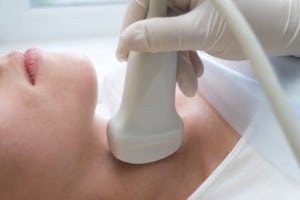
We propose confirmation of the guidewire in the brachiocephalic vein with ultrasonography as a more reliable method of confirming proper guidewire placement” Bowdle et al (2016). Abstract: BACKGROUND: Imaging the guidewire with ultrasonography in the internal jugular vein during central venous catheterization often is used to verify proper guidewire placement and to aid in prevention […]
Ultrasound-guided peripheral venous access for apheresis

We hypothesized that ultrasound-guided peripheral venous access would benefit such patients and would lead to placement of fewer central venous catheters” Salazar et al (2016). Abstract: Therapeutic and donor apheresis requires adequate vascular access to achieve inlet flow rates of ∼50-100 mL/min. While central dialysis-type venous catheters can usually provide such access, their use includes […]
How to estimate depth of insertion of right subclavian CVC

In this study, we compared the landmark topographic method with the formula technique for estimating depth of insertion of right subclavian CVCs” Anandaswamy and Marulasiddappa (2016). Abstract: BACKGROUND AND AIMS: Subclavian central venous catheterisation (CVC) is employed in critically ill patients requiring long-term central venous access. There is no gold standard for estimating their depth […]
What is the frequency of post-infusion phlebitis?

to investigate the incidence of phlebitis and its association with risk factors when using peripheral IV catheters (PIC) and following their removal – (post-infusion phlebitis) in hospitalized adults” Urbanetto Jde et al (2016). Abstract: OBJECTIVE: to investigate the incidence of phlebitis and its association with risk factors when using peripheral IV catheters (PIC) and following […]
Therapeutic phlebotomy guidelines discussed in this article

This review discusses therapeutic phlebotomy and the related disorders and also offers guidelines for establishing a therapeutic phlebotomy program” Kim and Oh (2016). Abstract: Phlebotomy is the removal of blood from the body, and therapeutic phlebotomy is the preferred treatment for blood disorders in which the removal of red blood cells or serum iron is […]
How to remodel outpatient phlebotomy services with simulation modeling

The purpose of this paper is to present a simulation modeling application to reconfigure the outpatient phlebotomy service of an acute regional and teaching hospital in Hong Kong, with an aim to improve service efficiency, shorten patient queuing time and enhance workforce utilization” Yip et al (2016). Abstract: Purpose – The purpose of this paper […]
Point-of-care ultrasonography in neonatal medicine

Our aim was to quantify POCUS use, training and perceptions regarding education and barriers among the United States NPM and PCCM fellowship programs” Nguyen et al (2016). Abstract: OBJECTIVE: The current state of point-of-care ultrasonography (POCUS) use and education in neonatal-perinatal medicine (NPM) and pediatric critical care medicine (PCCM) is unknown. Our aim was to […]
Simulation-based blended peripheral intravenous catheter insertion training

Blended PIVC insertion training programs that incorporate deliberate simulated practice have the potential to improve clinical practice and patient care” Keleekai et al (2016). Abstract: INTRODUCTION: Peripheral intravenous catheter (PIVC) insertion is one of the most common invasive procedures performed in a hospital, but most nurses receive little formal training in this area. Blended PIVC […]
Error in preparing morphine infusions in a UK paediatric hospital

To investigate current practice and accuracy during preparation of morphine N/PCA infusions in hospital theatres and wards at a UK children’s hospital” Rashed et al (2016). Abstract: Background: Administering nurse/patient controlled analgesia (N/PCA) to children requires complex dose calculations and multiple manipulations to prepare morphine solutions in 50 mL syringes for administration by continuous infusion […]
Intravenous infusion pump design and testing reduces errors

Usability testing provides the opportunity to detect and analyze potentially dangerous problems with the design of infusion pumps that could cause or allow avoidable errors” Miller et al (2016). Abstract: With the recognition that the introduction of new technology causes changes in workflow and may introduce new errors to the system, usability testing was performed […]
Hepatic artery chemotherapy infusion via robotic assisted port placement

Hepatic artery infusion (HAI) chemotherapy is an effective regional therapy for unresectable colorectal liver metastases (U-CRLM).1 , 2 One of its limitations is the need for a laparotomy, which can delay the use of systemic therapy.3 Here, we describe a purely robotic technique for placement of an HAI pump (Fig 1)” Dhir et al (2016). […]
Intravenous infusion pump dosing errors in preterm neonates

Applying multi-infusion while following a neonatal medication schedule may temporarily result in dosing errors, which can be relevant for fast-acting medications” Snijder et al (2016). Abstract: BACKGROUND: Drug administration on the neonatal intensive care unit is often associated with adverse events.This may be due to dosing errors caused by multi-infusion setups. We aim to investigate […]
Article provides guidance on sharps injury prevention

This article provides guidance on the steps that can be followed to minimize risk of a sharps injury” Spruce (2016). Abstract: Perioperative team members who handle sharp devices or equipment are at risk for sharps injuries. Because sharps injuries can expose individuals to potentially infectious diseases, safety practices should be followed at all times. Health […]
Needlestick injuries among persons with no presumed risk
This study identified persons without presumed risk (PWPR) involved in accidents with blood and body fluids in 2 health care facilities between 1989 and 2012 in a state in Central Brazil” Salgado et al (2016). Abstract: This study identified persons without presumed risk (PWPR) involved in accidents with blood and body fluids in 2 health […]
Review of work-related injuries indicates high rate of needlestick injury

Emergency medical technicians (EMTs) and paramedics are at serious risk for work-related injuries (WRIs) during work hours. Both EMTs and paramedics have higher WRI rates, according to the literature data” Yilmaz et al (2016). Abstract: OBJECTIVES: Emergency medical technicians (EMTs) and paramedics are at serious risk for work-related injuries (WRIs) during work hours. Both EMTs […]
Cosmetic satisfaction with totally implantable ports

The aim of this study was to assess breast cancer patients’ comfort level and aesthetic satisfaction with regard to TIVAD insertion” Liberale et al (2016). Abstract: PURPOSE: Totally implantable vascular access devices (TIVADs) are widely used to administer chemotherapy to cancer patients. While great progress has been made with respect to breast surgical reconstruction to […]
Impact of a negative displacement connector with an alcohol disinfecting cap?

We performed a prospective, observational study to determine the rate of central line-associated bloodstream infection (CLABSI) and CVC occlusion using a negative displacement connector with an alcohol disinfecting cap” Patel et al (2016). Abstract: BACKGROUND: Major complications of central venous catheter (CVC) use include bloodstream infection and occlusion. We performed a prospective, observational study to […]
PICC associated cardiac tamponade in neonates

Pericardial effusion with cardiac tamponade is a rare and life-threatening complication of peripherally inserted central catheter (PICC) in a neonate” Atmawidjaja et al (2016). Abstract: Pericardial effusion with cardiac tamponade is a rare and life-threatening complication of peripherally inserted central catheter (PICC) in a neonate. We report a 33-week preterm neonate who had sudden clinical […]
Comparison of the visualisation of the subclavian and axillary veins

To compare the area of the lumen of the axillary and subclavian veins using ultrasound (US) in 50 healthy volunteers” Roger et al (2016). Abstract: OBJECTIVE: To compare the area of the lumen of the axillary and subclavian veins using ultrasound (US) in 50 healthy volunteers. [ctt tweet=”ReTweet if useful… Comparison of the visualisation of […]
Vascular access clinic for children on haemodialysis

A multidisciplinary vascular clinic incorporating ultrasound assessment is key to maintaining young children on chronic haemodialysis via an AVF” Shroff et al (2016). Abstract: BACKGROUND: Arteriovenous fistula (AVF) formation for long-term haemodialysis in children is a niche discipline with little data for guidance. We developed a dedicated Vascular Access Clinic that is run jointly by […]