
Are nerve conduction studies safe in patients with central venous catheters?

Nerve conduction studies of the upper extremities, including both proximal stimulations and repetitive stimulation, do not appear to confer increased risk of cardiac conduction abnormality in those patients with central venous catheters who are not critically ill or have a prior history of arrhythmia” London et al (2016). Abstract: INTRODUCTION: It is unknown if central […]
What are the non-intravenous routes for Benzodiazepines in epilepsy?

This is a narrative review of data about delivery methods for benzodiazepines alternative to the intravenous and oral routes for the acute treatment of seizures” Mula (2016). Abstract: Benzodiazepines represent the first-line treatment for the acute management of epileptic seizures and status epilepticus. The emergency use of benzodiazepines must be timely, and because most seizures […]
How to safely select patients for home hemodialysis

Often the main barrier to home haemodialysis remains suitable accommodation, particularly in inner cities. Once established at home, it is important to ensure that patient expectations and the reality of home haemodialysis do not differ substantially” Davenport et al (2017). Abstract: Home haemodialysis offers many advantages in that patients take active control of their own […]
Are chest X-ray required prior to the administration of tPA for VAD occlusion

Current practice at many institutions is to assess VAD position with a chest X-ray (CXR) prior to intraluminal administration of tissue plasminogen activator (tPA). We aimed to determine the utility of this practice” Stammers et al (2016). Abstract: Background: Venous access device (VAD) occlusion from intraluminal thrombus is a common complication during childhood cancer treatment. […]
Vascular access education in developing countries

We report our activities training doctors on vascular access procedures at International University (IU) Hospital in Cambodia through a program facilitated by Ubiquitous Blood Purification International, a nonprofit organization that provides medical support to developing countries in the field of dialysis medicine” Naganuma and Takemoto (2017). Abstract: We report our activities training doctors on vascular […]
What are the CLABSI risk factors in an adult intensive care unit?

To evaluate the incidence, risk factors and associated mortality of central line-associated bloodstream infection (CLABSI) in an adult intensive care unit (ICU) in India” Mishra et al (2016). Abstract: OBJECTIVE: To evaluate the incidence, risk factors and associated mortality of central line-associated bloodstream infection (CLABSI) in an adult intensive care unit (ICU) in India. [ctt […]
Clinical practice guideline for blood culture use in critically ill children

To determine whether a novel, 2-part, clinical practice guideline could decrease the rates of total blood cultures and cultures collected from central venous catheters in critically ill children and to examine the effect of the guideline on patient outcomes” Woods-Hill et al (2016). Abstract: IMPORTANCE: Sepsis and septic shock are common and, at times, fatal […]
Future trends in vascular access for hemodialysis

In summary, this chapter reflects on the shortcomings of current access modalities and discusses potential avenues to improve VA outcomes in the future” Shenoy (2017). Abstract: Delivery of a prescribed dialysis dose, which is critical for longevity on hemodialysis, is directly dependent on vascular access (VA). However, VA is fraught with high failure rates and […]
Intravenous versus oral antibiotics for outpatient treatment of pneumonia
Postdischarge treatment of complicated pneumonia includes antibiotics administered intravenously via a peripherally inserted central venous catheter (PICC) or orally” Shah et al (2016). Abstract: BACKGROUND AND OBJECTIVES: Postdischarge treatment of complicated pneumonia includes antibiotics administered intravenously via a peripherally inserted central venous catheter (PICC) or orally. Antibiotics administered via PICC, although effective, may result in […]
Impact of CHG washcloths on CLABSI rates in intensive care units

We assessed the impact of 2% daily patient bathing with chlorhexidine gluconate (CHG) washcloths on the incidence of hospital-acquired (HA) and central line-associated (CLA) bloodstream infections (BSI) in intensive care units (ICUs)” Afonso et al (2016). Abstract: We assessed the impact of 2% daily patient bathing with chlorhexidine gluconate (CHG) washcloths on the incidence of […]
Which is the best vein for vascular access port implantation?

The aim of the present study was to clarify the optimal access vein for CVAP implantation when performed by residents rather than attending surgeons” Matsushima et al (2016). Abstract: OBJECTIVE: The central venous access port (CVAP) has played an important role in the safe administration of chemotherapy and parenteral nutrition. The aim of the present […]
Example of augmented reality for central line insertion

This study evaluates the usability and feasibility of a first-person point-of-view-augmented reality (AR) trainer on needle insertion as a component of central venous catheter placement” Rochlen et al (2016). Abstract: INTRODUCTION: The value of simulation in medical education and procedural skills training is well recognized. Despite this, many mannequin-based trainers are limited by the inability […]
Is ultrasound useful to locate lost guide wires following central line placement?

This unique case highlights the importance of this technology in management of a complication arising from a central line placement in an intensive care unit (ICU)” Siddiqui et al (2016). Abstract: The use of ultrasound (US) in clinical practice is becoming increasingly popular. This unique case highlights the importance of this technology in management of […]
Postmortem diagnosis of fatal intravenous injection of potassium

Fatal cases of potassium overdoses have traditionally been considered indemonstrable due postmortem biochemical investigation limits (mainly potassium determination in postmortem serum and vitreous humor)” Palmiere et al (2016). Abstract: Fatal cases of potassium overdoses have traditionally been considered indemonstrable due postmortem biochemical investigation limits (mainly potassium determination in postmortem serum and vitreous humor). Nevertheless, some […]
Pharmacokinetics of vancomycin during the initial loading dose

To characterize the pharmacokinetics (PK) of vancomycin in patients in the initial phase of septic shock” Katip et al (2016). Abstract: OBJECTIVE: To characterize the pharmacokinetics (PK) of vancomycin in patients in the initial phase of septic shock. METHODS: Twelve patients with septic shock received an intravenous infusion of vancomycin 30 mg/kg over 2 h. […]
Full text review examines the issue of central line bundles

The choice of an optimal catheter insertion site, use of all barrier precautions, and removal of catheters when they are no longer needed are essential to decrease the CLABSI rate” Atilla et al (2016). Abstract: BACKGROUND: The importance and efficacy of a care bundle for preventing central line-associated bloodstream infections (CLABSIs) and infectious complications related […]
Teaching nurses ultrasound guided venipuncture

as the use of this technology represents an innovation aimed to facilitate difficult venipuncture and to provide subsidies to the most appropriate clinical decision-making, it is urgent to qualify nurses for its use” Oliveira et al (2016). Abstract: OBJECTIVE: to evaluate the training of nurses in the use of ultrasound in peripheral venipuncture. METHOD: descriptive […]
Using single-dose intravenous iron for iron deficiency

It is clear that in many clinical situations IV iron is a new and improved standard of care offering advantages over oral iron in efficacy, toxicity, and convenience to patients and health care providers” Auerbach and Deloughery (2016). Abstract: Iron-deficiency anemia is the most common hematologic problem in the world. Although oral iron is often […]
Chemotherapy-induced implantable port extravasation

The lesion was slowly progressive with ulceration and bullae formation. A dye study showed that the catheter was intact and it was in position” Das and Gogia (2016). Summary: A 53-year-old woman with metastatic breast cancer receiving 3-week cycles of vinorelbine (30 mg/m2 on days 1 and 8) plus capecitabine 2000 mg/m2 (days 1–14) at […]
Missing guide wire after placement of peripherally inserted central catheter

Here we present a case of a missing guide wire after placement of peripherally inserted central catheter (PICC), which was incidentally picked up by bedside ultrasound in the intensive care unit” Kashif et al (2016). Abstract: BACKGROUND: Central venous catheterization is a common tool used in critically ill patients to monitor central venous pressure and […]
Ultrasound for confirmation of central venous catheter position and exclusion of pneumothorax
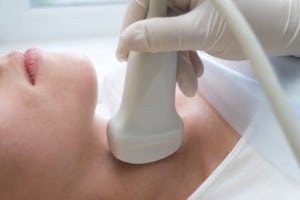
Bedside ultrasound is faster than radiography at identifying pneumothorax after central venous catheter insertion. When a central venous catheter malposition exists, bedside ultrasound will identify four out of every five earlier than chest radiography” Ablordeppey et al (2016). Abstract: OBJECTIVE: We performed a systematic review and meta-analysis to examine the accuracy of bedside ultrasound for […]
Case study describes PICC line placement alongside cardiac pacemakers

We share a case of two successful PICC insertions in a 97-year-old patient with bilateral pacemaker placement, that have not been reported previously” Sun et al (2016). Abstract: Peripherally inserted central catheters (PICCs) have been placed through the peripheral veins, and the best location for the tip of the PICCs is the lower third of […]
Internal jugular dimensions and common carotid overlapping mapped

This preclinical study was designed to determine by ultrasound technique relative topographic characteristics in humans of the internal jugular veins and common carotid arteries at different levels on both sides of the neck” Norin et al (2016). Abstract: Background: Cannulation of the internal jugular vein may be associated with inadvertent puncture of the common carotid […]
Proctoclysis as a method of fluid administration in an emergency setting

A novel device is now available that offers an easy route for administration of medications or fluids via rectal mucosal absorption (also referred to as proctoclysis in the case of fluid administration and subsequent absorption)” Honasoge et al (2016). Abstract: The available routes of administration commonly used for medications and fluids in the acute care […]
Transient paresis after neonatal PICC line insertion

Obtaining intravascular access in the neonatal intensive care unit (NICU) is not only critical but also technically challenging” Payne et al (2016). Abstract: Obtaining intravascular access in the neonatal intensive care unit (NICU) is not only critical but also technically challenging. Malposition of the catheter tip is a known and well-documented complication. Specifically, peripherally inserted […]
Outpatient parenteral antimicrobial therapy in Spain

This is the first programme of OPAT administration not dependent on Home Hospitalization Service in Spain, which could allow to optimize the hospital and primary care resources available” Ruiz-Campuzano et al (2016). Abstract: OBJECTIVE: Outpatient parenteral antimicrobial therapy (OPAT) programs are a good assistance option in a wide variety of infectious diseases. Our aim was […]
How to increase the accuracy of ultrasound-guided vascular access?

The aim of this observational cohort study was to investigate whether adding guidance markers on a US system would increase the accuracy of US-guided needle tip placement compared to no guidance markers” Thorn et al (2016). Abstract: Introduction: Peripheral ultrasound (US)-guided vascular access is gaining popularity. Though studies have demonstrated that US-guided vascular access has […]
Air embolism prevention after tunnelled central venous catheter removal

We present a useful technique that may prevent vascular air embolism and severe bleeding” Letachowicz et al (2016). Abstract: Introduction: Severe, life-threating, complications might occur on dialysis catheter removal. [ctt link=”0pEbz” template=”1″]ReTweet if useful… Air embolism prevention after tunnelled central venous catheter removal http://ctt.ec/0pEbz+ @ivteam #ivteam[/ctt] Methods: We present a useful technique that may prevent […]
Vascular access cannulation is an essential skill for dialysis nurses

The risk of an acute VA complication could be reduced with appropriate training of nurses, physicians and patients. This could potentially prolong the VA life” Parisotto et al (2016). Abstract: Background/aim: Vascular access (VA) cannulation is an essential skill for dialysis nurses: failure to correctly repeat this operation daily may result in serious complications for […]
Article describes how to insert a peripheral cannula

Peripheral cannulation is a common procedure that requires high standards of care and management to optimise patient outcomes” Shaw (20016). Rationale and key points: This article aims to assist practitioners to undertake the safe and effective insertion of a peripheral cannula. It provides information on best practice related to peripheral cannulation with an open-ported safety […]