
Neurologic sequelae that can develop as a result of central venous stenosis

This paper will summarize findings from case reports that describe the neurologic sequelae that can develop as a result of central venous stenosis/occlusion in end-stage renal disease patients with a functional arteriovenous access” Wasse (2017). Abstract: While central venous stenosis is a common consequence of protracted central venous catheter use, intracardiac device transvenous leads, and […]
Short-axis versus long-axis approaches to ultrasound-guided subclavian vein cannulation

The aim of this study was to compare the success rate and safety of short-axis versus long-axis approaches to ultrasound-guided subclavian vein cannulation” Vezzani et al (2017). Abstract: PURPOSE: The aim of this study was to compare the success rate and safety of short-axis versus long-axis approaches to ultrasound-guided subclavian vein cannulation. [ctt link=”z5jP3″ template=”1″]ReTweet […]
Self-reporting or mandatory reporting of CLABSI rates

We evaluate associations between Leapfrog SPS and Medicare measures, and the impact of SPS on HSS grades” Smith et al (2017). Abstract: BACKGROUND: Voluntary Leapfrog Safe Practices Score (SPS) measures were among the first public reports of hospital performance. Recently, Medicare’s Hospital Compare website has reported compulsory measures. Leapfrog’s Hospital Safety Score (HSS) grades incorporate […]
Audit of the management of severe sepsis and septic shock patients

The audit checklist was created based on the protocols of Surviving Sepsis Campaign and British Royal College recommendations” Alavi-Moghaddam et al (2017). Abstract: INTRODUCTION: Although significant development in the field of medicine is achieved, sepsis is still a major issue threatening humans’ lives. This study was aimed to audit the management of severe sepsis and […]
Pharmacokinetic effects of humeral intraosseous vasopressin

The purpose of this study was to evaluate the effects of HIO and IV vasopressin, on the occurrence, odds, and time of return of spontaneous circulation (ROSC) and pharmacokinetic measures in a swine model of VF” Burgert et al (2017). Abstract: INTRODUCTION: The American Heart Association (AHA; Dallas, Texas USA) and European Resuscitation Council (Niel, […]
Erroneous blood results following central venous catheter sampling

While on the TPE, two consecutive blood samples drawn from the proximal lumen of the apheresis catheter yielded K1levels of 9.41 and 8.71 mEq/L (normal, 3.5-5.5 mEq/L), respectively” Mustieles et al (2017). Abstract: “We report the case of a patient undergoing therapeutic plasma exchange (TPE) because of acute liver failure after hepatitis B virus infection […]
Patient satisfaction with self-administration of antibiotics in elastomeric pumps

Self-administration of antibiotics using elastomeric pumps has become the most frequently used treatment modality at the outpatient parenteral antimicrobial therapy (OPAT) unit of the University Hospital of Lausanne” Saillen et al (2017). Abstract: Self-administration of antibiotics using elastomeric pumps has become the most frequently used treatment modality at the outpatient parenteral antimicrobial therapy (OPAT) unit […]
Vascular access nurse role and the impact on PICC use in US hospitals

Vascular access nurses and their perceived role as part of the healthcare team are associated with PICC use in hospitals. Strong inter-professional collaboration and respect may help ensure more appropriate use of PICCs” Krein et al (2017). Abstract: BACKGROUND: The presence and proliferation of vascular access nursing in hospital settings has been identified as a […]
Checklists, education and feedback significantly reduced CLABSI

Our quality improvement initiative using checklists, supported with education and feedback, significantly reduced CLABSI in our neonatal unit” Taylor et al (2017). Abstract: Central line associated blood stream infections (CLABSI) are the most common complication of central catheters in neonates. These infections increase length of hospital stay, hospital costs and impact on mortality and morbidities. […]
How to manage the phlebotomy pre-analytical phase?

The pre-analytical phase encompasses all the procedures before the start of laboratory testing. This phase of the testing process is responsible for the majority of the laboratory errors, since the related procedures involve many sorts of non-laboratory professionals working outside the laboratory setting, thus without direct supervision by the laboratory staff” Lima-Oliveira et al (2017). […]
How to preserve vascular access in patients undergoing hemodialysis
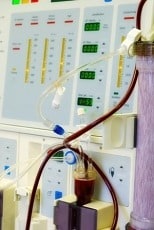
Central venous stenosis or occlusion is a common and vexing problem in patients undergoing hemodialysis” Horikawa and Quencer (2017). Abstract: Central venous stenosis or occlusion is a common and vexing problem in patients undergoing hemodialysis. Typical presenting symptoms include arm swelling and prolonged bleeding after hemodialysis. Despite multiple treatment approaches, these stenoses tend to recur […]
3D positioning system assists vascular access procedures

The results of its testing on the task of needle insertion into the blood vessel model diagnostics are presented” Bychkov et al (2017). Abstract: We describe a universal system for research in combined real-time optoacoustic (OA) and laser-ultrasonic (LU) imaging. The results of its testing on the task of needle insertion into the blood vessel […]
Central venous catheter exit-site and tunnel infection treatment options

Catheter-related bloodstream infections, exit-site infections, and tunnel infections are common complications related to hemodialysis central venous catheter use” Miller et al (2016). Abstract: Catheter-related bloodstream infections, exit-site infections, and tunnel infections are common complications related to hemodialysis central venous catheter use. The various definitions of catheter-related infections are reviewed, and various preventive strategies are discussed. […]
Why are dialysis vascular access management guidelines controversial?

Dialysis vascular access management in the United States changed significantly after National Kidney Foundation-Kidney Disease Outcome Quality Initiative (NKF-KDOQI) clinical practice guidelines were first published in 1997” Sequeira et al (2017). Abstract: Dialysis vascular access management in the United States changed significantly after National Kidney Foundation-Kidney Disease Outcome Quality Initiative (NKF-KDOQI) clinical practice guidelines were […]
Clinical leadership the main recommendation to reduce blood culture contamination rates

The evidence shows that the new process decreased the blood culture contamination rate from a baseline rate of 5.37% to 1.76%” Moeller (2016).
Jet injection of Lidocaine for IV-related pain management

Our objective was to increase JIL use with IV placements in our ED from 11% at baseline to 50% within 12 months” Jain et al (2017). Abstract: BACKGROUND AND OBJECTIVE: Venipuncture is a leading cause of procedural pain for children. Jet injection of lidocaine (JIL; J-Tip) has been demonstrated to be effective in controlling intravenous […]
What are the treatment options for upper extremity deep vein thrombosis?

In this article, the authors describe the evidence for the currently available treatment options and an approach to a patient with acute UEDVT” Carlon and Sudheendra (2017). Abstract: Approximately 10% of all deep vein thromboses occur in the upper extremity, and that number is increasing due to the use of peripherally inserted central catheters. Sequelae […]
Intracavitary electrocardiogram guidance for PICC placement in patients with cancer

Intracavitary electrocardiogram (IC ECG) guidance emerges as a new technique for peripherally inserted central catheters (PICCs) placement and demonstrates many potential advantages in recent observational studies” Yuan et al (2017). Abstract: BACKGROUND: Intracavitary electrocardiogram (IC ECG) guidance emerges as a new technique for peripherally inserted central catheters (PICCs) placement and demonstrates many potential advantages in […]
Acute dental infections managed within an OPAT program

This study aims to address this knowledge gap through evaluation of ADI referrals to a regional OPAT program in a large Canadian center” Connors et al (2017). Abstract: BACKGROUND: The number of Acute Dental Infections (ADI) presenting for emergency department (ED) care are steadily increasing. Outpatient Parenteral Antibiotic Therapy (OPAT) programs are increasingly utilized as […]
Type of vascular access and the incidence of mortality in Japanese dialysis patients

The aim of the present study was to examine the association between the type of vascular access at the initiation of dialysis and the incidence of mortality in Japan” Ozeki et al (2017). Abstract: Objective: The National Kidney Foundation (NKF) Kidney Disease Outcome Quality Initiative (KDOQI) guidelines have recommended the use of arteriovenous fistula (AVF) […]
How to correct coagulopathy prior CVC placement?

Correction of coagulopathy prior to central venous catheter (CVC) placement is advocated by guidelines, while retrospective studies support restrictive use of transfusion products” van de Weerdt et al (2017). Abstract: BACKGROUND: Correction of coagulopathy prior to central venous catheter (CVC) placement is advocated by guidelines, while retrospective studies support restrictive use of transfusion products. STUDY […]
PICC line catheters and long-term home parenteral nutrition

The objective of this study was to examine a group of HPN patients with a PICC in place for more than six months, and the complications associated with PICC removal” Opilla (2017). Abstract: Parenteral nutrition is administered through a central venous catheter(CVC). Peripherally inserted central catheters (PICC) are appropriate for home parenteral nutrition (HPN). The […]
PICC induced right atrium thrombosis and superior vena cava dissection

A peripherally inserted central catheter (PICC) was inserted because the patient had poor venous access. Transesophageal echocardiography was done to rule out infective endocarditis. The test showed thrombus attached to the PICC line” Shah et al (2017). Abstract: A 42-year-old woman with past medical history of intravenous drug abuse was admitted to hospital with fever […]
Septic pulmonary emboli detection in children with CLABSI

The purpose of this article is to describe the role of 18F-FDG PET/CT in the diagnosis of septic pulmonary embolism in children with S. aureus catheter-related bacteremia” Méndez-Echevarria et al (2017). Abstract: PURPOSE: The role of 18F-fluorodeoxyglucose positron emission tomography-computed tomography (18F-FDG PET/CT) in the diagnosis of metastatic infectious foci in children with catheter-related blood […]
The role of CLABSI prevention bundles in Thailand

We evaluated the practices used in Thai hospitals to prevent catheter-associated urinary tract infection (CAUTI), central line-associated bloodstream infection (CLABSI), and ventilator-associated pneumonia (VAP)” Apisarnthanarak et al (2017). Abstract: BACKGROUND: We evaluated the practices used in Thai hospitals to prevent catheter-associated urinary tract infection (CAUTI), central line-associated bloodstream infection (CLABSI), and ventilator-associated pneumonia (VAP). METHODS: […]
What is the incidence of central access catheter hub bacterial contamination?

“This study found a high incidence of central access catheter hub bacterial contamination, which correlated with positive blood cultures in 2 of 3 total bacteremia cases identified in the 45 patients” Holroyd et al (2017).
Implementing a framework prevent healthcare-acquired infection harm

The purpose of this paper is to provide a practical framework that health care organizations could use to decrease preventable healthcare-acquired harms” Pronovost et al (2017). Abstract: Purpose: The purpose of this paper is to provide a practical framework that health care organizations could use to decrease preventable healthcare-acquired harms. Design/methodology/approach: An existing theory of […]
What is the learning process associated with haptic IV simulator?

Combining the haptic IV simulator with practical experience on the IV arm may be the best practice for learning IV insertion” McWilliams and Malecha (2017). Abstract: Objective: The objective of this review was to compare traditional intravenous (IV) insertion instructional methods with the use of haptic IV simulators. Design: An integrative research design was used […]
Four step approach to intraosseous access training

The essentials of the IO access procedure can be taught to medical students using a modified version of the Walker and Peyton’s four-step approach and the checklist used was found reliable” Afzali et al (2017). Abstract: BACKGROUND: The intraosseous (IO) access is an alternative route for vascular access when peripheral intravascular catheterization cannot be obtained. […]
Case study describes retained intraosseous sternal needles

We discuss a rare complication of intraosseous needle insertion in two patients where the needle tip remained in the sternum after the device had been removed” Hodgetts et al (2017). Abstract: Sternal intraosseous devices are widely used in both civilian and military trauma when vascular access is difficult to establish. We discuss a rare complication […]