
Improving needle visualization during ultrasound-guided central venous catheter placement

This study evaluated the existing technology used to improve the safety and ease of ultrasound-guided central venous catheterization” Ikhsan et al (2017). Abstract: This study evaluated the existing technology used to improve the safety and ease of ultrasound-guided central venous catheterization. Electronic database searches were conducted in Scopus, IEEE, Google Patents, and relevant conference databases […]
Frequency of first-attempt ultrasound assisted axillary vein cannulation

The primary objective was to compare the frequency of first-attempt successful axillary vein cannulation by the Seldinger technique using out-of-plane ultrasound guidance versus in-plane imaging” Maddali et al (2017). Abstract: OBJECTIVE: The primary objective was to compare the frequency of first-attempt successful axillary vein cannulation by the Seldinger technique using out-of-plane ultrasound guidance versus in-plane […]
Systematic review of YouTube videos that demonstrate blood sampling in newborns

Objective of this study was to conduct a systematic review of YouTube videos showing neonatal blood sampling, and to evaluate pain management and comforting interventions used” Bueno et al (2017). Abstract: Objective of this study was to conduct a systematic review of YouTube videos showing neonatal blood sampling, and to evaluate pain management and comforting […]
Effectiveness of gentamicin lock solutions for dialysis catheters

The lack of antibiotic lock solutions led to an increase in bacteremia rates and higher financial cost for inpatient management of bacteremia. Our findings highlight the importance of consistent supply of pharmaceuticals” Goh et al (2017). Abstract: The use of antibiotic lock solutions as prophylaxis for catheter-associated blood stream infection (CRBSI) has been shown to […]
Evaluation of outpatient parenteral antimicrobial therapy (OPAT) models

Evaluate evidence of the efficacy, safety, acceptability and cost-effectiveness of outpatient parenteral antimicrobial therapy (OPAT) models” Mitchell et al (2017). Abstract: OBJECTIVE: Evaluate evidence of the efficacy, safety, acceptability and cost-effectiveness of outpatient parenteral antimicrobial therapy (OPAT) models. DESIGN: A systematic review. [ctt link=”z36Xa” template=”1″]ReTweet if useful… Evaluation of outpatient parenteral antimicrobial therapy (OPAT) models […]
Authors investigate the care coordination component of OPAT patient preparation

Outpatient parenteral or prolonged oral antibiotic therapy (OPAT) programs reduce inpatient healthcare costs by shifting care to outpatient settings. Care coordination (CC) is a necessary component to successfully transition patients. Our objective was to assess outcomes of provider time spent on nonreimbursable CC activities in a pediatric OPAT program” Vaz et al (2017). Abstract: BACKGROUND: […]
Survey describes variation in use of technology among vascular access specialists

Technology use by vascular access clinicians while placing PICCs is associated with clinician characteristics, work setting and practice factors. Understanding whether such differences influence clinical care or patient outcomes appears necessary” Chopra et al (2017). Abstract: BACKGROUND: While the use of technologies such as ultrasound and electrocardiographic (ECG) guidance systems to place peripherally inserted central […]
Introducing a novel non-antibiotic nitroglycerin based catheter lock solution

We evaluated the safety and efficacy of a novel non-antibiotic catheter lock solution for the prevention of CLABSI” Chaftari et al (2017). Abstract: Background: For long-term central lines (CL), the lumen is the major source of central line associated bloodstream infections (CLABSI). Current standard of care for maintaining catheter patency includes flushing the CL with […]
Monitoring blood pressure through an intraosseous device

Intraosseous pressure readings can be obtained in healthy human volunteers” Salzman et al (2017). Abstract: STUDY OBJECTIVE: Invasively monitoring blood pressure through the IO device has not been thoroughly demonstrated. This study attempted to establish baseline values of IO pressure in a healthy human population. [ctt link=”y0xDs” template=”1″]ReTweet if useful… Monitoring blood pressure through an […]
Teaching medical students ultrasound-guided peripheral vascular access

The group receiving traditional face-to-face teaching on ultrasound-guided vascular access, performed significantly better than those not receiving education” Lian et al (2017). Abstract: INTRODUCTION: Ultrasound is recommended to guide insertion of peripheral intravenous vascular cannulae (PIVC) where difficulty is experienced. Ultrasound machines are now common-place and junior doctors are often expected to be able to […]
CLABSI characteristics and risk factors for intensive care unit patients

We aimed to investigate the characteristics and the risk factors for mortality in patients with CLABSIs in intensive care units (ICUs) and provide the relevant data” Atilla et al (2017). Abstract: BACKGROUND/AIM: Central line-associated bloodstream infections (CLABSIs) are associated with substantial morbidity and mortality and the infection rates vary in a wide range1397645907(high: 62.5%; low: […]
Establishing a vascular access team in the emergency department

The aim of this article is to describe a needs assessment performed in a level-one academic emergency department to establish the need for a dedicated team for patients with difficult vascular access” Whalen et al (2017). Abstract: Peripheral vascular access is one of the most common procedures performed in emergency departments across the United States. […]
Taking blood samples from short peripheral IV catheters

A new US Food and Drug Administration-cleared needleless blood collection device (PIVO; Velano Vascular, San Francisco, CA) for short peripheral catheters was compared with conventional venipuncture for collecting blood samples for routine laboratory analysis from adult healthy volunteers” Cadacio and Nachamkin (2017). Abstract: A new US Food and Drug Administration-cleared needleless blood collection device (PIVO; […]
What is the impact of extending short peripheral IV catheter dwell time

Removing and not routinely restarting unneccessary intravenous catheters can help prevent catheter-related infections and other vascular complications and reduce cost” Ansel et al (2017). Abstract: Complications involving short peripheral catheters (SPCs) can significantly affect health care costs, patient quality of life, morbidity, mortality, and treatment expense, especially when the hospital stay is lengthened. This article […]
Ultrasound assisted peripheral IV placement and thrombosis risk
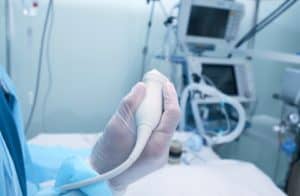
This study compared the rate of venous thrombosis in patients with and without US-guided catheter placement” Holder et al (2017). Abstract: Approximately 90% of hospitalized patients have a short peripheral intravenous catheter (SPC) placed. Methods of inserting the catheter have evolved over time and now include the use of ultrasound (US)-guided procedures for placement. Little […]
Evidence based practice for implantable port care

This article identifies strategies implemented at a comprehensive ambulatory cancer center to integrate professional evidence-based standards and guidelines for implanted port care into nursing practice at the point of care” Conley et al (2017). Abstract: Nearly 3 million central vascular access devices (CVADs) are used in the United States each year. These devices are an […]
Safety review of peripherally inserted central catheters during pregnancy

We investigated the incidence of complications associated with peripherally inserted central line catheters, inserted using a standardized technique, during pregnancy and the postpartum period” Jacques et al (2017). Abstract: PURPOSE: We investigated the incidence of complications associated with peripherally inserted central line catheters, inserted using a standardized technique, during pregnancy and the postpartum period. [ctt […]
Case report examines the differential diagnosis of trabectedin extravasation
However, there is no report of the utility of skin biopsies in the diagnosis of trabectedin extravasation” Yoshimi et al (2017). Extract: “Trabectedin is an alkylating antitumor agent. Studies have reported that trabectedin causes serious tissue injury. However, there is no report of the utility of skin biopsies in the diagnosis of trabectedin extravasation. [ctt […]
Survey compares the management of extravasation injury

Extravasation injury may occur in 0.1–6.5% of patients receiving chemotherapy1 and up to 11% in pediatric patients receiving intravenous (IV) fluids” Ching and Wong (2017). Abstract: Extravasation injury may occur in 0.1–6.5% of patients receiving chemotherapy1 and up to 11% in pediatric patients receiving intravenous (IV) fluids. Furthermore, rates extending to 70% have been observed […]
Prevalence of bacterial contamination in platelet concentrates in Mexico

Most common bacterial sepsis associated with transfusion is caused by contaminated Platelet Concentrates (PC). The screening of PC to detect bacterial contamination is obligatory in Mexico, and it is carried out in quality control programs” Ibáñez-Cervantes et al (2017). Abstract: OBJECTIVES: Most common bacterial sepsis associated with transfusion is caused by contaminated Platelet Concentrates (PC). […]
Avoiding nerve injury during venipuncture procedures

The median and radial nerves are two important neural structures found in the cubital fossa. The trajectory and landmarks used to identify their location are important when procedures are done in this area” Voin et al (2017). Abstract: INTRODUCTION: The median and radial nerves are two important neural structures found in the cubital fossa. The […]
Comparison of IV site antimicrobial impregnated disc dressings

To investigate the feasibility and safety of comparing two antimicrobial impregnated discs to prevent CLABSI” Webster et al (2017). Abstract: Background: A number of antimicrobial impregnated discs to prevent central-line associated blood stream infection (CLABSI) are marketed but it is unclear which disc is most effective. [ctt link=”vUKO2″ template=”1″]ReTweet if useful… Comparison of IV site […]
Urgent peritoneal dialysis decreases use of central venous catheters

Recent use of urgent peritoneal dialysis as the initial dialysis modality has resulted in decreased exposure to CVCs and in-center HD” Moist and Lok (2017). Abstract: The initiation of dialysis is a challenging time of transition for patients, families, and their supporters. Patients with exposure to a comprehensive chronic kidney disease clinic may have had […]
Successes and controversies in neonatal CLABSI reduction

Over the past decade, numerous local, statewide, and national quality improvement initiatives have resulted in a significant reduction in CLABSI rates” Mobley and Bizzarro (2017). Abstract: Central line-associated bloodstream infections (CLABSI) are among the most common healthcare-acquired infections in the neonatal intensive care unit (NICU) population and are associated with an increased risk of morbidity […]
Massive hemothorax following placement of central venous catheter

However, a massive left hemothorax developed because of perforation of the brachiocephalic vein and violation of the pleural space” Wetzel et al (2017). Abstract: An elderly male presented for emergent repair of a ruptured abdominal aortic aneurysm. For anticipated volume resuscitation, vasopressor administration, and hemodynamic monitoring, a large-bore central venous catheter was placed in the […]
Families can help detect medical errors and safety incidents that hospitals miss

This review discusses new research comparing rates of medical errors and adverse events collected by interviews with families or caregivers to standard methods of hospital safety surveillance” McBride (2017). Abstract: Identifying medical errors and adverse events (events that cause harm) is an essential part of hospital safety surveillance systems, but usually do not include input […]
What is the effect of tourniquet application after local forearm warming prior to cannulation?

To evaluate the effectiveness of tourniquet application after local forearm warming with that of tourniquet application alone in young and middle-aged adults” Yamagami et al (2017). Abstract: BACKGROUND: Local forearm warming before tourniquet application is often used to promote venodilation for peripheral intravenous cannulation; however, few studies have compared the effect of tourniquet application with […]
Effectiveness of beraprost sodium in maintaining vascular access patency

This study aimed to investigate the effects of beraprost sodium, an oral synthetic analog of prostaglandin I2, on vascular access patency in patients on hemodialysis who experienced primary hemodialysis vascular access failure” Kim et al (2017). Abstract: PURPOSE: Hemodialysis vascular access dysfunction, mostly attributed to neointimal hyperplasia, is a major cause of morbidity and hospitalization […]
Nursing undergraduate students’ knowledge of intravenous procedures

to assess the knowledge of scholars on Nursing regarding simple hands hygiene (SHH), blood pressure measurement (BP), peripheral venipuncture (PV) with venous catheter and male urethral catheterization delay (UCD) procedures” Melo et al (2017). Abstract: OBJECTIVE: to assess the knowledge of scholars on Nursing regarding simple hands hygiene (SHH), blood pressure measurement (BP), peripheral venipuncture […]
Draft genome sequence of Roseomonas mucosa strain AU37 isolated from peripheral IV catheter tip

Here, we report the draft genome sequence of Roseomonas mucosa strain AU37, isolated from a peripheral intravenous catheter tip” Abu Choudhury et al 92017). Abstract: Roseomonas mucosa is an opportunistic pathogen that causes infections in humans and is often associated with vascular catheter-related bacteremia. Here, we report the draft genome sequence of Roseomonas mucosa strain […]