
Congenital anomaly results in central venous catheter malposition

Reviewing the patient’s thoracic computed tomography scan revealed, patient had congenital anomaly and double superior vena cava that explained the abnormal course of left subclavian CVC along the left border of mediastinum” Desai et al (2017). Abstract: A 50-year-old male was admitted to Intensive Care Unit with head and chest injury needed multiple central venous […]
Simulated review of four common methods of adrenaline administration

To compare, quantify, and describe the time-delays associated with four common methods of adrenaline administration in the simulated setting of impending cardiac arrest” Brindley et al (2017). Abstract: PURPOSE: To compare, quantify, and describe the time-delays associated with four common methods of adrenaline administration in the simulated setting of impending cardiac arrest. METHODS: Using sham […]
Hard limit optimization of intelligent infusion pump technology

There is a lack of data evaluating the impact of hard limit implementation into intelligent infusion pump technology (IIPT). The purpose of this study was to determine if incorporation of vasopressor upper hard limits (UHL) into IIPT increases efficacy of alerts by preventing pump programming errors” Vadiei et al (2017). Abstract: BACKGROUND: There is a […]
Longitudinal or transverse approaches to ultrasound-guided axillary vein cannulation

The objective of this study was to identify which transducer orientation, longitudinal or transverse, is better for imaging the axillary vein with ultrasound” He et al (2017). Abstract: BACKGROUND: The axillary vein is an easily accessible vessel that can be used for ultrasound-guided central vascular access and offers an alternative to the internal jugular and […]
Targeted interventions on trends in central line-associated bloodstream infection

To assess the impact of targeted interventions on trends in central line-associated bloodstream infection” Cho et al (2017). Abstract: Objective: To assess the impact of targeted interventions on trends in central line-associated bloodstream infection. Design: A before-and-after study between January 2013 and September 2014. [ctt link=”6JYf1″ template=”1″]ReTweet if useful… Targeted interventions on trends in central […]
Full text article presents strategies to prevent bloodborne pathogen exposure

We urge all hospitals to evaluate these best practices and, where possible, implement them in an effort to reduce the persistent problem of BBF exposures” Good and Grimmond (2017). Abstract: The Exposure Study of Occupational Practice (EXPO-S.T.O.P.) is the Association of Occupational Health Professionals in Healthcare’s (AOHP) national blood and body fluid exposure study. The […]
The use of normalized body weight to determine antibiotic dose

To evaluate the ability of body-weight-driven renal function assessment (RFA) formulae to predict on-target elimination rate ranges for gentamicin in patients with varying degrees of renal function” Ariano et al (2017). Abstract: Objectives: To evaluate the ability of body-weight-driven renal function assessment (RFA) formulae to predict on-target elimination rate ranges for gentamicin in patients with […]
Central venous catheter-induced right atrial thrombi

Catheter-induced right atrial thrombi (CRAT) is a serious complication of central venous catheterization” Aval et al (2017). Abstract: Catheter-induced right atrial thrombi (CRAT) is a serious complication of central venous catheterization. Herein we report a case of large hypermobile right atrial thrombi in a 57- year-old man with hemodialysis catheter in right internal jugular vein. […]
What is the cost of peripheral intravenous cannulation in neonates

We conducted an audit of peripheral venous access in neonates admitted to paediatric surgical intensive care unit to study the morbidity, time spent on cannulation and cost with its use” Tandale et al (2017). Abstract: INTRODUCTION: Peripheral venous access in sick neonates is indicated for administration of fluids, drugs or nutrients. AIM: We conducted an […]
Intracavitary electrocardiogram guidance in PICC tip placement in neonates

Correct tip location is crucial for a peripherally inserted central catheter (PICC) to maximize the effects of central venous infusion” Zhou et al (2017). Abstract: Correct tip location is crucial for a peripherally inserted central catheter (PICC) to maximize the effects of central venous infusion. However, it is difficult to place the tip in a […]
Ultrasound improves patient safety during deep needle procedures
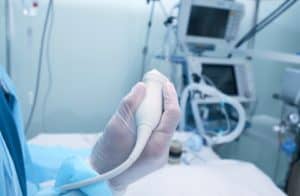
There is now mounting evidence that clinician-performed point-of-care ultrasound improves patient safety, enhances health care quality, and reduces health care cost for deep needle procedures” Peabody and Mandavia (2017). Abstract: Promoting patient safety and increasing health care quality have dominated the health care landscape during the last 15 years. Health care regulators and payers are […]
Compatibility of vancomycin with existing and novel β-lactam/β-lactamase inhibitors

The compatibility of vancomycin with existing and novel β-lactam/β-lactamase inhibitors at clinically relevant concentrations in 5% dextrose in water has not been fully explored to date” Meyer et al (2017). Abstract: Objectives: The compatibility of vancomycin with existing and novel β-lactam/β-lactamase inhibitors at clinically relevant concentrations in 5% dextrose in water has not been fully […]
Internal medicine point-of-care ultrasound curriculum recommendations

We recommend four POCUS applications for the core PGY 1-3 curriculum (inferior vena cava, lung B lines, pleural effusion, and abdominal free fluid) and three ultrasound-guided procedures (central venous catheterization, thoracentesis, and paracentesis)” Ma et al (2017). Abstract: Bedside point-of-care ultrasound (POCUS) is increasingly used to assess medical patients. At present, no consensus exists for […]
The critical role of ultrasound guidance for vascular access in Pakistan

The aim of this letter is to create awareness among the practicing anaesthetists and critical care physicians regarding the critical role of ultrasound guidance for vascular access to achieve best possible patient outcome” Akhtar et al (2017). Extract: “Ultrasound application is now evolving to become a standard of care practice in critical care areas for […]
Intraosseous access devices improve the resuscitation process

Key steps health care systems can take to enhance the quality of CPR and, potentially, to improve outcomes, include optimizing chest compressions; avoiding hyperventilation; encouraging intraosseus access, and monitoring capnography” Nassar and Kerber (2017). Abstract: Cardiac arrest continues to represent a public health burden with most patients having dismal outcomes. Cardiopulmonary resuscitation (CPR) is a […]
Skin antisepsis application method is an important aspect of CLABSI prevention

However, in the opinion of the authors, current guidelines fail to address a key element: the method of application of the antiseptic agent” Casey et al (2017). Abstract: Numerous guidelines have been published by consensus groups worldwide regarding optimal skin antisepsis prior to surgical incision or insertion of intravascular catheters [1–3]. However, in the opinion […]
Ultrasound-guided catheterization of the left subclavian vein in a patient with PLSVC

Ultrasound is used for safe and correct placement of CVC; however, the presence of PLSVC could not be detected by ultrasonography in this case” Park et al (2017). Abstract: RATIONALE: A persistent left superior vena cava (PLSVC) is rare, but the most common thoracic venous anomaly. We report a case of PLSVC unrecognized during left […]
Implantable port placement via the anterior jugular venous system

We report on a patient who was referred for port implantation with a two-chamber pacemaker aggregate on the right and total occlusion of the central veins on the left side” Rott and Boecker (2017). Abstract: We report on a patient who was referred for port implantation with a two-chamber pacemaker aggregate on the right and […]
Endoluminal dilation as an implantable port removal technique

Sometimes scar tissue can develop around the device, making it resistant to removal even after application of forceful traction. We report a case of stuck port-a-cath that was extract by using endoluminal dilatation technique” Cerini et al (2017). Abstract: Port-a-cath is a type of central venous catheter (CVC) designed to allow repeated access to the […]
Relationship between alterations in intestinal microbiota and central line infections

Marked alterations of the intestinal microbiota with decreased level of acetate were shown in SBS patients compared with healthy controls. Over-abundance of Proteobacteria (especially Enterobacteriaceae) was found in the samples from the PNALD and CLABSI Groups” Wang et al (2017). Abstract: BACKGROUND: The gut microbiota plays a vital role in modulating the metabolic and immune […]
Psychological safety and reporting nonadherence to CLABSI checklist

Patient safety checklists are ubiquitous in health care. Nurses bear significant responsibility for ensuring checklist adherence. To report nonadherence to a checklist and stop an unsafe procedure, a workplace climate of psychological safety is needed” Gilmartin et al (2017). Abstract: Patient safety checklists are ubiquitous in health care. Nurses bear significant responsibility for ensuring checklist […]
Study offers comparison of four intraosseous access devices

“The aim of the study was to compare the success rate, procedure time, and user satisfaction of pediatric NIO™ compared to Pediatric BIG®, EZ-IO®, and Jamshidi intraosseous access devices” Bielski et al (2017).
Costs of outpatient parenteral antimicrobial therapy (OPAT) administered in Spain

The aim of this study was to assess the direct healthcare costs of outpatient parenteral antimicrobial therapy (OPAT) administered by hospital at home (HaH) units in Spain” González-Ramallo et al (2017). Abstract: The aim of this study was to assess the direct healthcare costs of outpatient parenteral antimicrobial therapy (OPAT) administered by hospital at home […]
Review of core competency medical training includes central line placement

Invasive bedside procedures are core competencies for internal medicine, yet no formal training guidelines exist. The authors conducted a scoping review and realist synthesis to characterize current training for lumbar puncture, arthrocentesis, paracentesis, thoracentesis, and central venous catheterization” Brydges et al (2017). Abstract: PURPOSE: Invasive bedside procedures are core competencies for internal medicine, yet no […]
Technique for tunneled central line placement in children
The single-incision technique for central venous access has comparable procedure time and fluoroscopy time with no difference in complication rates between the two techniques in a pediatric population” Ashton et al (2017). Abstract: PURPOSE: A single-incision technique for tunneled central venous access has been described. This study evaluates whether single-incision technique in children is comparable […]
Continuous thermographic observation may predict extravasation

As macroscopic observation may overlook symptoms during infusion, we focused on skin temperature changes at puncture sites and studied thermographic patterns related to induration or necrosis caused by extravasation” Oya et al (2017). Abstract: PURPOSE: Extravasation, or leakage of vesicant drugs into subcutaneous tissues, causes serious complications such as induration and necrosis in chemotherapy-treated patients. […]
Surface fabrication of central venous catheters to combat biofilm formation

So, herein we sought to compare the performance of AgNPs generated through biogenic routes using bacteria and plant extract for their antibacterial and antibiofilm potential against biofilm forming Staphylococcus aureus” Thomas et al (2017). Abstract: In spite of newer innovations and process improvements, catheter related infections still pose serious threat to hospitalized patients. Silver nanoparticles […]
Central venous catheter fracture during pacemaker lead extraction

In this case report, we present an unusual and potentially life- threatening complication of cardiac electronic device lead extraction…” Rizkallah et al (2017). Introduction: In this case report, we present an unusual and potentially life- threatening complication of cardiac electronic device lead extraction during which a peripherally inserted central venous catheter (CVC) coursing ipsilaterally to […]
Accidental intravenous administration of paracetamol syrup

An 18-month-old child presented with vomiting and diarrhea. Due to a rise in temperature, paracetamol syrup was prescribed, but a nurse inadvertently administered the drug IV through the peripheral venous access” El Mazloum et al (2016). Abstract: OBJECTIVE AND IMPORTANCE: Medication administration errors occur frequently in clinical practice. CLINICAL PRESENTATION: An 18-month-old child presented with […]
Oncology nurses’ knowledge of guidelines for CLABSI prevention

This descriptive cross-sectional survey evaluated Jordanian oncology nurses’ knowledge of the guidelines for preventing central venous catheter–associated infection” Al Qadire (2017). Abstract: This descriptive cross-sectional survey evaluated Jordanian oncology nurses’ knowledge of the guidelines for preventing central venous catheter–associated infection. Poor knowledge was evident from the very low mean total scores and the low percentage […]