
Role of the Registered Nurse in the insertion of central venous access devices

As the result of requests from several state boards of nursing, the Infusion Nurses Society (INS) convened a task force to determine whether insertion of central vascular access devices by appropriately trained registered nurses (RNs) should be recommended” Plohal et al (2017). Abstract: As the result of requests from several state boards of nursing, the […]
Implementing a multidimensional central-line bundle

This study assessed the effect of the central line bundle on the rate of central line-associated bloodstream infections (CLABSI) in intensive care units (ICUs) in Taiwan” Lai et al (2017). Abstract: BACKGROUND/PURPOSE: This study assessed the effect of the central line bundle on the rate of central line-associated bloodstream infections (CLABSI) in intensive care units […]
Full text overview of peripherally inserted central catheters

Venous access can be obtained through conventional peripheral intravenous (IV) lines, midline peripheral catheters, and central venous catheters (CVCs)” Gonzalez and Cassaro (2017). Excerpt: The ability to obtain venous access in the inpatient and outpatient setting is one of the most fundamental, yet, crucial components for a large number of diagnostic and therapeutic interventions. It […]
Review of different types of Taurolidine central venous catheter lock solution

In this prospective, randomized, controlled trial, patients were randomized to receive either Taurolock/Hep or Taurolock/U and were followed for 6 months” Al-Ali et al (2017). Abstract: BACKGROUND: Taurolidine citrate with heparin (Taurolock/Hep) is a promising central venous catheter lock solution. Despite its universal use among our hemodialysis patients, the prevalence of catheter malfunction was high. We […]
Guideline development on the management of central venous access

The device selected for central venous access depends on the clinical indication, duration of the treatment, and associated comorbidities. It is important for health care providers to familiarize themselves with the types of central venous catheters available, including information about their indications, contraindications, and potential complications, especially the management of catheters in the setting of […]
Evaluation of central venous catheters coated with a noble metal alloy

We have evaluated the durability of a noble metal coated CVC (the Bactiguard Infectious Protection, BIP CVC) and compared with an uncoated CVC for clinical tolerability (Adverse Events, AEs) and performance, in order to create a baseline for a large future study” Björling et al (2017). Abstract: The use of Central Venous Catheters (CVCs) commonly […]
Peripheral parenteral nutrition solution infection risk

Therefore, we investigated the effects of water soluble vitamins on growth of microorganisms in PPN solutions” Omotani et al (2017). Abstract: Peripheral parenteral nutrition (PPN) solutions contain amino acids, glucose, and electrolytes, with or without some water soluble vitamins. Peripheral venous catheters are one of the causes of catheter related blood stream infection (CRBSI), which […]
Treating central venous haemodialysis catheter malfunction
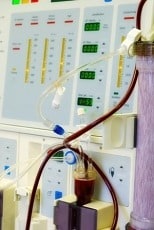
Although discouraged due to high rates of infectious and thrombotic complications as well as technical issues that limit their life span, CVC have the significant advantage of being immediately usable and are the only means of vascular access in a significant number of patients” Kennard et al (2017). Abstract: BACKGROUND: Adequate haemodialysis (HD) in people […]
IV push Cephalosporin antibiotics in the emergency department

To improve the care of patients with sepsis within our 73-bed emergency department (ED), a “first-dose” intravenous push (IVP) cephalosporin antibiotic protocol was initiated” McLaughlin et al (2017). Abstract: Delays in administration of appropriate antibiotics to patients with septic shock are associated with increased mortality. To improve the care of patients with sepsis within our […]
Hand-held robotic device for peripheral intravenous catheterization

In this article, we present the design, development and experimental evaluation of a novel hand-held robotic device for improving the process of peripheral intravenous catheterization by facilitating the needle insertion procedure” Cheng et al (2017). Abstract: Intravenous catheterization is frequently required for numerous medical treatments. However, this process is characterized by a high failure rate, […]
Central venous catheters for chronic hemodialysis
There is mounting evidence that much of the difference in patient outcomes may be explained by patient factors, rather than choice of vascular access” Dumaine et al (2017). Abstract: Since the publication of the first vascular access clinical practice guidelines in 1997, the global nephrology community has dedicated significant time and resources toward increasing the […]
Determine if vapocoolant will reduce pain perception with peripheral intravenous access

The purpose of this study was to investigate whether the use of a topical anesthetic spray (vapocoolant) at the site of intravenous access reduces pain and anxiety associated with peripheral intravenous (PIV) catheter insertion in an adult emergency department population” Edwards and Noah (2017). Abstract: The purpose of this study was to investigate whether the […]
PICCs are suitable for patients receiving stem-cell transplantation

Our data suggest that PICCs are a safe and effective alternative to conventional central venous catheters even in pediatric patients with high risk of infectious and hemorrhagic complications such as patients receiving stem-cell transplantation” Benvenuti et al (2017). Abstract: INTRODUCTION: The aim of our study was to present our experience with the use of peripherally […]
Anti-Candida activity of antimicrobial impregnated central venous catheters

Data from this in vitro study may suggest that patients at high risk for invasive candidosis could benefit from the use of CSS-CVCs” Cobrado et al (2017). Abstract: Background: Whenever the rate of central line-associated bloodstream infections (CLABSIs) remains high even after the implementation of preventive strategies, the use of chlorhexidine/silver sulfadiazine (CSS) or minocycline/rifampin […]
What is the duration of anthracycline infusion in children with cancer?

We aimed to provide recommendations on the infusion duration of anthracycline chemotherapy agents in children with cancer” Loeffen et al (2017). Abstract: We aimed to provide recommendations on the infusion duration of anthracycline chemotherapy agents in children with cancer. This study also serves as a practice example of the essential steps that need to be […]
Stopcock technique delivers lower-than-intended drug doses?

Administration of adenosine through a stopcock delivers doses lower than intended in patients weighing less than 10 kg, which may account for the decreased response of infants to the first dose of adenosine” Weberding et al (2017). Abstract: Study objective: Adenosine administration with a stopcock is the recommended treatment for pediatric patients with acute supraventricular […]
Review of glove use during potential exposure to blood and body fluids

Occupational exposure to blood and body fluids presents a major safety risk for bloodborne viruses to all health care workers (HCWs)” Jain and Clezy (2017). Occupational exposure to blood and body fluids presents a major safety risk for bloodborne viruses to all health care workers (HCWs). In response to human immunodeficiency syndrome (HIV), various strategies […]
Surgical hand preparation with chlorhexidine soap or povidone iodine

Our new double chlorhexidine application permits surgical hand preparation with chlorhexidine, as a safe alternative to use of alcohols, because it can surpass EN12791” Herruzo et al (2017). Abstract: Introduction: Surgical use of 4% chlorhexidine soap (CHX-4) and 10% iodine povidone (PVP-I-10) do not meet the standards defined by EN12791. We investigated whether it would […]
Cutaneous manifestations of phosphate solution extravasation
Extravasation injuries can lead to skin ulceration and nerve and tendon damage, and therefore to permanent disability. We report three cases of phosphate solution extravasation leading to unusual cutaneous manifestations” Verykiou et al (2017). Abstract: Extravasation injuries are common in patients receiving multiple intravenous infusions. Although such injuries are closely associated with the infusion of […]
Impact of ceftriaxone for treatment of MSSA BSI

In this case series, we identified 15 patients receiving ceftriaxone for treatment of MSSA BSI, either following standard of care therapy or as initial therapy” Lowe et al (2017). Abstract: Methicillin-susceptible Staphylococcus aureus (MSSA) causes 45% of S. aureus bloodstream infections (BSI) and is the most important cause of BSI-associated death. The standard of care […]
Self-administered outpatient parenteral antimicrobial therapy

This study aimed to evaluate the efficiency of treatment of infectious endocarditis (IE) via Self-administered Outpatient Parenteral Antimicrobial Therapy (S-OPAT) supported by a shortening hospital admission program in a hospitalization-at-home unit (HAH), including a short review of the literature” Pajarón et al (2017). Abstract: OBJECTIVE: This study aimed to evaluate the efficiency of treatment of […]
Nursing students are at high risk of needlestick injuries

Nursing students are at high risk of NSIs in China. Occupational safety training should be developed and implemented to prevent NSIs among this vulnerable population” Zhang et al (2017). Abstract: Needlestick and sharps injuries (NSIs) are a major cause of occupational injuries for health care workers worldwide. In this study, the authors report the prevalence […]
Is staphylococcus aureus biofilm a cause of bacterial virulence

Staphylococcus aureus biofilm may constitute a major cause of virulence. Our main objective was to analyze whether there was an association between biofilm production and poor outcome in patients with S. aureus bacteremia” Guembe et al (2017). Abstract: Objective: Staphylococcus aureus biofilm may constitute a major cause of virulence. Our main objective was to analyze […]
Nonpharmacological methods of cannulation pain reduction in adults

The aim of this study was to compare the effectiveness in reducing pain during peripheral intravenous catheterization of coughing, blowing into a spirometer and squeezing a stress ball” Yılmaz and Güneş (2017). Abstract: AIMS AND OBJECTIVES: The aim of this study was to compare the effectiveness in reducing pain during peripheral intravenous catheterization of coughing, […]
Inferior petrosal sinus thrombosis in a child due to CVC malposition

To report a case of inferior petrosal sinus(IPS) thrombosis associated with malposition of central venous catheterization (CVC)” Akıncı et al (2017). Abstract: OBJECTIVE: To report a case of inferior petrosal sinus(IPS) thrombosis associated with malposition of central venous catheterization(CVC). [ctt link=”5YdIW” template=”1″]ReTweet if useful… Inferior petrosal sinus thrombosis in a child due to CVC malposition […]
PICC tip migration following CT contrast injection

While they are generally regarded as safe, they are not free from complication. In this case review, we present three cases of PICC tips migrating post-CT contrast pressure injection…” Craigie et al (2017). Abstract: Pressure-injectable peripherally inserted central catheters are now widely used for contrast pressure injections for CT scans. While they are generally regarded […]
Medical liability associated with neonatal peripheral IV catheter insertion

In the presented case, after the positioning of a PVC in a newborn, no clear signs/symptoms of phlebitis were registered before the sixth day and, despite the immediate removal of the catheter, the thrombotic process, secondary to phlebitis, was already occurring, causing serious and permanent disabling outcomes, susceptible to legal medical evaluation and financial compensation” […]
Introduction of a research protocol that examines intravenous access during resuscitation

To compare the effects of central versus peripheral drug administration on the rate of return of organised electrical activity and/or spontaneous circulation during CPR” Nanayakkara and Smulder (2017). Abstract: OBJECTIVE: To compare the effects of central versus peripheral drug administration on the rate of return of organised electrical activity and/or spontaneous circulation during CPR. [ctt […]
High resolution computational fluid dynamic simulation of haemodialysis cannulation

This study utilized computational fluid dynamics on a patient specific radio-cephalic fistula under hemodialysis treatment to determine the dynamics of access recirculation and identify the presence of disturbed flow” Fulker et al (2017). Abstract: Arteriovenous fistulae are the preferred choice of vascular access in hemodialysis patients, however complications such as stenosis can lead to access […]
Interactive online learning for ultrasound-guided central venous catheter insertion

The CVC training module increased declarative knowledge acquisition and retention. No significant difference in simulated CVC performance was found over the three time points” Boet et al (2017). Abstract: Evidence has demonstrated that the use of dynamic ultrasound guidance (USG) for central venous catheter (CVC) significantly decreases attempts, failures, and complication rates. Despite national organizations […]