
Treatment outcomes of drug extravasation in pediatric patients

The aim of this study is to explore the incidence, risk factors and summarize the characteristics and treatment outcomes of extravasation injuries resulting in drug extravasation among Chinese children in our hospital” Yan et al (2017). Abstract: Extravasation injury is a common phenomenon in hospitals. Failure to detect and treat extravasation injury can lead to […]
Improving vancomycin dosing and monitoring

Using the gathered information presented in this paper, two user-friendly and scientifically based dosing strategies are proposed to improve the efficiency of vancomycin dosing while avoiding the risk of nephrotoxicity and minimizing the cost of therapeutic drug monitoring” Elbarbry (2017). Abstract: After more than six decades of its use as the mainstay antibiotic for the […]
Physiologic basis for goal-directed hemodynamic and fluid therapy

The purpose of this narrative review is to describe the pivotal role of the venous circulation in goal-directed hemodynamic and fluid therapy” Gelman and Bigatello (2017). Abstract: PURPOSE: Understanding cardiovascular physiology should help clinicians to understand the purpose of fluid and drug management during the perioperative period. The purpose of this narrative review is to […]
Measurement error in Cyclosporine levels drawn between peripheral and central sources

Despite potential for preanalytical error due to adsorption, cyclosporine infusion and monitoring via CVCs produce results similar to monitoring via peripheral blood draws” Shih et al (2017). Abstract: OBJECTIVES: Cyclosporine is often monitored by drug levels drawn through central venous catheters (CVCs), which may be falsely elevated due to reversible drug adsorption onto the catheter. […]
Efficacy of three topical antiseptic solutions for the prevention of central catheter colonization

To compare the efficacy of three antiseptic solutions [0.5%, and 1.0% alcohol/chlorhexidine gluconate (CHG), and 10% aqueous povidone-iodine (PVI)] for the prevention of intravascular catheter colonization, we conducted a randomized controlled trial in patients from 16 intensive care units in Japan” Yasuda et al (2017). Abstract: BACKGROUND: To compare the efficacy of three antiseptic solutions […]
Lean improvement model applied to the frequency of changing peripheral intravenous catheters

Once finalized, the blended Lean-EBP model now guides improvement work as highlighted in the example of updating our practice for frequency of changing peripheral intravenous catheters” Halm et al (2017). Abstract: In our journey from Magnet designation to a Lean hospital, a team of advanced practice nurses, a nurse scientist, and Lean specialists developed a […]
Evaluation of intraosseous fluid as a biological specimen in postmortem toxicology

The postmortem redistribution phenomenon is an important factor in the interpretation of blood drug concentrations as a cause or factor in death. Intraosseous fluid (IOF) may serve as an alternative matrix for drug testing” Rodda et al (2017). Abstract: The postmortem redistribution phenomenon is an important factor in the interpretation of blood drug concentrations as […]
Improved peripheral IV care match better understanding of drug specific administration recommendations

PVC complications were frequent in our pediatric departments and are often associated with misuse of the device. These results could engender awareness among both doctors and nurses regarding the need for rationalization of the use of PVC and better adherence to the recommendations for the use of each drug and each administration method” Ben Abdelaziz […]
Updated Spanish guidelines on vascular access for haemodialysis 2017

With a view to finding a common approach, the Spanish Multidisciplinary Group on Vascular Access (GEMAV), which includes experts from the five scientific societies involved (nephrology [S.E.N.], vascular surgery [SEACV], vascular and interventional radiology [SERAM-SERVEI], infectious diseases [SEIMC] and nephrology nursing [SEDEN]), along with the methodological support of the Cochrane Center, has updated the Guidelines […]
Article examines strategies that aim to improve CVC insertion practice

This study demonstrates that multimodal prevention strategies aiming at improving CVC insertion practice and HH reduce CRBSI in diverse European ICUs” van der Kooi (2017). Abstract: PURPOSE: To test the effectiveness of a central venous catheter (CVC) insertion strategy and a hand hygiene (HH) improvement strategy to prevent central venous catheter-related bloodstream infections (CRBSI) in […]
Blood tests for people with severe learning disabilities

This article discusses a holistic approach to healthcare for people with severe LD, including patient outcomes, financial and resource implications, and offers practical guidance on venepuncture technique, which is relevant to many aspects of both community and hospital dental practice” Clough et al (2017). Abstract: People with learning disabilities (LDs) have poorer health than their […]
Trends in rates of central line-associated bloodstream infection

…the National and State Healthcare–Associated Infections Progress Report has shown that CLABSI rates declined by 50% between 2008 and 2014” O’Grady (2017). Abstract: Reports suggest that rates of central line–associated bloodstream infection (CLABSI) have steadily decreased over the past 2 decades. For example, the Centers for Disease Control and Prevention (CDC) reported a 58% decline […]
Preparation and administration of intravenous medication

This study aims at describing the knowledge, attitudes, behaviours and training needs of the Italian nurses who work in ICUs towards the use of IV drugs, and identifying the strategies that nurses can adopt to prevent the occurrence of medication errors” Di Muzio et al (2017). Abstract: BACKGROUND: Medication errors can put at risk the […]
Chest radiograph measurement technique for bedside PICC placement in children

The chest radiograph measurement technique is an accurate method to determine catheter length for PICC placement at bedside in the pediatric population” Ramamurthi et al (2017). Abstract: PURPOSE: To report the chest radiograph measurement technique for placing bedside peripherally inserted central catheters (PICCs). MATERIALS AND METHODS: Two hundred and thirty-two consecutive pediatric patients, mean age […]
Does nurse job satisfaction influence adherence to the central line bundles?
Results showed a decreased risk of CLABSI with higher job satisfaction, on average. No relationship was observed with checklist adherence” Gilmartin et al (2017). Abstract: Nurses satisfied with their jobs report less job stress, more effective nurse-physician collaboration, and higher patient satisfaction scores. It is unknown if job satisfaction influences adherence to best practices or […]
Self-reporting instrument for coping with needle-related procedures

The aim of this study was to determine the concurrent and content validity, sensitivity and inter-rater reliability of the Faces Emotional Coping Scale (FECS) to evaluate the children’s anticipation of the level of emotional coping in conjunction with a venepuncture” Nilsson et al (2017). Abstract: The aim of this study was to determine the concurrent […]
Do analgesic sweet solutions in neonates influence glycemia?

Sweet solutions are one of the most widely used nonpharmacologic analgesics used for newborns. They alleviate mild to moderate pain induced by painful procedures. They are used daily in neonatal intensive care units before a venepuncture or a heel stick, especially for a blood-sugar measurement” Walter-Nicolet et al (2017). Abstract: Sweet solutions are one of […]
Review of just-in-case peripheral intravenous cannulae in the ED

The prevalence of PIVC insertions and idle PIVCs was heterogeneous among these publications; the median ED idle PIVC prevalence value was 32.4%. This practice is associated with compromised patient safety, squandered finances and misdirected practitioner time” Gledstone-Brown and McHugh (2017). Abstract: Peripheral intravenous cannula (PIVC) placement is often an essential emergency medicine precursor to lifesaving […]
Design and development of a manual pump for bolus enteral nutrition

The resulting device is a manual pump for infusion of EN to patients that solves previously identified problems and is highly functional and compact” Romano-García and Fernández-Morera (2017). Abstract: INTRODUCTION: Enteral nutrition (EN) is based on administration of liquid solutions into the gastrointestinal tract using a tube. After identifying unsolved practical difficulties in administration of […]
Pathfinders in oncology from the beginning of the 19th century

The fields of medicine and oncology made substantial progress between 1800 and 1885. The first half of this period was dominated by the spectacular progress in physiology, cytology, histology, histopathology, and diagnostic microscopy” Hajdu (2017). Abstract: The fields of medicine and oncology made substantial progress between 1800 and 1885. The first half of this period […]
Vascular access complications associated with endovascular cooling

In our propensity-score matched study, endovascular cooling catheters were associated with an increased risk of venous catheter-related thrombosis compared to standard central venous catheters” Andremont et al (2017). Abstract: BACKGROUND: Targeted temperature management (TTM) contributes to improved neurological outcome in adults who have been successfully resuscitated after cardiac arrest with shockable rhythm. Endovascular cooling catheters […]
Outcomes of bloodstream infections in patients with solid tumors

We conducted a retrospective study to evaluate the epidemiologic profile and mortality of patients with solid tumors who have BSIs and were admitted to Mexico Hospital” Calvo-Lon et al (2017). Abstract: Purpose: Bloodstream infections (BSIs) are an important cause of mortality in patients with solid tumors. We conducted a retrospective study to evaluate the epidemiologic […]
Catheter-related blood stream infections in hemodialysis patients

We aimed to determine if differential management of catheter-related blood stream infections (CRBSIs) could explain poorer outcomes” Thompson et al (2017). Abstract: BACKGROUND: For people requiring hemodialysis, infectious mortality is independently associated with geographic distance from a nephrologist. We aimed to determine if differential management of catheter-related blood stream infections (CRBSIs) could explain poorer outcomes. […]
Central and peripheral line-associated bloodstream infections in children

The objective of this study was to evaluate burden of illness, aetiology, and time-trends for central and peripheral line-associated bloodstream infections (CLABSI and PLABSI) in Australian neonatal and paediatric intensive care units (ICUs) between 1 July 2008 and 31 December 2016” Worth et al (2017). Summary: Background: Healthcare-associated infections in neonatal and paediatric populations are […]
Emergency medical technician perform point-of-care blood analysis
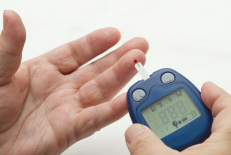
Comparing a point-of-care (POC) test using the capillary blood obtained from skin puncture with conventional laboratory tests” Kim and Kim (2017). Abstract: Objective: Comparing a point-of-care (POC) test using the capillary blood obtained from skin puncture with conventional laboratory tests. [ctt link=”QRo6c” template=”1″]ReTweet if useful… Emergency medical technician perform point-of-care blood analysis https://ctt.ec/QRo6c+ @ivteam #ivteam[/ctt] […]
Electronic consults for improving vancomycin use
Here, we evaluate the use of an electronic consult (e-consult) as a mechanism to reduce inappropriate inpatient vancomycin use while generating measurable workload credit for stewardship” Linsenmeyer et al (2017). Abstract: The Joint Commission, CDC, and Veterans Administration (VA) have recently set standards for implementation of antibiotic stewardship programs by health care facilities. Specific stewardship […]
Ultrasound guided radial artery cannulation in adult patients

Radial artery cannulation is used routinely in clinical settings for many purposes, such as for accurate hemodynamic monitoring, repeated blood sampling and as access for percutaneous coronary intervention” Yao et al (2017). Abstract: Radial artery cannulation is used routinely in clinical settings for many purposes, such as for accurate hemodynamic monitoring, repeated blood sampling and […]
The 50th anniversary of long-term central venous catheters

Tunneled central venous catheters (CVC) were developed five decades ago. Since then, several clinician-inventors have created a variety of catheters with different functions. Indeed, many catheters have been named after their inventor” Gow et al (2017). Abstract: Background: Tunneled central venous catheters (CVC) were developed five decades ago. Since then, several clinician-inventors have created a […]
Novel tunnelled central catheter placement in a pediatric patient

When stable central venous access is required for long-term intravenous infusions, several options are available including peripherally inserted central catheters (PICC), tunneled catheters and ports” Goel et al (2017). Abstract: Establishing venous access can be an important and often complex aspect of care for pediatric patients. When stable central venous access is required for long-term […]
Providing patient education is the first step to CLABSI prevention

Enhancing patient self-efficacy in preventing CABSIs requires them to have an adequate level of knowledge on infection prevention and the skills and confidence to self-care in the community” Mariano and Castro-Sánchez (2017). Abstract: The threat of catheter-associated bloodstream infections (CABSIs) among hemodialysis patients is present beyond health care settings. With the rise of antimicrobial-resistant infections, […]