
Emergency department resuscitation of pediatric trauma patients in Iraq and Afghanistan

Pediatric subjects accounted for a notable portion of care delivered in theater emergency departments during the study period. Vascular access and fluid administration were the most frequently performed interventions. Pediatric-specific training is needed as a part of deployment medicine operations” Schauer et al (2018). Abstract: BACKGROUND: Military hospital healthcare providers treated children during the recent […]
Review of clinical effectiveness and safety of central venous access devices

This Rapid Response report is an update of the previous CADTH reports which found no difference in terms of frequency of occlusion in patients who had a valved versus a non-valved PICCs, and similar patency between heparin and saline use for CVCs” Ho and Spry (2017). Excerpt: Central venous access devices (CVADs) or central venous […]
Authors describe optimization of the blood culture pathway

By siting our blood culture analyser in the Blood Sciences laboratory and optimizing the pre-analytical and analytic phases of blood culture management we reduced the time taken to detect most blood culture isolates to <12 hours” Weinbren et al (2018). Summary: Laboratory processing of blood cultures has remained static over the past 30 years despite […]
Pattern of causative micro-organisms in catheter related blood stream infections

Gram negative microorganisms were more commonly responsible for CRBSI in our settings” Mohsin (2017). Abstract: BACKGROUND: Catheter related blood stream infections (CRBSI) are the leading cause of morbidity in HD patients. The majority of these infections relate to haemodialysis catheters. There is a paucity of local data on microbial agents responsible for CRBSI in our […]
Point-of-care ultrasound education to improve care of dialysis patients

In this narrative review, we will provide an overview of selected POCUS techniques, highlight potential uses of POCUS in routine nephrology practice, and describe a new curriculum implemented at Johns Hopkins University School of Medicine to teach diagnostic POCUS skills to nephrology fellows” Mullangi et al (2018). Abstract: Point-of-care ultrasound (POCUS) is rapidly emerging as […]
Converting the easy internal jugular access into a central venous access device

The purpose of this letter is to inform your readers that the Easy IJ can be converted into a multi-lumen central venous catheter or even an introducer catheter” Moayedi and Witting (2018). Abstract: Placement of an 18-gauge, 48-mm single lumen intravenous catheter under ultrasound guidance into the internal jugular (IJ) vein, termed the “Easy IJ,” […]
Risk factors of vasopressor-induced symmetrical peripheral gangrene

Symmetrical peripheral gangrene (SPG) is an uncommon syndrome showing symmetrical gangrene in acral regions without evidence of large-vessel occlusion or vasculitis. Intravenous vasopressors are frequently used to manage hemodynamically unstable patients. There have been few reports about SPG after using inotropics” Kwon et al (2018). Abstract: BACKGROUND: Symmetrical peripheral gangrene (SPG) is an uncommon syndrome […]
Chylothorax related to central line associated thrombosis

Central vein thrombosis as a cause of chylothorax is uncommon, and in a few cases in the literature was related to thrombotic complications of central venous access devices (CVAD)” Spiwak et al (2018). Abstract: Central vein thrombosis as a cause of chylothorax is uncommon, and in a few cases in the literature was related to […]
Effectiveness of ultrasound-guided peripheral intravenous cannulation in pediatric patients
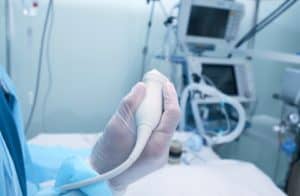
The objective of this systematic review is to identify, evaluate and synthesize evidence of effectiveness on ultrasound-guided peripheral intravenous cannulation in pediatric patients aged under three years” Yamagami et al (2018). Abstract: The objective of this systematic review is to identify, evaluate and synthesize evidence of effectiveness on ultrasound-guided peripheral intravenous cannulation in pediatric patients […]
Cerebral oxygenation during umbilical arterial blood sampling in very low birth weight neonates

Umbilical arterial blood sampling (UABS) has been associated with cerebral oxygen saturation (CrSO2) decrements in very low birth weight (VLBW) neonates. We sought to determine patient- and UABS procedure-related factors contributing to this effect” Mintzer and Messina (2018). Abstract: Objective: Umbilical arterial blood sampling (UABS) has been associated with cerebral oxygen saturation (CrSO2) decrements in […]
Epidemiology of health-care associated infections in pediatric intensive care units

We provide comprehensive multicenter benchmark data regarding rates of HAI within dedicated pediatric CICUs. We confirm that while rare, HAIs of all types are associated with significant resource utilization and mortality” Alten et al (2017). Abstract: BACKGROUND: Health-care associated infections (HAI) represent serious complications for patients within pediatric cardiac intensive care units (CICU). HAI are […]
Endovascular stent-based revascularization of malignant superior vena cava syndrome

The aim of this paper is to evaluate the safety and efficacy of endovascular revascularization of malignant superior vena cava syndrome (SVCS) and simultaneous implantation of a totally implantable venous access port (TIVAP) using a dual venous approach” Anton et al (2017). Abstract: PURPOSE: The aim of this paper is to evaluate the safety and […]
This qualitative study illustrates patient feedback about OPAT services

Outpatient parenteral antimicrobial therapy (OPAT) provides opportunities for improved cost savings, but in the UK, implementation is patchy and a variety of service models are in use” Twiddy et al (2018). Abstract: OBJECTIVE: Outpatient parenteral antimicrobial therapy (OPAT) provides opportunities for improved cost savings, but in the UK, implementation is patchy and a variety of […]
Improving documentation of peripheral intravenous access insertion in theatre

We assessed documentation on the anaesthetic charts of 50 surgical patients. Purpose-made stickers were then placed on all anaesthetic charts. Re-assessment of a further 50 patients’ charts demonstrated a significant improvement in documentation of the bundle post intervention…” Upadhyaya et al (2018). Abstract: The Department of Health’s ‘High Impact Intervention (HII) – Peripheral intravenous cannula […]
Alert identifies need to flush intravenous cannulae at the end of a procedure

If the IV lines and cannulae are not removed or effectively flushed residual anaesthetic and sedative drugs can later be inadvertently introduced into the patient’s circulation causing muscle paralysis, unconsciousness and respiratory and cardiac arrest” NHS Improvement (2017). NHS Improvement report “Patient Safety incidents are occurring from lapses in identifying and flushing all IV lines […]
The role of elastomeric pumps in postoperative analgesia

Elastomeric pumps are mechanical devices composed of an elastomeric balloon reservoir into which the drug to be infused is stored, a protective casing (used by some manufacturers), a flow controller and a wound catheter. In orthopaedics they are used to provide continuous local infiltration analgesia” Theodorides (2017). Abstract: Elastomeric pumps are mechanical devices composed of […]
Time to re-calibrate the zero CLABSI model towards one with greater relevance

These findings reflect the complexity of CLABSIs with multiple patient and hospital factors influencing incidence. It suggests the need for further studies to re-calibrate the zero CLABSI model towards one with greater relevance” Strickler et al (2018). Abstract: BACKGROUND: In the USA, central line associated blood stream infections (CLABSIs) have been designated as ‘never events’, […]
Supraclavicular central catheterization of the brachiocephalic vein

Placement of a central venous catheter (CVC) in the brachiocephalic vein (BCV) via the ultrasound (US)-guided supraclavicular approach was recently described in children. We aimed to determine the CVC maintenance-related complications at this site compared to the others (i.e., the femoral, the subclavian, and the jugular)” Habas et al (2018). Abstract: Placement of a central […]
Review of the evidence on the clinical effectiveness of valved versus non-valved PICCs

This Rapid Response report is an update of the previous CADTH reports which found no difference in terms of frequency of occlusion in patients who had a valved versus a non-valved PICCs, and similar patency between heparin and saline use for CVCs” Ho and Spry (2017). Excerpt: Central venous access devices (CVADs) or central venous […]
Stability of sodium bicarbonate injection 8.4% in syringes over a six-week period

We assessed whether the pre-filled sodium bicarbonate injection in 5 mL syringes would not only preserve sterility and retain its pH and concentration but also amount to the potential cost savings for future use when stored in a refrigerated environment” Seki et al (2017). Abstract: Background: Dysfunctional central venous catheter prohibits the administration of potential life-saving […]
Intraosseous vascular access and out-of-hospital cardiac arrest
We seek to determine the effect of intraosseous over intravenous vascular access on outcomes after out-of-hospital cardiac arrest” Kawano et al (2018). Abstract: Study objective: We seek to determine the effect of intraosseous over intravenous vascular access on outcomes after out-of-hospital cardiac arrest. [ctt link=”ah69F” template=”1″]ReTweet if useful… Intraosseous vascular access and out-of-hospital cardiac arrest […]
Looking for a suggested CLABSI rate in burn patients?

This study aimed at addressing the epidemiological aspect of CVC infection in a sample of Iranian burn patients admitted to the largest referral burn center in Iran, Motahari Burn Center” Roham et al (2017). Abstract: BACKGROUND AND OBJECTIVES: Currently, there are no well-defined guidelines or criteria for catheter-site care in burn patients, and there is […]
Early central line removal in patients with gram-negative CRBSI

We evaluated the impact of delayed central venous catheter (CVC) removal on clinical outcomes in patients with gram-negative CRBSI” Lee et al (2018). Abstract: Background: Gram-negative bacteria are increasingly the cause of catheter-related bloodstream infections (CRBSI), which show a rapidly rising prevalence of multidrug-resistant strains. We evaluated the impact of delayed central venous catheter (CVC) […]
Central venous catheterisation through external jugular vein
This prospective randomised controlled study was conducted with the aim of evaluating the efficacy of body manoeuvres in improving the success rate of CVC through EJV” Magoon et al (2017). Abstract: BACKGROUND AND AIMS: The external jugular vein (EJV), often used for resuscitation, has been underutilised for central venous catheterisation (CVC) in view of an […]
Predictive factors of catheter-related bloodstream infection

Strict compliance by patients and caregivers with evidence-based instructions together with supervision by well-trained HPN providers is the most effective strategy to prevent CRBSIs” Pichitchaipitak et al (2018). Abstract: OBJECTIVES: The aim of this study was to determine the incidence and predictive factors of catheter-related bloodstream infections (CRBSIs) acquired through a central venous catheter for […]
intraosseous route compared with peripheral and central venous access

Access attempts using IO are as fast as PIV attempts but are more than twice as likely to be successful” Chreiman et al (2017). Abstract: BACKGROUND: Quick and successful vascular access in injured patients arriving in extremis is crucial to enable early resuscitation and rapid OR transport for definitive repair. We hypothesized that intraosseous (IO) […]
Retrospective analysis of dialysis events over a 3-year period

To determine the difference in the rates of dialysis events stratified by vascular access type and to describe the microbiological profile and sensitivity patterns of positive blood cultures over a 3-year period” Ramadan and Hebbar (2018). Abstract: OBJECTIVE: To determine the difference in the rates of dialysis events stratified by vascular access type and to […]
Chylothorax in a patient with right-sided subclavian central venous catheter

On the 2nd postoperative day in ICU, his airway pressures were high, and chest X-ray revealed massive pleural effusion on right side. Under ultrasound guidance, 1400 milky white fluid was aspirated. It was sent for analysis (triglycerides) that confirmed chyle and hence, chylothorax was made as diagnosis” Asghar and Shamim (2017). Abstract: A young male […]
Effect of CLABSI reduction intensive education and training on nurses

The aim was to analyze the impact of education and training of nurses on the incidence of ventilator-associated pneumonia (VAP) and central line-associated bloodstream infection (CLABSI)” Sahni et al (2017). Abstract: OBJECTIVE: The aim was to analyze the impact of education and training of nurses on the incidence of ventilator-associated pneumonia (VAP) and central line-associated […]
Ultrasound-guided percutaneous arteriovenous fistula creation

To evaluate safety and efficacy of arteriovenous fistulas (AVFs) created with a thermal resistance anastomosis device” Hull et al (2017). Abstract: PURPOSE: To evaluate safety and efficacy of arteriovenous fistulas (AVFs) created with a thermal resistance anastomosis device. [ctt link=”delbo” template=”1″]ReTweet if useful… Ultrasound-guided percutaneous arteriovenous fistula creation https://ctt.ec/delbo+ @ivteam #ivteam[/ctt] MATERIALS AND METHODS: A […]