
Variation of internal jugular vein area measurements of newborns

In this study, we aimed to compare area measurements using ultrasonography and efficiency of varying Trendelenburg degrees on the area measurements, for two different entry points used as internal jugular vein (IJV) cannulation points in newborns” Karaaslan et al (2018). Abstract: BACKGROUND: Recent guidelines from the National Institute for Clinical Excellence recommend the use of […]
What is the efficacy of a central venous catheter adhesive fixation device?

The catheters fixed with adhesive systems had fewer infectious complications and less displacement” Molina-Mazón et al (2018). Abstract: OBJECTIVES: To assess the efficacy of a central venous catheter adhesive fixation device (CVC) to prevent associated complications. To establish the need for dressing changes, number of days’ catheterization and reasons for catheter removal in both study […]
Personalized feedback on central venous catheterization training

Simulation training with the DHRT system and the personalized learning feedback can improve resident self-efficacy with IJ CVC procedures and provide sufficient feedback to allow residents to accurately assess their own performance” Yovanoff et al (2018). Abstract: OBJECTIVE: To compare the effect of simulator functional fidelity (manikin vs a Dynamic Haptic Robotic Trainer [DHRT]) and […]
Burden of illness among paediatric haemophilia patients with and without central venous access devices

Paediatric haemophilia patients with CVADs experienced greater infection rates, healthcare utilization and higher hospitalization costs compared with non-CVAD patients” Buckley et al (2018). Abstract: INTRODUCTION: Central venous access devices (CVADs) facilitate repeated or urgent treatments for paediatric haemophilia patients, but are associated with complications. This study examined the burden of illness, healthcare utilization and costs […]
Removal of totally implanted venous access ports for suspected infection

TIVAP-related infection was confirmed in nearly one out of two cases of life-threatening sepsis in patients in whom it has been removed” Lecronier et al (2018). Abstract: Background: While no data support this practice, international guidelines recommend the removal of totally implanted venous access ports (TIVAPs) in patients with suspicion of TIVAP-related bloodstream infection admitted […]
What is the impact of blood sampling from peripheral IV catheters?

Results suggest that use of a PIV based blood collection was a reliable and valid approach and was superior to routine phlebotomy in self-reported responses from patients” Mulloy et al (2018). Abstract AIM: To evaluate the effect of daily PIV-based phlebotomy using the PIVO device on PIVC dwell times and replacement rates, as well as […]
First-time phlebotomy success related to patient anxiety and fear

Child’s fear, anxiety before phlebotomy, and difficult vascular access affects the first-time phlebotomy success” Gerçeker et al (2018). Abstract PURPOSE: This study aimed to investigate the success of first-time phlebotomy and the affecting factors in children between 4 and 10 years of age. METHODS: This descriptive, comparative, and cross-sectional study was conducted on 155 children who […]
Axillary vein puncture for peripherally inserted central venous catheters

Our new protocol for axillary peripherally inserted central venous catheters/tunneled axillary peripherally inserted central venous catheters use for a small-diameter basilic vein is safe and feasible” Saijo et al (2018). Abstract: PURPOSE: Peripherally inserted central venous catheters are some of the most useful devices for vascular access used globally. Peripherally inserted central venous catheters have […]
Venepuncture procedure for obtaining venous blood samples

This article outlines the procedure for undertaking venepuncture and obtaining venous blood samples” Shaw (2018). Abstract: Venepuncture and obtaining accurate blood samples is an important procedure in healthcare, and can assist in the diagnosis, care and treatment of patients. This article outlines the procedure for undertaking venepuncture and obtaining venous blood samples. It emphasises the […]
Intravenous antibiotic treatment in patients with substance use disorder

Hospitalizations for severe infections associated with substance use disorder (SUD) are increasing. People with SUD often remain hospitalized for many weeks instead of completing intravenous antibiotics at home; often, they are denied skilled nursing facility admission” Englander et al (2018). Abstract BACKGROUND: Hospitalizations for severe infections associated with substance use disorder (SUD) are increasing. People […]
Obtaining central access in challenging pediatric patients

Here, we present a case series of patients where central access was obtained at our institution with the utilization of a novel ultrasound-guided technique. This series represents the first of its kind where the native, parent vessels were inaccessible, resulting in a challenging situation for providers” Criss et al (2018). Abstract: PURPOSE: Central catheter placement […]
Management of a massive cervical hematoma after insertion of a central venous catheter

A central venous catheter (CVC) aimed at the internal jugular vein was incidentally inserted in the common carotid artery, resulting in acute dyspnea and a hemorrhagic shock due to a massive cervical hematoma” Pfister and Michels (2018). Abstract: An 81-year-old woman with infarct-related cardiogenic shock was admitted to the cardiac catheterization laboratory. Coronary angiography revealed […]
Translumbar HeRO dialysis catheter in a case of severe central venous occlusion

…patient on catheter-dependent dialysis in whom a translumbar Hemodialysis Reliable Outflow (HeRO) graft…” Loskutov et al (2018). Extract: “We report a case of a 30-year-old end-stage renal disease (ESRD) patient on catheter-dependent dialysis in whom a translumbar Hemodialysis Reliable Outflow (HeRO) graft (Merit Medical Systems, South Jordan, UT) was successfully placed for long-term hemodialysis after […]
Catheter-related complications in hemodialysis patients

This study examines the complication rates and factors predicting catheter-related bloodstream infections and mortality rates in patients who were initiated on hemodialysis at our institution” Yap et al (2018). Abstract: INTRODUCTION: Hemodialysis is the main modality of renal replacement therapy in Singapore. However, a majority of the patients in Singapore are initiated on hemodialysis via […]
Lessons from international differences in vascular access practices

Ever since origination of the Kidney Disease Outcomes Quality Initiative (KDOQI) guidelines on vascular access management in 19971 and the Fistula First Initiative in 2002,2 vascular access research has exploded” Allon (2018). Extract: “Ever since origination of the Kidney Disease Outcomes Quality Initiative (KDOQI) guidelines on vascular access management in 19971 and the Fistula First […]
Effect of skin-protective barrier film beneath transparent IV catheter dressing

We assessed the effect of a skin-protective terpolymer barrier film around the catheter insertion site on frequency of dressing disruptions and skin integrity issues (hyperaemia, skin irritation, residues of adhesives and moisture under the dressing)” Pivkina et al (2018). Abstract: OBJECTIVES: We assessed the effect of a skin-protective terpolymer barrier film around the catheter insertion […]
Vapocoolant spray versus placebo spray for reducing IV cannulation pain

This meta-analysis suggests that vapocoolant spray significantly decreased pain during intravenous cannulation when compared with placebo spray or no treatment in both adults and children” Zhu et al (2018). Abstract: Background: Intravenous cannulation is a routine procedure in hospitalized patients, and pain can occur during the cannulation process. Vapocoolant spray is an advantageous analgesic alternative […]
Effect of chlorhexidine baths on neonatal CLABSI

We describe the impact of chlorhexidine baths on CLABSI rates in a Neonatal Intensive Care Unit in a developing country…” Cleeves et al (2018). Abstract: Healthcare-associated infections, especially central line-associated bloodstream infections (CLABSIs) are worrisome in neonates. We describe the impact of chlorhexidine baths on CLABSI rates in a Neonatal Intensive Care Unit in a […]
Systematic review evaluates the evidence base for the WHO adopted hand hygiene technique

This systematic review evaluates the evidence for the World Health Organization’s (WHO) technique in reducing the microbial load on the hands of healthcare workers (HCWs)” Price et al (2018). Abstract: Background: Effective hand hygiene prevents healthcare-associated infections. This systematic review evaluates the evidence for the World Health Organization’s (WHO) technique in reducing the microbial load […]
Systematic review of MRI and CT contrast media extravasation

This systematic review combines data from multiple papers on contrast media extravasation to identify factors contributing to increased extravasation risk” Heshmatzadeh Behzadi et al (2018). Abstract: BACKGROUND: This systematic review combines data from multiple papers on contrast media extravasation to identify factors contributing to increased extravasation risk. METHODS: Data were extracted from 17 papers reporting […]
Registered nurse knowledge regarding noncytotoxic medication extravasation

The purpose of this study was to assess the knowledge level regarding noncytotoxic medications extravasation and its associated factors among staff nurses” Sisan et al (2018). Abstract: Extravasation and infiltration are among the most common intravenous therapy complications. For noncytotoxic agents, the incidence of extravasation remains unknown. There has been little research into extravasation due […]
Assessment of parenteral nutrition prescription in Canadian acute care settings

Most patients were malnourished at the start of PN. Energy and protein provided from PN were less than requirements, and the goals were reached with delay. Mortality was high, possibly as a result of complex diseases” Adjemian et al (2018). Abstract: BACKGROUND: Parenteral nutrition (PN) prescription can be challenging in patients with complex conditions and […]
Impact of a training program on adherence to central venous catheter care standards

A high percentage of venous lines (VLs) are placed in non-ICU patients, particularly those treated in the internal medicine department (IMD). We assessed adherence to VL care after a training program aimed at nurses and clinicians attending patients admitted to Spanish IMDs” Guembe et al (2018). Abstract: A high percentage of venous lines (VLs) are […]
Report of intravenous lipid emulsion overdose in infancy

We report a case of accidental ILE (Intralipid) overdose in a 3-month-old male infant who fully recovered after single-volume blood exchange transfusion. We also review reported cases and summarize potential solutions for ILE overdose. Our review indicates that ILE infusion is a high-risk medication, and opportunities for errors remain even in the best hospital set-ups” […]
Study examines the impact of vascular access specialist teams

“To compare the use of the vascular access specialist team (VAST) for VAD insertion and care to a generalist model approach for hospital or community participants requiring a VAD in terms of insertion success, device failure, and cost-effectiveness” Carr et al (2018).
Real-time ultrasound-guided placement of PICC without fluoroscopy
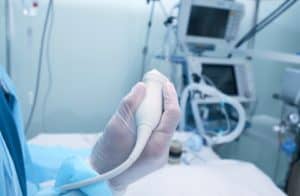
We report the success rate of the placement of peripherally inserted central catheters with ultrasound guidance for tip positioning and describe the knacks and pitfalls” Nakamuta et al (2018). Abstract: BACKGROUND AND AIM: Malposition of peripherally inserted central catheters placed at the bedside is a well-recognized phenomenon. We report the success rate of the placement […]
Catheter-related venous thromboembolism following hypothermia

Physicians should promote frequent assessment of the access site(s) during routine physical examinations and potentially use point of care vascular ultrasound in high-risk cases to rule out a catheter-associated thrombus before catheter removal” Wang et al (2018). Abstract: Fifty-four year-old man with recent history of myocardial infarction and a percutaneous coronary intervention who suffered a […]
What is the most appropriate scrub the hub technique?

This study aimed to investigate the appropriate ‘scrubbing’ technique for needleless connectors to minimize contamination risk” Satou et al (2018). Summary: This study aimed to investigate the appropriate ‘scrubbing’ technique for needleless connectors to minimize contamination risk. To demonstrate a highly effective scrubbing technique to physically eliminate bacteria, needleless connectors were contaminated with Geobacillus stearothermophilus […]
Effect of catheter diameter on left innominate vein after implantable port placement

To evaluate the effect of catheter diameter on left innominate vein stenosis in breast cancer patients after placement of totally implantable venous access ports” Song et al (2018). Abstract: PURPOSE: To evaluate the effect of catheter diameter on left innominate vein stenosis in breast cancer patients after placement of totally implantable venous access ports. MATERIALS […]
Staphylococcus epidermidis implicated in Catheter-Related Bloodstream Infections

Staphylococcus epidermidis is one of the most prevalent pathogens implicated in catheter-related bloodstream infections (CRBSI) at an academic hospital in Pretoria, South Africa” Ehlers et al (2018). Abstract: Staphylococcus epidermidis is one of the most prevalent pathogens implicated in catheter-related bloodstream infections (CRBSI) at an academic hospital in Pretoria, South Africa. Little is known about […]