
Central catheter-related complications among Japanese patients

The aim of this study was to estimate the incidence of complications in Japanese patients with CVCs, including patients with SBS using CVCs” wing et al (2018). Abstract: PURPOSE: Short bowel syndrome (SBS) is a serious rare disorder that is usually managed with parenteral nutrition. Central venous catheter (CVC)-related complications are known to occur, but […]
ECG method for confirming central venous catheter tip placement

The objective of this study is to compare the accurate placement of the CVC tip using anatomical landmark technique with ECG-guided technique” Krishnan et al (2018). Abstract: BACKGROUND: The current standard followed for assessing central venous catheter (CVC) tip placement location is through radiological confirmation using chest X-ray (CXR). Placement of CVCs under electrocardiogram (ECG) […]
Early detection and prompt treatment of infiltration and extravasation

The potential complications of infiltration and extravasation are common in this population. Consequences of infiltration and extravasation may be prevented or mitigated by early detection and prompt treatment” Desarno et al (2018). Abstract: The vast majority of infants in the NICU receive peripheral intravenous (PIV) therapy for administration of fluids, nutrition, medications, and blood products. […]
Bilateral hydrothorax case as a rare outcome of central venous catheter placement

CVC placement is a relatively safe procedure but may occasionally be associated with complications, such as pneumothorax, haemothorax, cardiac tamponade, sepsis and thrombosis” Batihan et al (2018). Abstract: Central venous catheters (CVCs) are very useful tools in clinical medicine. It is important not only for the administration of medications or fluids but also the measurement […]
Point-of-care ultrasound evaluation and puncture simulation of the internal jugular vein

To show that medical students can evaluate the internal jugular vein (IJV) and its anatomical variations after rapid and focused training. We also aimed to evaluate the success rate of IJV puncture in simulation following traditional techniques (TTs) and monitored via ultrasound (US)” Pazeli et al (2018). Abstract: OBJECTIVES: To show that medical students can […]
Review of low-lying umbilical venous catheters

Conventional neonatology practice is to place umbilical venous catheters (UVCs) in central position and to limit the use of low-lying catheters. Our objectives were to describe the practices and complications associated with UVCs and to evaluate the type of infusates used with either UVC position” El Ters et al (2018). Abstract: OBJECTIVES: Conventional neonatology practice […]
Infectious Diseases Society of America clinical practice guideline for OPAT

A panel of experts was convened by the Infectious Diseases Society of America to update the 2004 clinical practice guideline on outpatient parenteral antimicrobial therapy (OPAT)” Norris et al (2019). Abstract: A panel of experts was convened by the Infectious Diseases Society of America to update the 2004 clinical practice guideline on outpatient parenteral antimicrobial […]
Septic pulmonary embolism related to implanted central venous access port

Due to the increasing use of intravascular devices and catheters, more catheter-related and device-related SPEs have been reported. Here, we report a case, in which, a CVAPD was infected with Staphylococcus epidermidis, causing recurrent SPE” Hong and Kim (2018). Extract: “The use of central venous access port devices (CVAPDs) has increased rapidly worldwide because of […]
Central catheter size for infants for continuous renal replacement therapy

The aim of this study was to characterize both the operating conditions and performance of three different central vascular catheters sizes (4F, 5F, and 7F) connected to two different extracorporeal blood circulation models (adult and pediatric)” Garzotto et al (2018). Abstract: OBJECTIVES: Renal replacement therapy in infants and small children is the treatment of choice […]
State of needlestick training for undergraduate medical students

Of UME respondents, 53% reported that their institution lacks needlestick training, and 35% were unsure whether their institution provides reporting instruction” Shirreff et al (2018). Abstract: Canadian undergraduate medical students sustain needlestick injuries, which have adverse implications, including blood-borne illnesses and personal anxiety. This study sought to determine students’ needle handling efficacy and to examine […]
Ertapenem for osteoarticular infections in obese patients

Ertapenem is used off-label to treat osteoarticular infections but there are few pharmacokinetic (PK) data to guide optimal dosing strategies in patients who may be obese with multiple co-morbidities including diabetes and peripheral vascular disease” Chambers et al (2018). Abstract: PURPOSE: Ertapenem is used off-label to treat osteoarticular infections but there are few pharmacokinetic (PK) […]
Mineralocorticoid receptor and hemodialysis vascular access dysfunction
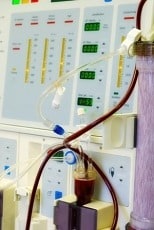
As a key mediator of vascular and cardiac maladaptive remodeling, mineralocorticoid receptor (MR) plays a pivotal role in vascular fibrosis and intimal hyperplasia (IH) and is potentiated locally in hemodialysis vascular access following diverse injuries, like barotrauma, cannulation and shear stress” Chen et al (2018). Abstract: Hemodialysis vascular access dysfunction is a common and intractable […]
Chlorhexidine-impregnated gel IV dressing compared with transparent polyurethane dressing

The objective of this study was to assess the feasibility of a randomised controlled trial to compare the efficacy of chlorhexidine-impregnated dressing with that of polyurethane dressing in the prevention of catheter-related infections in critically ill adult patients with short-term percutaneous CVC” Margatho et al (2018). Abstract: BACKGROUND: In patients with short-term percutaneous central venous […]
Impact of subcutaneous tunnels on peripherally inserted catheter placement

To evaluate the impact of subcutaneous tunneling on peripherally inserted central catheter (PICC) placement in terms of central line-associated bloodstream infections (CLABSIs)” Kim et al (2018). Abstract: OBJECTIVE: To evaluate the impact of subcutaneous tunneling on peripherally inserted central catheter (PICC) placement in terms of central line-associated bloodstream infections (CLABSIs). METHODS: Our dual-facility central institutional […]
Kamishibai cards to sustain evidence-based health care-associated infection prevention

Sustaining healthcare-associated infection (HAI) prevention practices is complex. We examined the use of Kamishibai Cards (K Cards) as a tool to encourage compliance interactions between leaders and staff” Shea et al (2018). Abstract: BACKGROUND: Sustaining healthcare-associated infection (HAI) prevention practices is complex. We examined the use of Kamishibai Cards (K Cards) as a tool to […]
Safety of Peripherally Inserted Central Catheter use in OPAT for children

To determine the safety of peripherally inserted central catheter (PICC) use for delivery of outpatient parenteral antimicrobial therapy (PAT) in children discharged to rural or urban locales. We hypothesized that children from rural settings would experience higher complication rates” Beachum et al (2018). Abstract: OBJECTIVES: To determine the safety of peripherally inserted central catheter (PICC) […]
Efficacy and safety of ultrasound-guided cannulation via the right brachiocephalic vein

Central venous catheter (CVC) insertion is difficult to perform and is a high-risk operation; ultrasound (US)-guided cannulation helps increase the odds of success while reducing the associated complications” Xia et al (2018). Abstract: Central venous catheter (CVC) insertion is difficult to perform and is a high-risk operation; ultrasound (US)-guided cannulation helps increase the odds of […]
Preventing occupational exposure to cytotoxic and other hazardous drugs

The workplace exposure to dangerous drugs and the resulting health risks for healthcare personnel have been well known and documented for over four decades, since it first became a recognised safety risk in the United States in the 1970s” Sessink et al (2016). Extract: This recommendation is particularly imperative in the healthcare sector. While the […]
Guidance on handling of injectable cytotoxic drugs in clinical areas

This document provides guidance on the handling of cytotoxic chemotherapy and its focus is on traditional small molecule chemotherapy although there are references to biological therapies including monoclonal antibodies which are being used in increasing numbers” NHS Pharmaceutical Quality Assurance Committee (2018). Extract: This document provides guidance on the handling of cytotoxic chemotherapy and its […]
Type of flush solution for implantable port?

In this context, it was intended to determine the effectiveness of a heparin solution compared to sodium chloride 0.9% in the permeability of implanted ports in adults with oncology disease” Ramada et al (2018). Abstract: Totally implantable catheter (CVCTI) is a type of central venous catheter that becomes an essential resource because it increases the […]
Improving care associated with needleless connectors

This study aims the improvement of the CVC management, using a double lumen extension line with needleless connectors, in acute leukemia (AL) patients population undergoing high dose chemotherapy treatments” Martinez et al (2018). Abstract: Background: With the increase in the number, frequency and duration of treatments, long-term catheters were needed to allow different and continuous […]
Types and frequencies of complications associated with midline catheters and PICCs

The aim of this study was to describe the types and frequencies of complications of PICCs and midline catheters which were inserted by specialized registered nurses in a South Tyrolean district hospital” Kostner et al (2018). Abstract: Types and frequencies of complications associated with midline catheters and PICCs in a South Tyrolean district hospital: a […]
Novel short peripheral catheter design for prevention of thrombophlebitis
Here we introduce a novel SPC, named Very Short Peripheral Catheter(VSPC), that was designed to minimize biomechanical irritation and improve blood flow” Weiss et al (2018). Abstract: BACKGROUND: Short peripheral catheters (SPCs) are the most common intravenous device in today’s medical practice. Short peripheral catheter thrombophlebitis (SPCT) occurs in up to 80% of hospitalized patients. […]
Air embolism due to internal jugular vein catheterization

Air embolism due to internal jugular vein catheterization during procedural sedation is very rare, but it is a potentially life-threatening complication of central catheterization that warrants attention” Tosi et al (2018). Abstract: We performed a systematic review of the literature starting from a real case of venous air embolism (VAE) in a young infant undergoing […]
Crystalloids vs. colloids for fluid resuscitation in the intensive care unit

Crystalloids were less efficient than colloids at stabilizing resuscitation endpoints; guidance on when to switch is urgently required” Martin and Bassett (2018). Abstract: PURPOSE: Guidelines recommend crystalloids for fluid resuscitation in sepsis/shock and switching to albumin in cases where crystalloids are insufficient. We evaluated hemodynamic response to crystalloids/colloids in critically ill adults. MATERIALS AND METHODS: […]
Outcomes of vascular access in patients older than 70 years
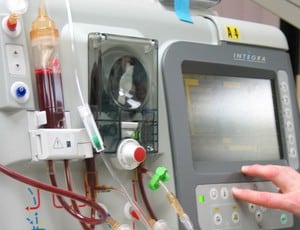
The advantage of arteriovenous fistulas (AVFs) in older patients requiring dialysis is controversial. We reviewed our vascular access experience in patients ≥70 years of age (older group) compared with younger patients” Hwang et al (2018). Abstract: OBJECTIVE: The advantage of arteriovenous fistulas (AVFs) in older patients requiring dialysis is controversial. We reviewed our vascular access […]
Electronic-prescribing and infusion-related medication errors

This study aims to achieve consensus on defining as medication errors a range of either technology-generated, or previously unaddressed infusion-related scenarios, common in the paediatric intensive care setting” Howlett et al (2019). Abstract: BACKGROUND: The use of health information technology (HIT) to improve patient safety is widely advocated by governmental and safety agencies. Electronic-prescribing and […]
Needle insertion skill in central venous catheterization training

Training for ultrasound-guided central venous catheterization (CVC) is typically conducted on static manikin simulators with real-time feedback from a skilled observer. Dynamic haptic robotic trainers (DHRTs) are an alternative method that simulates various patient anatomies and provides consistent feedback for each insertion” Chen et al (2018). Abstract; BACKGROUND: Training for ultrasound-guided central venous catheterization (CVC) […]
Surgical treatment of patients with superior vena cava syndrome

Presented herein are two clinical case reports concerning surgical treatment for superior vena cava syndrome in patients suffering from end-stage renal disease and undergoing programmed haemodialysis” Maksimov et al (2018). Abstract: Presented herein are two clinical case reports concerning surgical treatment for superior vena cava syndrome in patients suffering from end-stage renal disease and undergoing […]
Risk of bleeding after ultrasound-guided jugular central venous catheter insertion

We sought to assess the incidence and risk factors of bleeding after ultrasound-guided internal jugular (USGIJ) catheter insertion in severely thrombocytopenic cancer patients, as safe platelet (PLT) count threshold remains controversial” AlRstum et al (2019). Abstract: INTRODUCTION: We sought to assess the incidence and risk factors of bleeding after ultrasound-guided internal jugular (USGIJ) catheter insertion […]