Centrally inserted tunnelled peripherally inserted central catheter

“We evaluated the feasibility of centrally placed non-cuffed tunnelled peripherally inserted central catheter in the chest as an alternative to conventional peripherally inserted central catheter” Lingegowda et al (2020).
Ultrasound-guided arterial cannulation or by pulse palpation

“The aim of this study is to compare the outcomes of US-guided arterial catheterisation with the traditional landmark (LM) technique in critically ill children” Oulego-Erroz et al (2020).
Vascular access guidewire entrapped in the right ventricle

“The guidewire was rotated anticlockwise with simultaneous soft pulls coinciding with the cardiac cycle. The guidewire was successfully and safely removed” Verma et al (2020).
Review of iatrogenic anaemia in adult intensive care

“High volumes of blood were taken and discarded from the study population, possibly reflecting the fact that there are no guidelines for ICU staff in terms of the amount of blood that needs to be withdrawn in order to “prime” access lines” Holland et al (2020).
Recurrent severe hypophosphatemia following intravenous iron administration

“Hypophosphatemia postintravenous iron is frequent but under-recognized. If prolonged or recurrent, it can cause osteomalacia” Nataatmadja and Francis (2020).
Bedside PICC placement without fluoroscopy
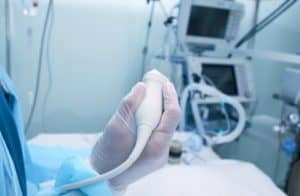
Bedside PICC placement without fluoroscopy
Risk factors associated with difficult peripheral venous cannulation

“This study intends to identify risk factors associated to the incidence of ‘difficult peripheral venous access’ in adults at hospital” Rodríguez-Calero et al (2020).
Vascular access and hemodialysis session stability
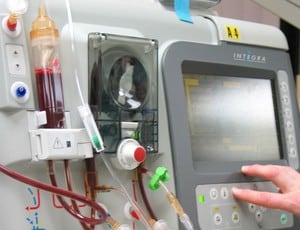
“Bad runs were characterized primarily by cramping, low blood pressure (“crashing”), cannulation-related difficulties (“bad sticks”), and clotting of the dialysis circuit or vascular access” Kuo et al (2020).
Propofol infusion syndrome affecting critically ill patients

“Propofol infusion syndrome is a rare condition that mainly affects critically ill patients who receive high doses of this hypnotic for a long time” Subirà González et al (2020).
Massive hemoptysis following cannulation of right internal jugular vein

“Here we report an extremely rare presentation of internal jugular vein catheterization, presenting as massive hemoptysis which was noted during right internal jugular vein cuffed hemodialysis catheter insertion” Ghoddusi Johari et al (2020).
Midline catheter in patients for HPC collection by apheresis

“We prospectively analyzed the use of midline for performing apheresis on 3 healthy donors and 3 adults patients requiring autologous transplantation” Caime et al (2020).
De-implementation strategy to reduce inappropriate use of intravenous catheters

“Our de-implementation strategy reduced inappropriate use of short peripheral intravenous catheters in patients who were not in the intensive care unit” Loan et al (2020).
Incidence of implantable port-related thrombosis

“In patients with digestive cancers who had implantable venous access ports, the incidence of the CRT was 4.5% with no association with anti-VEGF therapies” Tanioka et al (2019).
Influence of CVC insertion on the hemodynamics in the central veins

“The placement of CVC makes significant changes on the hemodynamic environment in the central veins. A great disturbance and increase of velocity can be observed in central veins after the insertion of CVC” Park et al (2020).
Overview of intraosseous vascular access

“Intraosseous (IO) vascular access refers to the placement of a specialized hollow bore needle through the cortex of a bone, into the medullary space for infusion of medical therapy and laboratory tests” Dornhofer and Kellar (2020).
Chlorhexidine locking device for central line infection prevention

“This study will be the first human RCT to investigate a CHG locking device for the prevention of central line infections” Zamir et al (2020).
Changing the syringe pump during vasoactive drug administration
“In the literature, the change of a syringe pump is described as a dangerous situation, especially in the case of vasoactive drug administration” Elli et al (2020).
Central venous catheter tip and intrathoracic pressure waveform

” We report a case where intrathoracic pressure waveform transduced from the CVC with chest radiograph inconclusive of intracaval placement was investigated with transesophageal echocardiography (TEE) to confirm the placement of the CVC tip within the SVC” G.N. et al (2020).
Decreasing CLABSI in the home setting among pediatric oncology patients

“Most children receiving cancer treatment require a central venous catheter (CVC), putting them at risk for central line-associated bloodstream infections (CLABSI)” Altounji et al (2020).
Reduction of CLABSI rates in resource limited settings

“Reduction of central-line-associated bloodstream infection (CLABSI) in resource limited, nonintensive care unit (ICU) settings” Poh et al (2020).
Patient-reported complications related to midline catheters and PICC

“We conducted a prospective observational study of indications for use and patient experiences with midline catheters (n = 50) compared to peripherally inserted central catheters (n = 63).” Lescinskas et al (2020)
Cultural considerations for central venous catheter placement

“Understanding of the cultural aspect of South Korean patients who practice the traditional Confucian ethics of “unaltering one’s body” and are therefore reluctant to have CVCs inserted into their bodies” Park and Lee (2020).
Lipid use in hospitalized adults requiring parenteral nutrition

“Clinical and experimental evidence is reviewed regarding lipid emulsion use in a variety of hospitalized patient groups, including surgical, critically ill, sepsis, trauma, and acute pancreatitis patients” Mayer et al (2020).
Complications of central venous access devices in children

“Multivariate analysis on complications of central venous access devices in children with cancer and severe disease influenced by catheter tip position and vessel insertion site” Hofmann et al (2020).
Accidental finding of persistent left superior vena cava

“The presence of the superior left vena cava represents a rare anomaly of the thoracic venous system” Savu et al (2020).
CLABSI risk associated with simultaneous use of 2 central venous catheters

“These findings suggest that concurrent CVC use is associated with nearly 2-fold the risk of CLABSI compared with use of a single low-risk CVC” Due et al (2020).
Managing chemotherapy extravasation in totally implantable central venous access

“This study would argue for the feasibility and effectiveness of subcutaneous wash-out in the treatment of chemotherapy extravasations” Taibi et al (2020).
Handling of intravenous lipid emulsions with parenteral nutrition

“A number of topics important to the handling of intravenous lipid emulsions (ILEs) were discussed at the international summit” Boullata et al (2020).
Blood transfusion via intravenous and intraosseous access

“There was therefore the need for feasibility testing of a model for contrasting the efficacy of blood infusion devices via intravenous (IV) and IO access” Bianchi et al (2020).
Evaluation of a sterile surgical skin marker to indicate the optimal vein for venepuncture

“Generally, staff indicated that the markers may be valuable to assist with phlebotomies for donors with difficult or deep veins” Bell et al (2020).