
Intraosseous vascular access device comparison

“Each of these devices provides an effective route for fluid resuscitation, drug delivery, laboratory evaluation, and shortening the timeframe for established vascular access, provided that the person obtaining the access is acquainted with the use of the device” Drozd et al (2021).
CICC complication prevention – SIC protocol

“This paper describes a standardized protocol (S.I.C.: Safe Insertion of Centrally Inserted Central Catheters) for the systematic application of seven basic beneficial strategies to be adopted during insertion of central venous catheters in the cervico-thoracic region, aiming to minimize immediate, early, or late insertion-related complications” Brescia et al (2021).
CLABSI in critically ill patients

“Our findings suggest that catecholamine inotropes is an independent risk factor for catheter-related infections in critically ill patients undergoing CRRT” Liu et al (2021).
PICC nursing care

“The purpose of this study was to understand nurses’ perspectives about PICC implementation in their clinical practice” Salgueiro-Oliveira et al (2021).
Pediatric vascular access – Full Text

“The objective of this study was to assess adherence to guidelines for the placement of VADs in a pediatric setting” Moreal et al (2021).
Quality PICC care

“To analyze the effect of multidisciplinary cooperation mode (MCM) led by infusion nurse specialists (INSs) on peripherally inserted central catheters (PICC) catheterization and indwelling nursing quality” Jie et al (2021).
Fatal complications of tunnelled CVC

“If a perforation with relevant vascular damage is suspected, we recommend leaving the dilator/introducer/catheter in place to reduce major hemorrhage until the vascular or cardiothoracic surgeon can fix the problem” Schuepfer et al (2021).
Stability of pemetrexed disodium

“The aim of this study was to assess the stability of pemetrexed disodium (Alimta), reconstituted in 100 mL sodium chloride 0.9% w/v intravenous infusion bags (Baxter Viaflo)” Nelson et al (2021).
IV tubing residual volume

“An unrecognized phenomenon across the antimicrobial landscape may be residual volume remaining within intravenous tubing, never getting to the patient” Peyko (2021).
Subclavian CVC training – Full Text

“To develop and implement a comprehensive program to train providers to place subclavian central venous catheters (CVCs) using real-time ultrasound guidance” Davis et al (2021).
RAVESTO tool for complex vascular access patients

“The tool we describe (RAVESTO-Rapid Assessment of Vascular Exit Site and Tunneling Options) defines the different options of subcutaneous tunneling and their indications in different clinical situations in patients with complex vascular access” Ostroff et al (2021).
PICC UEDVT risk factors

“Among the common risk factors, local risk factors reflecting peripherally inserted central catheter technology itself had a greater effect than systemic risk factors reflecting predisposition to thrombosis” Chen et al (2021).
PICC complications in newborns

“The aim of this systematic review (SR) is to estimate the prevalence of complications associated with the use of PICC in NBs” Sarmento Diniz et al (2021).
Vascular access curriculum for student nurses

“An innovative vascular access and infusion nursing (VAIN) curriculum was created and mapped onto the entry to practice undergraduate nursing program at McGill University in Montréal, Québec, Canada” Marchionni et al (2021).
Vascular access in breast cancer – Full Text

“All three types of catheters could be used in breast cancer patients without causing serious complications” Kim et al (2021).
Peripheral IV complications

“The aim of this descriptive and cross-sectional study was to determine the knowledge and practices of nurses related to the prevention of peripheral intravenous therapy (PIT) complications, and to identify the influencing factors” Yilmaz et al (2021).
Central venous access device training
“The new education programme was introduced to all registered nurses working in one care group within an acute healthcare Trust with the aim of improving knowledge and skills and reduce CVAD-related complications” Burt and Spowart (2021)
Taurolidine catheter lock solution

“A solution containing 2% taurolidine seems suitable as a hemodialysis catheter lock. In a Swiss cohort, it prevented CRBSI, limited catheter dysfunction, and was cost-efficient” Neusser et al (2021).
UK vessel health and preservation framework

“In 2016, a UK vessel health and preservation (VHP) framework was developed to support healthcare staff to select the most appropriate vascular access device for patients requiring intravenous therapy” Hallam et al (2021).
Extravasation injury treatment – Full Text

“The treatment of severe extravasation injuries using a combination of localized closure, ethacridine lactate dressing, and phototherapy resulted in satisfactory outcomes in patients” Lu et al (2021).
Does CICC have effect on ECG PICC tip location

“For patients with an indwelling CICC, the position of PICC tip can be accurately determined by the dynamic changes in the P-wave amplitude” Sun et al (2021).
Implantable port for solid tumours

“For most patients receiving SACT, PORTs are more effective and safer than both Hickman and PICCs” Moss et al (2021).
Integrated short peripheral cannula

“A rapid review of the current evidence suggests that this new device may have different clinical performance and different indications if compared to standard short peripheral cannulas” Pinelli and Pittiruti (2021).
IV flushing with pre-filled syringes

“This article describes how one large university health board in Wales implemented a change in products and practice and explores the issues around adopting and using CE-marked pre-filled, sterile syringes of 0.9% sodium chloride in place of manually drawing up an IV flush (the CE mark indicates devices that conforms with European legal requirements)” Lee and Terry (2021).
Peripheral IV care – Full Text

“Our main objective was to assess the feasibility and inter-rater agreement on the PIVC-mini Questionnaire (PIVC-miniQ) in a tertiary care hospital in Nepal” Shrestha et al (2021).
Vascular access patient experience

“Having a CVAD affects the psychological, social, and personal self and impacts on self-esteem and self-image” Kelly and Snowden (2021).
Meropenem pharmacokinetics in sepsis

“A prospective single-center study assessed whether fluid retention alters meropenem pharmacokinetics and the achievement of the pharmacokinetic/pharmacodynamic (PK/PD) targets for efficacy” Pařízková et al (2021).
CVC ultrasound placement training
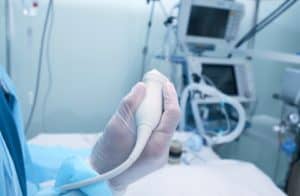
“Although the learning curve for CVC ultrasound placement is usually fast, formal training and certification for beginners are strongly recommended” Forneris et al (2021).
IV antibiotic administration rate
“The rapid administration of intravenous ceftriaxone, ertapenem, meropenem and daptomycin in an outpatient setting is clinically safe and well tolerated” Ling et al (2021).
Haemodialysis and CLABSI – Full Text

“Neither catheter salvation nor antibiotic-lock therapy were associated with the recurrence of CRBSI” Ramli et al (2021).