Central venous catheter associated DVT in inflammatory bowel disease

“The aim of this study was to examine the relationship between IBD and catheter-associated deep venous thrombosis.” Bhakta et al (2014). Reference: Bhakta,A., Tafen, M., Ahmed, M., Ata, A., Abraham, C., Bruce, D., Valerian, B.T. and Lee, E.C. (2014) Risk of Catheter-Associated Deep Venous Thrombosis in Inflammatory Bowel Disease. Diseases of the Colon Rectum. 57(12), […]
Biofilm-based central line-associated bloodstream infections reviewed

“In this article, we provide an overview of microbial biofilm formation; describe the involvement of various genetic determinants, adhesion proteins, organelles, mechanism(s) of biofilm formation, polymicrobial infections, and biofilm-associated infections on indwelling intravascular catheters; and describe the diagnosis, management, and prevention of catheter-related bloodstream infections.” Yousif et al (2015). Reference: Yousif, A., Jamal, M.A. and Raad, […]
Neonatal CLABSI rates decrease following intervention

“The retrospective review compared CLABSI incidence during and after changes in catheter care.” Dumpa et al (2014). Reference: Dumpa, V., Adler, B., Allen, D., Bowman, D., Gram, A., Ford, P. and Sannoh, S. (2014) Reduction in Central Line-Associated Bloodstream Infection Rates After Implementations of Infection Control Measures at a Level 3 Neonatal Intensive Care Unit. […]
Role of intravenous dressings in the prevention of vascular access device infections

“This article will consider how the use of dressings can reduce the risk of CRBSI.” Hodson (2014). Reference: Hodson, J. (2014) The role of dressings in the prevention of vascular access device infections. British Journal of Nursing. 23(14 Suppl), p.S11-4. [ctt tweet=”Role of intravenous dressings in the prevention of vascular access device infections http://ctt.ec/reQlR+ @ivteam […]
Effectiveness of safety-engineered devices in reducing needlestick

“Sharps injuries remain a common factor in occupational exposure of healthcare workers to blood-borne viruses. The extent to which the introduction of safety-engineered devices has been effective in reducing such injuries among healthcare workers is unclear.” Lu et al (2014). Reference: Lu, Y., Senthilselvan, A., Joffe, A.M. and Beach, J. (2014) Effectiveness of safety-engineered devices […]
Paediatric peripheral intravenous catheter outcomes

“This study sought to address a gap in the literature about current practice in the securement and dressing of PIVCs in paediatric acute care, and to ascertain the duration and failure of these devices.” Malyon et al (2014). Reference: Malyon, L., Ullman, A.J., Phillips, N., Young, J., Kleidon, T., Murfield, J. and Rickard, C.M. (2014) […]
Hemodialysis elderly patients: Factors affecting survival
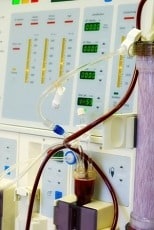
“We describe circumstances of dialysis initiation, dialysis prescription and factors affecting survival in elderly patients.” Gubensek et al (2014) Reference: Gubensek, J., Ponikvar, R., Ekart, R. and Buturovic-Ponikvar, J. (2014) Very Old Patients on Hemodialysis: How They Start and Can We Predict Survival? Blood Purification. 38(1), p.74-79. [ctt tweet=”Hemodialysis elderly patients: Factors affecting survival http://ctt.ec/a2W8Y+ […]
Umbilical venous catheter tip position in neonates

“Lateral radiographs are more reliable in measurement of UVC tip position and should be performed in conjunction with AP films to aid in determining UVC position.” Butler et al (2014). Reference: Butler, G.C., Al-Assaf, N., Tarrant, A., Ryan, S. and El-Khuffash, A. (2014) Using lateral radiographs to determine umbilical venous catheter tip position in neonates. […]
Timing of supplemental parenteral nutrition among ICU patients

“This systematic review summarizes results of prospective studies among adult ICU patients addressing the best timing of (supplemental) parenteral nutrition (S)PN.” Bost et al (2014). Reference: Bost, R.B.C., Tjan, D.H.T. and van Zanten, A.R.H (2014) Timing of (supplemental) parenteral nutrition in critically ill patients: a systematic review. Annals of Intensive Care 2014, 4:31. [ctt tweet=”Timing […]
CDC National Health Report: Includes CLABSI reduction

“Health-care-associated infections declined, on average, for central-line associated bloodstream infections (CLABSI), surgical site infections (SSI), and Methicillin-resistant Staphylococcus aureus (MRSA) infection.” Johnson et al (2014). Reference: Johnson, N.B., Hayes, L.D., Brown, K., Hoo, E.C. and Ethier, K.A. (2014) CDC National Health Report: Leading Causes of Morbidity and Mortality and Associated Behavioral Risk and Protective Factors-United States, […]
CLABSI reduction following hand hygiene adherence project

“This multifactorial quality improvement project resulted in an institution-wide increase in HH adherence and a significant decrease in CLABSIs.” Johnson et al (2014). Reference: Johnson, L., Grueber, S., Schlotzhauer, C., Phillips, E., Bullock, P., Basnett, J. and Hahn-Cover, K. (2014) A multifactorial action plan improves hand hygiene adherence and significantly reduces central line–associated bloodstream infections. American […]
Central line–associated bloodstream infection LOS and cost

“Among pediatric hematology/oncology patients, CLABSI was associated with an additional LOS of 21 days and increased costs of nearly $70,000.” Wilson et al (2014). Reference: Wilson, M.Z., Rafferty, C., Deeter, D., Comito, M.A. and Hollenbeak, C.S. (2014) Attributable costs of central line–associated bloodstream infections in a pediatric hematology/oncology population. American Journal of Infection Control. 42(11), […]
Colonization of stickers used for the identification of intravenous lines

“Stickers used for the identification of IV lines may become potential reservoirs of catheter colonization.” Reference: Granda, M.J.P., Guembe, M., Cruces, R., Martín-Rabadán, P. and Bouza, E. (2014) Colonization of stickers used for the identification of intravenous lines: Results from an in vitro study. American Journal of Infection Control. 42(11), p.1161–1164. [ctt tweet=”Colonization of stickers […]
Post-thrombotic syndrome after central venous catheter removal

“We aimed to study PTS post-CVC removal using physical, functional and health related quality of life (HRQoL) domains in childhood cancer and bone marrow transplantation (BMT) survivors.” Polen et al (2014) Reference: Polen. E., Weintraub, M., Stoffer, C., Jaffe, D.H., Burger, A. and Revel-Vilk, S. (2014) Post-thrombotic syndrome after central venous catheter removal in childhood […]
Anaphylaxis to chlorhexidine reviewed in this article

“Anaphylaxis to chlorhexidine was first reported in 1984 and was almost always seen in men. However, in the last 4 years we have observed a surge in confirmed cases of anaphylaxis to chlorhexidine, with increasing numbers of female patients recently diagnosed.” Odedra and Farooque (2014). Reference: Odedra, K.M. and Farooque, S. (2014) Chlorhexidine: an unrecognised cause […]
CLABSI prevention innovation reviewed in this article

“Central lines, which are essential for treating cancer, are associated with at least 400 000 episodes of bloodstream infection in patients with cancer every year in the United States.” Raad and Chaftari (2014). Reference: Raad, I. and Chaftari, A.M. (2014) Advances in prevention and management of central line-associated bloodstream infections in patients with cancer. Clinical Infectious […]
The effect of Valsalva maneuver on vena caval dynamics

“…changes produced within the inferior vena cava (IVC) during respiratory movements and identify their possible clinical implications.” Laborda et al (2014). Reference: Laborda, A., Sierre, S., Malvè, M., Blas, I.D., Ioakeim, I., Kuo, W.T. and Gregorio, M.A. (2014) Influence of breathing movements and Valsalva maneuver on vena caval dynamics. World Journal of Radiology. 6(10), p.833-9. […]
Using inflammation markers in hemodialysis catheter patients
“We aimed to investigate the relationship among serum NGAL levels, the inflammation markers (IL-6, hs-CRP, TNF-α) and different vascular access types used in dialysis patients.” Yigit et al (2014). Reference: Yigit, I.P., Celiker, H., Dogukan, A., Ilhan, N., Gurel, A., Ulu, R. and Aygen, B. (2014) Can serum NGAL levels be used as an inflammation […]
The use of community IV antibiotics in bronchiectasis

“We introduced domiciliary intravenous (IV) antibiotic therapy in patients with bronchiectasis to promote patient-centred domiciliary treatment instead of hospital inpatient treatment.” Bedi et al (2014). Reference: Bedi, P., Sidhu, M.K., Donaldson, L.S., Chalmers, J.D., Smith, M.P., Turnbull, K., Pentland, J.L., Scott, J. and Hill, A.T. (2014) A prospective cohort study of the use of domiciliary […]
Intraosseous devices: Indication, implementation and risks

“In this article we describe the use of intraosseous devices on adults and children, with reference to the indication, implementation, problems and risks.” Hess et al (2014). Reference: Hess, T., Böhmer, R., Stuhr, M. and Kerner, T. (2014) Invasive emergency techniques – intraosseous devices. Anästhesiologie, Intensivmedizin, Notfallmedizin, Schmerztherapie, AINS. 49(10), p.576-586. [Article in German]. [ctt […]
Sharp safety waiver system associated with needlestick reduction

“In some instances, however, safer devices and practices cannot be utilized because of procedural factors or the lack of a manufactured safety device for the specific clinical use. In these situations, a standardized system to examine requests for waiver from expected practices is necessary.” Talbot et al (2014). Reference: Talbot, T.R., Wang, D., Swift, M., […]
Peripheral intravenous cannulation associated anxiety

“Nurses can play a valuable role in minimising the associated physical discomfort and complications that patients may experience as a result of having a peripheral cannula inserted.” McGowan (2014). Reference: McGowan, D. (2014) Peripheral intravenous cannulation: managing distress and anxiety. British Journal of Nursing. 23(Suppl 19), p.S4-9. [ctt tweet=”Peripheral intravenous cannulation associated anxiety http://ctt.ec/UBwym+ @ivteam […]
Midline vascular access device for community IV therapy

“This clinical audit was undertaken to provide a local evidence base for the insertion of midlines in patients receiving non-vesicant intravenous antibiotic therapy in the community setting.” Owen (2014). Reference: Owen, K. (2014) The use of 8 cm midlines in community IV therapy. British Journal of Nursing. 23(Suppl 19), p.S18-20. [ctt tweet=”Midline vascular access device […]
Review of methods to determine PICC tip location

“The purpose of this evaluation is to discuss how using an electrocardiogram-guided PICC placement system may be a preferable method with which to accurately measure the exact position of the PICC” Oliver and Jones (2014). Reference: Oliver, G. and Jones, M. (2014) ECG or X-ray as the ‘gold standard’ for establishing PICC-tip location? British Journal […]
Inadvertent placement of a central venous catheter into the carotid artery

“…a case of an infusion of intra-aortic propofol after the missed inadvertent placement of a central venous catheter into the right common carotid artery.” Ho et al (2014) Reference: Ho, L., Spanger, M., Hayward, P., McNicol, L. and Weinberg, L. (2014) Missed carotid artery cannulation: a line crossed and lessons learnt. Anaesthesia and Intensive Care. […]
Efficacy of vibration on infant venipuncture pain scores

“The objective of this study was to investigate the efficacy of this device on pain during and after venipuncture procedures in infants.” Secil et al (2014). Reference: Secil, A., Fatih, C., Gokhan, A., Alpaslan, G.F. and Gonul, S.R. (2014) Efficacy of vibration on venipuncture pain scores in a pediatric emergency department. Pediatric Emergency Care. 30(10), […]
Evidence-based advances in transfusion practice in neonatal care

“We sought to analyze published information on nine aspects of transfusion practice in neonatal intensive care units.” Christensen et al (2014). Reference: Christensen, R.D., Carroll, P.D. and Josephson, C.D. (2014) Evidence-based advances in transfusion practice in neonatal intensive care units. Neonatology. 106(3), p.245-53. [ctt tweet=”Evidence-based advances in transfusion practice in neonatal care http://ctt.ec/HJ19U+ @ivteam #ivteam” […]
Study of pain perception during venipuncture in children

“…the aim of the present study was to assess and compare the analgesic effect of holding the child by a family member versus holding the child by a family member along with an animation distraction intervention on the level of pain perception during venipuncture.” Gupta et al (2014). Reference: Gupta, H.V., Gupta, V.V., Kaur, A., […]
Paediatric OPAT guidelines to improve outcomes and safety

“There is compelling evidence to support the rationale for managing children on intravenous antimicrobial therapy at home whenever possible.” Patel et al (2014). Reference: Patel, S., Abrahamson, E., Goldring, S., Green, H., Wickens, H. and Laundy, M. (2014) Good practice recommendations for paediatric outpatient parenteral antibiotic therapy (p-OPAT) in the UK: a consensus statement. The […]
Vascular access difficulty and a near-infrared vein visualiser evaluation

“Although a serious impediment in haemo-philia patients, difficulty accessing peripheral veins has received little attention in clinical studies. New peripheral vein visualization devices could potentially ameliorate difficult venous access (DVA), but their utility remains unproved.” Guillon et al (2014). Reference: Guillon, P., Makhloufi, M., Baillie, S., Roucoulet, C., Dolimier, E. and Masquelier, A.M. (2014) Prospective […]