Vascular imaging to guide peripheral intravenous catheterisation in children

“We conducted a pragmatic randomized controlled trial to determine whether the use of ultrasound or near-infrared vascular imaging to guide catheterization would be more effective than the standard approach in achieving successful catheter placement on the first attempt” Curtis et al (2015). Reference: Curtis, S.J., Craig, W.R., Logue, E., Vandermeer, B., Hanson, A. and Klassen, […]
Practical aspects relating to parenteral nutrition for adults

“Over the last 50 years, parenteral nutrition has been recognised as an invaluable and potentially lifesaving tool in the physician’s arsenal in the management of patients with intestinal failure or inaccessibility; however, it may also be associated with a number of potentially life-threatening complications” Inayet and and Neild (2015). Reference: Inayet, N. and Neild, P. […]
Blood transfusion in septic shock

“To evaluate the immediate effects of red blood cell transfusion on central venous oxygen saturation and lactate levels in septic shock patients with different transfusion triggers” Mazza et al (2015). Reference: Mazza, B.F., Freitas, F.G., Barros, M.M., Azevedo, L.C. and Machado, F.R. (2015) Blood transfusions in septic shock: is 7.0g/dL really the appropriate threshold? Revista […]
Fabrication of medical grade polyurethane composite vascular catheters for near-infrared imaging

“We hypothesize that near infrared (NIR) polymer composites can be fabricated into catheters by incorporating a fluorescent dye (IRDye 800CW) and visualized using NIR imaging” Stevenson et al (2015). Reference: Stevenson, A.T. Jr., Reese, L.M., Hill, T.K., McGuire, J., Mohs, A.M., Shekhar, R., Bickford, L.R. and Whittington, A.R. (2015) Fabrication and characterization of medical grade […]
Diagnosis and treatment of hemodialysis catheter-related infection

“This review aims to discuss prevention, diagnosis criteria and management of CVC-related infections in HD patients” Böhlke et al (2015). Reference: Böhlke, M., Uliano, G. and Barcellos, F.C. (2015) Hemodialysis catheter-related infection: prophylaxis, diagnosis and treatment. The Journal of Vascular Access April 20th. [epub ahead of print]. [ctt tweet=”Diagnosis and treatment of hemodialysis catheter-related infection […]
PICC line benefits in patients with hematologic malignancies

“PICCs represent a useful and safe alternative to conventional CVAD for the management of patients with hematologic malignancies” Morano et al (2015). Reference: Morano, S.G., Latagliata, R., Girmenia, C., Massaro, F., Berneschi, P., Guerriero, A., Giampaoletti, M., Sammarco, A., Annechini, G., Fama, A., Di Rocco, A., Chistolini, A., Micozzi, A., Molica, M., Barberi, W., Minotti, […]
Use of double-lumen peripherally inserted central catheters for operative patients

“As a step to large-scale clinical trials, we conducted a small-scale exploratory study to clarify whether the secondary lumen of the double-lumen (DL) peripherally inserted central catheters (PICCs) could perform as well as the secondary lumen of the DL centrally inserted central catheters (CICCs), with an acceptable complication rate in the perioperative surgery period” Fukuda […]
Parenteral nutrition recommendations for critically ill obese patients

“The Society of Critical Care Medicine and A.S.P.E.N. recommend that obese, critically ill patients receive 11–14 kcal/kg/d using actual body weight (ABW) or 22–25 kcal/kg/d using ideal body weight (IBW), because feeding these patients 50%-70% maintenance needs while administering high protein may improve outcomes” Mogensen et al (2015). Reference: Mogensen, K.M., Andrew, B.Y., Corona, J.C. […]
Implementing a new teaching and learning strategy for CVAD care

“The aim of this study was to determine whether the introduction of an innovative educational intervention within a higher education institution (HEI) improved the confidence and knowledge of registered nurses dealing with CVADs” Kelly et al (2015). Reference: Kelly, L.J., Green, A. and Hainey, K. (2015) Implementing a new teaching and learning strategy for CVAD […]
Managing cytotoxic chemotherapy extravasation with a saline washout technique

“Florence Nightingale Foundation scholar Karen Harrold received funding to support her PhD exploring the patient experience of saline washout as a management strategy for chemotherapy extravasation” Harold (2015). Reference: Harrold, K. (2015) Managing cytotoxic chemotherapy extravasation: use of saline washout. British Journal of Nursing. 24(Suppl 8), p.S36-7. [ctt tweet=”Managing cytotoxic chemotherapy extravasation with a saline […]
Review of compliance with vascular access care standards

“The post-insertion care of VADs is an essential component of a comprehensive strategy to prevent complications” McGuire (2015). Reference: McGuire, R. (2015) Assessing standards of vascular access device care. British Journal of Nursing. 24(Suppl 8), p.S29-35. [ctt tweet=”Review of compliance with vascular access care standards http://ctt.ec/VRY1y+ @ivteam #ivteam” coverup=”VRY1y”] Abstract: Vascular access devices (VADs) are […]
Review of peripheral intravenous catheter securement

“This article explores some of the complications associated with inappropriately secured IV cannulas, along with a discussion on common securement devices” Higgingson (2015). Reference: Higgingson, R. (2015) IV cannula securement: protecting the patient from infection. British Journal of Nursing. 24(Suppl 8), p.S23-8. [ctt tweet=”Review of peripheral intravenous catheter securement http://ctt.ec/vahOG+ @ivteam #ivteam” coverup=”vahOG”] Abstract: The […]
Review aims to seek excellence in vascular access

“In March 2014 the author’s trust initiated a project to independently assess short-term peripheral cannulation against best practice guidelines as part of a whole system review into intravenous (IV) line complications” Coram (2015). Reference: Coram, J. (2015) A collaborative approach: seeking excellence in vascular access. British Journal of Nursing. 24(Suppl 8), .S16-22. [ctt tweet=”Review aims […]
Impact of point-of-care ultrasound training on surgical residents’ confidence

“We conducted an observational cohort study evaluating a POCUS training course that comprised 7 sessions of 2 hours each with didactics and proctored skills stations covering ultrasound applications for trauma (Focused Assessement with Sonography for Trauma (FAST) examination), obstetrics, vascular, soft tissue, regional anesthesia, focused echocardiography, and ultrasound guidance for procedures” Kotagal et al (2015). […]
Review of achieving safe femoral arterial access

“Measures to decrease vascular access complications include proper technique, optimal pharmacotherapy, and avoiding the use of arterial sheaths >6 Fr” Lee and Kong (2015). Reference: Lee, M.S. and Kong, J. (2015) Achieving Safe Femoral Arterial Access. Current Cardiology Reports. 17(6), p.596. [ctt tweet=”Review of achieving safe femoral arterial access http://ctt.ec/6f61e+ @ivteam #ivteam” coverup=”6f61e”] Abstract: Percutaneous […]
Graphic account of needlestick injury whilst working in an Ebola Treatment Unit

While providing clinical care in the confirmed ward of the Ebola Treatment Unit (ETU) at the Kenema Government Hospital (KGH) in Kenema, Sierra Leone, I accidentally stuck an 18-gauge hollow-bore needle deep into my left thumb” Robinson (2015). Reference: Rubinson, L. (2015) From Clinician to Suspect Case: My Experience After a Needle Stick in an […]
Pain and distress perceived by patients during PICC placement

“…evaluate distress and pain perceived by patients during the positioning of a peripherally inserted central venous catheter (PICC) or midline catheter, both in the home and hospice settings” Bortolussi et al (2015). Reference: Bortolussi, R., Zotti, P., Conte, M., Marson, R., Polesel, J., Colussi, A., Piazza, D., Tabaro, G. and Spazzapan, S. (2015) Quality of […]
Biomarkers for prediction of central venous catheter related-thrombosis

“In a prospective setting, we aimed to find associations between biomarkers of the hemostatic system and the occurrence of central venous catheter (CVC)-related thrombosis in patients with hematological malignancies undergoing intensive chemotherapy” Boersma et al (2015). Reference: Boersma, R.S., Hamulyak, K., van Oerle, R., Tuinenburg, A., Cate-Hoek, A.J. and Schouten, H.C. (2015) Biomarkers for Prediction […]
CVAD tip malposition after placement of tunneled hemodialysis catheters

“The aim of our study was to present and to analyze episodes of catheter tip malposition during percutaneous tunneled hemodialysis catheter insertion in the large, unselected group of patients” Weber et al (2015). Reference: Weber, E., Liberek, T., Wołyniec, W. and Rutkowski, B. (2015) Catheter tip malposition after percutaneous placement of tunneled hemodialysis catheters. Hemodialysis […]
Previous hospitalization increases CLABSI risk in hemodialysis

“This study evaluated risk factors for the development of bloodstream infections in patients undergoing hemodialysis” Fram et al (2015). Reference: Fram, D., Okuno, M.F., Taminato, M., Ponzio, V., Manfredi, S.R., Grothe, C., Belasco, A., Sesso, R. and Barbosa, D. (2015) Risk factors for bloodstream infection in patients at a Brazilian hemodialysis center: a case-control study. […]
Appearance of retained foreign object in central venous catheter radiograph
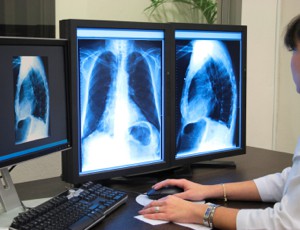
“A radiologist interpreted a postoperative chest radiograph as containing a 7-cm foreign body in the distal lumen of the CVC” Abcejo et al (2015). Reference: Abcejo, A.S., Smith, H.M. and Hebl, J.R. (2015) Positioning artifact causing retained foreign object appearance in a radiograph of a venous catheter. A & A Case Reports. 4(8):97-9. [ctt tweet=”Appearance […]
Bundle intervention decreases central line-associated bloodstream infections

“A bundled intervention consisting of 3 components was implemented as part of the program. It consisted of a multifaceted approach that targeted clinician use of evidence-based infection prevention recommendations, tools that supported the identification of local barriers to these practices, and implementation ideas to help ensure patients received the practices” Latif et al (2015). Reference: […]
Comparison of heparin and sodium chloride flushing solutions

“This study aimed to determine the effect of heparin saline solution and normal saline in maintenance of patency of central venous catheters” Heidari Gorji et al (2015). Reference: Heidari Gorji, M.A., Rezaei, F., Jafari, H. and Yazdani Cherati, J. (2015) Comparison of the effects of heparin and 0.9% sodium chloride solutions in maintenance of patency […]
Surveillance of neonatal healthcare-associated infections

“The aim of this study was to evaluate and describe the results of surveillance of HAIs in a III level NICU in Naples, Italy during 2006-2010” Crivaro et al (2015). Reference: Crivaro, V., Bogdanović, L., Bagattini, M., Iula, V.D., Catania, M., Raimondi, F., Triassi, M. and Zarrilli, R. (2015) Surveillance of healthcare-associated infections in a […]
Estimation of central venous catheter insertion depth during ultrasound-guided subclavian catheterization

“The appropriate length of a CVC inserted through the subclavian vein can be estimated by a formula using ultrasound images and CXR” Shin et al (2015). Reference: Shin, H.J., Kim, B.G., Na, H., Oh, A.Y., Park, H.P. and Jeon, Y.T. (2015) Estimation of catheter insertion depth during ultrasound-guided subclavian venous catheterization. Journal of Anesthesia. April […]
CLABSI rate increase associated with a high turnover of the nursing team

“Our results reveal the deleterious impact of the reorganization during the hospital moving on the CRBSI incidence rate, and the possible implication of inexperienced team of nurses” Elea et al (2015). Reference: Elea, M.C., N’Guyen, M., Valdeyron, M.L., Quessada, T., Goudable, J., Loras-Duclaux, I., Marotte, S., Heissat, S., Restier, L., Lachaux, A. and Peretti, N. […]
Immediate access arteriovenous grafts versus tunnelled central venous catheters

“Patients with end-stage renal disease needing urgent vascular access therefore traditionally require insertion of a tunnelled central venous catheter (TCVC). TCVCs are associated with high infection rates and central venous stenosis” Aitken et al (2015). Reference: Aitken, E., Geddes, C., Thomson, P., Kasthuri, R., Chandramohan, M., Berry, C. and Kingsmore, D. (2015) Immediate access arteriovenous […]
Cultures of needleless connectors to determine central venous catheter colonization

“Cultures of closed NCs can be used to rule out catheter tip colonization and are superior to hub cultures in ruling out short-term central venous catheter colonization” gumbo et al (2015). Reference: Guembe, M., Pérez-Granda, M.J., Cruces, R., Martín-Rabadán, P. and Bouza, E. (2015) Cultures of Needleless Connectors Are Useful for Ruling Out Central Venous […]
Impact of bundles on the prevention of HAI in the intensive care unit

“In the current study, a bundle of interventions and measures for preventing and controlling HAIs were developed and implemented in the ICU by trained personnel, and the impact of the bundle was evaluated” Gao et al (2015). Reference: Gao, F., Wu, Y.Y., Zou, J.N., Zhu, M., Zhang, J., Huang, H.Y. and Xiong, L.J. (2015) Impact […]
Simulation suggests label design affects intravenous medication safety

“The redesigned labels helped participants correctly select hetastarch from the cart, thus preventing some potentially catastrophic medication errors from reaching the simulated patient” Estock et al (2015). Reference: Estock, J.L., Murray, A.W., Mizah, M.T., Mangione, M.P., Goode, J.S. Jr. and Eibling, D.E. (2015) Label Design Affects Medication Safety in an Operating Room Crisis: A Controlled […]