Effect of multimodal training program and traditional lecture method on nurses’ hand hygiene knowledge

This study compared the effect of a multimodal training program and lecturing method on nurses’ hand hygiene knowledge, belief, and practice” Ghezeljeh et al (2015). Reference: Ghezeljeh, T.N., Abbasnejad, Z., Rafii, F. and Haghani, H. (2015) Effect of a multimodal training program and traditional lecture method on nurses’ hand hygiene knowledge, belief, and practice: A […]
Review of coated antiseptic tip (CAT) syringe

Colonization of connector hubs and contaminated syringes are thought to increase the risk of CR-BSI. The Coated Antiseptic Tip (CAT) syringe was developed to decontaminate connector hubs, thereby reducing the risk of CR-BSI” Mariyaselvam et al (2015). Reference: Mariyaselvam, M., Hodges, E., Richardson, J., Steel, A., Moondi, P. and Young, P. (2015) The coated antiseptic […]
Review of central vein catheterization during trauma resuscitation

Our primary objective compared subclavian versus femoral CVC complications during initial trauma resuscitations” Choron et al (2015). Reference: Choron, R.L., Wang, A., Van Orden, K., Capano-Wehrle, L. and Seamon, M.J. (2015) Emergency Central Venous Catheterization during Trauma Resuscitation: A Safety Analysis by Site. The American Surgeon. 81(5), p.527-31. [ctt tweet=”Review of central vein catheterization during […]
Epidemiological characteristics and risk factors for CLABSI

The occurrence of CRBSI is a risk factor for mortality. And diabetes, trauma and arteriovenous catheterization time > 6 days are risk factors for CRBSI. Comprehensive preventive measures should be taken to reduce the incidence of CRBSI” Jia et al (2015). Reference: Jia, L., Yu, H., Lu, J., Zhang, Y., Cai, Y., Liu, Y. and […]
Species distribution of pathogens and prognostic factors for CLABSI

The recent prevalent pathogens of CRBSI in ICU are S.epidermidis and A.baumannii. Advanced age, disease severity and polymicrobial CRBSI are significant independent risk factor of mortality for CRBSI patients in ICU” Li et al (2015). Reference: Li, J., Yu, L., Yang, J., Long, D., Zhang, Y. and Bu, X. (2015) Species distribution of pathogens and […]
CLABSI prevention strategies for pediatric oncology patients and families

Interventions aimed at reducing ambulatory CLABSIs should target appropriate educational experiences for adult caregivers and patients and identify ways to improve compliance with best-practice care” Rinke et al (2015). Reference: Rinke, M.L., Chen, A.R., Milstone, A.M., Hebert, L.C., Bundy, D.G., Colantuoni, E., Fratino, L., Herpst, C., Kokoszka, M. and Miller, M.R. (2015) Bringing central line-associated […]
Comparison of mechanical and manual bone marrow puncture needle for intraosseous access

We compared the performance of the manual and mechanical bone marrow puncture needle for adult, child and infant simulation” Ohchi et al (2015). Reference: Ohchi, F., Komasawa, N., Mihara, R. and Minami, T. (2015) Comparison of mechanical and manual bone marrow puncture needle for intraosseous access; a randomized simulation trial. SpringerPlus. May 2nd. eCollection 2015. […]
Ultrasound-guided cannulation of the brachiocephalic vein in neonates

US-guided supraclavicular cannulation of the brachiocephalic vein (BCV) is a new approach that may be advantageous in case of difficult central venous catheterization. We present our preliminary experience with this technique in a case series of neonates and small infants” Oulego-Erroz et al (2015). Reference: Oulego-Erroz, I., Alonso-Quintela, P., Domínguez, P., Rodríguez-Blanco, S., Muñíz-Fontán, M., […]
Comparison of the efficacy of 0.5% or 2% chlorhexidine gluconate for skin preparation

Our objective was to compare the efficacy of 70% isopropyl alcohol (IPA) containing either 0.5% or 2% CHG for antiseptic skin preparation in patients undergoing coronary artery bypass grafting” Casey et al (2015). Reference: Casey, A., Itrakjy, A., Birkett, C., Clethro, A., Bonser, R., Graham, T., Mascaro, J., Pagano, D., Rooney, S., Wilson, I., Nightingale, […]
Iron deficiency in long-term parenteral nutrition therapy

We aimed to determine the incidence of IDA and to examine the effectiveness of parenteral iron replacement in patients receiving HPN” Hwa et al (2015). Reference: Hwa, Y.L., Rashtak, S., Kelly, D.G. and Murray, J.A. (2015) Iron Deficiency in Long-term Parenteral Nutrition Therapy. JPEN. May 13th. [epub ahead of print]. [ctt tweet=”Iron deficiency in long-term […]
Central line salvage following CRBSI during home parenteral nutrition

Data regarding catheter salvage after a CRBSI episode are limited. We aimed to determine the incidence of CRBSI and rates of catheter salvage in adult patients receiving HPN” Edakkanambeth Varayil et al (2015). Reference: Edakkanambeth Varayil, J., Whitaker, J.A., Okano, A., Carnell, J.J., Davidson, J.B., Enzler, M.J., Kelly, D.G., Mundi, M.S. and Hurt, R.T. (2015) […]
Home parenteral nutrition patient characteristics

Home parenteral nutrition (HPN) is a vital lifesaving therapy for patients who are unable to maintain weight, fluid balance, nutrition, and functional status via oral or enteral nutrition alone. There are few current data sources describing HPN prevalence, patient demographics, or long-term outcomes in the United States” Winkler et al (2015). Reference: Winkler, M.F., DiMaria-Ghalili, […]
Ultrasonographically guided arterial puncture for blood gas analysis

The use of ultrasonography to guide arterial puncture could potentially minimize some of these drawbacks” Laursen et al (2015). Reference: Laursen, C.B., Pedersen, R.L. and Lassen, A.T. (2015) Ultrasonographically Guided Puncture of the Radial Artery for Blood Gas Analysis: A Prospective, Randomized Controlled Trial. Annals of Emergency Medicine. 65(5), p.618-619. [ctt tweet=”Ultrasonographically guided arterial puncture […]
Randomized trial of jet-injected lidocaine to reduce venipuncture pain

The J-Tip (National Medical Products Inc, Irvine, CA) uses air instead of a needle to push lidocaine into the skin. To our knowledge, no studies have investigated its use for venipuncture in young children. We determine whether the J-Tip decreased venipuncture pain in young children compared with vapocoolant spray” Lunoe et al (2015). Reference: Lunoe, […]
Improving compliance with central venous catheter care bundles

This paper describes the use of our electronic tool to monitor and feedback process compliance in conjunction of introducing bespoke central line insertion packs to tackle catheter-related bloodstream infections in our intensive care unit in a medium-sized district general hospital” Hermon et al (2015). Reference: Hermon, A., Pain, T., Beckett, P., Jerrett, H., Llewellyn, N., […]
DEFENS – Drug Exposure Feedback and Education for Nurses’ Safety

The Drug Exposure Feedback and Education for Nurses’ Safety (DEFENS) study will compare the efficacy of education (control) versus an audit and feedback intervention (treatment) on nurses’ self-reported use of personal protective equipment when handling hazardous drugs” Friese et al (2015). Reference: Friese, C.R., Mendelsohn-Victor, K., Wen, B., Sun, D., Sutcliffe, K., Yang, J.J., Ronis, […]
Improved sepsis bundles in the treatment of septic shock

Sepsis bundles can decrease mortality in patients with severe sepsis or septic shock. However, current methods of measuring pressure, such as central venous pressure, are inadequate” Lu et al (2015). Reference: Lu, N.F., Zheng, R.Q., Lin, H., Shao, J., Yu, J.Q. and Yang, G. (2015) Improved sepsis bundles in the treatment of septic shock: a […]
Insertion of totally implantable central venous access devices

The aim of this study is to evaluate the results for the insertion of totally implantable central venous access devices (TICVADs) by surgeons” An et al (2015). Reference: An, H., Ryu, C.G., Jung, E.J., Kang, H.J., Paik, J.H., Yang, J.H. and Hwang, D.Y. (2015) Insertion of totally implantable central venous access devices by surgeons. Annals […]
Complications associated to central venous catheters in hematology patients

Differences between hospitals with regard to major complications, infection and occlusion may be related to different care protocol” García-Gabás et al (2015). Reference: García-Gabás, C., Castillo-Ayala, A., Hinojo-Marín, B., Muriel-Abajo, M.Á., Gómez-Gutiérrez, I., de Mena-Arenas, A.M., Rodríguez-Gonzalo, A., Chao-Lozano, C., García-Menéndez, C. and Madroñero-Agreda, M.A. (2015) Multicenter descriptive study of complications associated to central venous […]
Review of gram-negative bacteraemia in haemodialysis patients

In our haemodialysis population, we identify the pathogens, sensitivity patterns, sources of infection and outcomes of Gram-negative bacteraemia” Murray et al (2015). Reference: Murray, E.C., Marek, A., Thomson, P.C. and Coia, J.E. (2015) Gram-negative bacteraemia in haemodialysis. Nephrology, Dialysis, Transplantation. May 9th. [epub ahead of print]. [ctt tweet=”Review of gram-negative bacteraemia in haemodialysis patients http://ctt.ec/q15H6+ […]
Case report of a guide wire loss and migration after central venous access

We report a case of guide wire loss and migration after central venous access for spinal deformity surgery” Van Doninck et al (2015). Reference: Van Doninck, J., Maleux, G., Coppens, S. and Moke, L. (2015) Case report of a guide wire loss and migration after central venous access. Journal of Clinical Anesthesia. May 6th. [epub […]
CHG dressings reduce bacterial colonization rates in epidural and regional catheters

This is the first study evaluating the effect of CHG-impregnated dressings on bacterial colonization of regional anesthesia catheters in a routine clinical setting” Kerwat et al (2015). Reference: Kerwat, K., Eberhart, L., Kerwat, M., Hörth, D., Wulf, H., Steinfeldt, T. and Wiesmann, T. (2015) Chlorhexidine gluconate dressings reduce bacterial colonization rates in epidural and peripheral […]
Innominate vein repair after iatrogenic perforation with central venous catheter

Iatrogenic damage of the innominate vein is a possible complication with extracorporeal central venous line catheter insertion techniques” Siordia et al (2015). Reference: Siordia, J.A., Ayers, G.R., Garlish, A. and Subramanian, S. (2015) Innominate vein repair after iatrogenic perforation with central venous catheter via mini-sternotomy-Case report. International Journal of Surgery Case Reports. March 18th. [epub […]
Vancomycin continuous infusion versus intermittent infusion during continuous venovenous hemofiltration

Vancomycin during continuous venovenous hemofiltration (CVVH) is either administered by intermittent infusion (II) or continuous infusion (CI). In this patient population, the best method to rapidly achieve target serum concentrations of 15 mcg/ml to 25 mcg/ml remains to be elucidated” Hsin et al (2015). Reference: Hsin, L., Yana B., De Moya, M., Lee, J. and […]
Management of stuck tunneled central venous catheters

An uncommon complication is resistant removal of the catheter due to adherence of the catheter to the vessel wall” Vellanki et al (2015). Reference: Vellanki, V.S., Watson, D., Rajan, D.K., Bhola, C.B. and Lok, C.E. (2015) The stuck catheter: a hazardous twist to the meaning of permanent catheters. Journal of Vascular Access. April 28th. [epub […]
Innominate vein stenosis after totally implantable venous access port placement
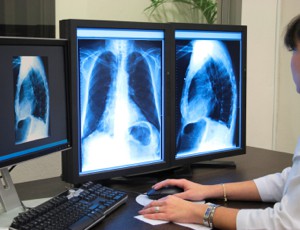
The incidence of central vein stenosis in breast cancer patients was higher after placement of TIVPs via the left IJV” Song et al (2015). Reference: Song, M.G., Seo, T.S., Kang, E.Y., Yong, H.S., Seo, J.H. and Choi, Y.Y. (2015) Innominate vein stenosis in breast cancer patients after totally implantable venous access port placement. Journal of […]
Ultrasound evaluation of saphenous vein for peripheral intravenous cannulation

The objective of this study was to investigate variables that may affect sonographic cannulation of great saphenous vein and determine the ideal location for ultrasound-guided saphenous vein cannulation in adult emergency department (ED) patients” Jones et al (2015). Reference: Jones, T., Stea, N., Stolz, U. and Adhikari, S. (2015) Ultrasound evaluation of saphenous vein for […]
Azygos vein thrombosis secondary to a peripherally inserted central catheter

This case illustrates a rare complication of a peripherally inserted central catheter (PICC)” Sherif et al (2015). Reference: Sherif, M.M., Hall, R. and Schauer, C.K. (2015) Azygos vein thrombosis secondary to a peripherally inserted central catheter (PICC). Journal of Vascular Access. April 28th. [epub ahead of print]. [ctt tweet=”Azygos vein thrombosis secondary to a peripherally […]
Hemodialysis catheter design improves long-term catheter functionality
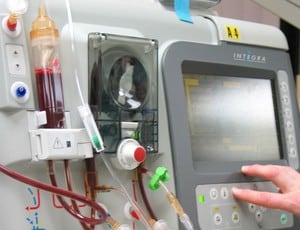
Hemodialysis catheters remain necessary for long-term vascular access in patients for whom arteriovenous access may be problematic or impossible. Developments in catheter design have improved long-term catheter functionality, and reduced the rate of infection and complications associated with their use” Ye et al (2015). Reference: Ye, C., Mao, Z., Zhang, P., Zhang, Y., Rong, S., […]
Proper tip position of central venous catheter in pediatric patients

The carina is a good landmark for the upper border of the cavoatrial junction. Length of carina to cavoaterial juction was associated with age” Ahn and Chung (2015). Reference: Ahn, S. and Chung, J.H. (2015) Proper tip position of central venous catheter in pediatric patients. The Journal of Vascular Access. April 27th. [epub ahead of […]