Subclavian vein cannulation in neonates and children

The cannulation of the central vein in neonates and children in a skilled hand would be performed with great success rate and low complications” Aminnejad et al 92015). Reference: Aminnejad, R., Razavi, S.S., Mohajerani, S.A. and Mahdavi, S.A. (2015) Subclavian Vein Cannulation Success Rate in Neonates and Children. Anesthesiology and Pain Medicine. 5(3), p.e24156. [ctt […]
Additional costs of CRBSI in Japan estimated at $57,090 per case

The additional costs of CVC-CRBSI were estimated at $57,090 per case. Antimicrobial agents comprised only about 10% of the additional drug costs” Nakamura et al (2015). Reference: Nakamura, I., Fukushima, S., Hayakawa, T., Sekiya K. and Matsumoto, T. (2015) The additional costs of catheter-related bloodstream infections in intensive care units. American Journal of Infection Control. […]
How family carers engage with technical health procedures in the home

New Zealand family carers (21 women, 5 men) who managed technical health procedures such as enteral feeding, peritoneal dialysis, tracheostomy care, a central venous line or urinary catheter. In addition, 15 health professionals involved in teaching carers were interviewed” McDonald et al (2015). Reference: McDonald, J., McKinlay, E., Keeling, S. and Levack, W. (2015) How […]
Rare complication of parenteral nutrition therapy

We present the diagnosis and management of a rare case of an immunocompetent, nonneonatal, PN-dependent child with Malassezia furfur pneumonia” Baker metal (2015). Reference: Baker, R.M., Stegink, R.J., Manaloor, J.J., Schmitt, B.H., Stevens, J.C. and Christenson, J.C. (2015) Malassezia Pneumonia: A Rare Complication of Parenteral Nutrition Therapy. JPEN. Journal of Parenteral and Enteral Nutrition.. July […]
Patterns of superficial veins of the middle upper extremity

There are only nine basic patterns of middle upper extremity venous anatomy. Some are more common than others. This knowledge should help those needing venous access for medical procedures (venepuncture, transfusion, infusion, cardiac catheterization, placement of dialysis access)” Vucinic et al (2015). Reference: Vucinic, N., Eric, M. and Macanovic, M. (2015) Patterns of superficial veins […]
Direct vascular access catheterisation via the superior vena cava
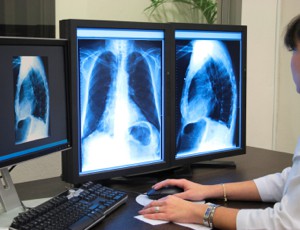
Direct puncture via superior vena cava might be the last choice for catheter insertion site” Cui et al (2015). Reference: Cui, T., Zhao, Q., Zhou, L., Li, X. and Fu, P. (2015) A Case Report of a Direct Catheterization of Tunneled Cuffed Catheter via Superior Vena Cava: A Choice after Vascular Access Exhaustion. Blood Purification. […]
Review of purple glove syndrome after Phenytoin administration

The aim of our study was to identify all previously reported cases of phenytoin- or fosphenytoin-associated purple glove syndrome (PGS) and summarize the most current understanding of the pathophysiology, clinical presentation, diagnosis, and treatment of the disease” Garbovsky et al (2015). Abstract: The aim of our study was to identify all previously reported cases of phenytoin- […]
Cathasept line lock reduces microbial colonization

Cathasept significantly reduced tunneled hemodialysis catheter colonization, but the reduction in CRBSIs was not statistically significant, and it was associated with more thrombotic complications” Kanaa et al (2015). Reference: Kanaa, M., Wright, M.J., Akbani, H., Laboi, P., Bhandari, S. and Sandoe, J.A. (2015) Cathasept Line Lock and Microbial Colonization of Tunneled Hemodialysis Catheters: A Multicenter […]
Novel navigated ultrasound guided vascular access

The authors hypothesized that, compared with conventional ultrasound (CUS), the use of a novel navigated ultrasound (NUS) technology would increase success rates and decrease performance times of vascular access procedures in a gel phantom model” Sander et al (2015). Reference: Sander, D., Schick, V., Ecker, H., Lindacher, F., Felsch, M., Spelten, O., Schier, R., Hinkelbein, […]
Effect of sesame oil on the prevention of amiodarone-induced phlebitis

The purpose of this study is to determine the effects of sesame oil on the prevention of amiodarone-induced phlebitis” Bagheri-Nesami et al (2015). Reference: Bagheri-Nesami, M., Shorofi, S.A., Hashemi-Karoie, S.Z. and Khalilian, A. (2015) The effects of sesame oil on the prevention of amiodarone-induced phlebitis. Iranian Journal of Nursing and Midwifery Research. 20(3), p.365-70. [ctt tweet=”ReTweet […]
Review of novel intravenous safety catheter

We investigated the success rate of intravenous catheterization using SWC by questionnaire. Anesthesiologists were recruited who had no previous experience of using SWC” Nakamura et al (2015). Reference: Nakamura, R., Fukuda, H., Miyoshi, H., Matsunami, K., Hamada, H. and Kawamoto, M. (2015) Investigation of a Novel Intravenous Catheter “Safe Wing Cath”. Masui. 64(2), p.212-7. [Article […]
Study reviews needlestick injuries to medical students

The study aimed at surveying and analysing the prevailing risks for medical students due to so-called needlestick injuries, i. e., injuries to the skin by handling sharp objects by which blood of patients can be transmitted to the health professional” Siegmann et al (2015). Reference: Siegmann, S., Muth, T., Kluth, W., Hofbauer, U., Angerer, P. and Schwarze, […]
Compliance with sharps injury prevention guidelines

This study was performed to compare self-report and observation methods for measuring compliance with double gloving (DG) and the hands-free technique (HFT)” Kim et al (2015). Reference: Kim, Y.G., Jeong, I.S. and Park, S.M. (2015) Sharps injury prevention guidance among health care professionals: A comparison between self-reported and observed compliance. American Journal of Infection Control. […]
Ultrasound-guided subclavian vein catheterization

…we conducted a systematic review and meta-analysis to determine whether ultrasound guidance of subclavian vein catheterization reduces catheterization failures and adverse events compared to the traditional “blind” landmark method” Lalu et al (2015). Reference: Lalu, M.M., Fayad, A., Ahmed, O., Bryson, G.L., Fergusson, D.A., Barron, C.C., Sullivan, P. and Thompson, C. (2015) Ultrasound-Guided Subclavian Vein […]
Central venous catheter-related infection in trauma patients

To reduce the rate of CVC-related infections in severe trauma patients, we suggest that catheters be shifted from the internal jugular or femoral veins to the subclavian vein as soon as possible and that the duration of catheter insertion should be minimized” Youn et al (2015). Reference: Youn, S.H., Lee, J.C., Kim, Y., Moon, J., […]
Study of the implementation of central venous catheter bundles

Our aim was to study the impact of CVL insertion bundle on incidence of CLABSI and study the causative microbial agents in an intensive care unit in Kuwait” Salama et al (2015). Reference: Salama, M.F., Jamal, W., Mousa, H.A. and Rotimi, V. (2015) Implementation of central venous catheter bundle in an intensive care unit in […]
Development of antimicrobial gendine coated central venous catheters

Gendine-PICCs were highly effective in preventing biofilm formation of multi-drug resistant pathogenic bacteria and fungi” Jamal et al (2015). Reference: Jamal, M.A., Hachem, R.Y., Rosenblatt, J., McArthur, M.J., Felix, E., Jiang, Y., Tailor, R.C. and Raad, I. (2015) Development of Antimicrobial Gendine Coated Central Catheters: In Vivo Biocompatibility and In Vitro Efficacy. Antimicrobial Agents and […]
Predictors of nonelective removal of PICC lines in infants
Nonelective removal of peripherally inserted central catheters (PICCs) due to complications continues to be a major concern in neonatal intensive care units (NICUs) around the world” Costa et al (2015). Reference: Costa, P., Kimura, A.F., Brandon, D.H. and Damiani, L.P. (2015) Predictors of Nonelective Removal of Peripherally Inserted Central Catheters in Infants. Biological Research for […]
Simultaneous IVCF and PICC insertion using the same upper extremity

Simultaneous IVCF and PICC insertion using the same upper extremity venous access was feasible and safe in our series” Ballard et al (2015). Reference: Ballard, D.H., Hamidian Jahromi, A., Weisman, J.A., Vea, R., D’Agostino, A.M. and D’Agostino, H.B. (2015) Sequential inferior vena cava filter insertion and peripherally inserted central catheter placement through upper extremity veins. […]
Transhepatic central venous access catheters in pediatric patients

We evaluated transhepatic central venous catheter placed in patients with congenital heart disease and risk factors associated with complications and outcomes” Boe et al (2015). Reference: Boe, B.A., Zampi, J.D., Yu, S., Donohue, J.E. and Aiyagari, R. (2015) Transhepatic Central Venous Catheters in Pediatric Patients With Congenital Heart Disease. Pediatric Critical Care Medicine. June 30th. […]
Ultrasound imaging reduces intravenous cannulation failure in children

The aim of this updated review was to determine whether percutaneous central venous catheterization with the aid of ultrasound reduces cannulation failure in children” Shime et al (2015). Reference: Shime, N., Hosokawa, K. and MacLaren, G. (2015) Ultrasound Imaging Reduces Failure Rates of Percutaneous Central Venous Catheterization in Children. Pediatric Critical Care Medicine. July 1st. […]
Intravenous central catheter-associated candidemia

As C. membranaefaciens is an opportunistic Candida species, both clinicians and microbiologists should be aware of the factors that confer fast diagnosis and appropriate treatment” Aghili et al (2015). Reference: Aghili, S.R., Shokohi, T., Boroumand, M.A., Hashemi Fesharaki, S. and Salmanian, B. (2015) Intravenous Catheter-Associated Candidemia due to Candida membranaefaciens: The First Iranian Case. The […]
Embolized fragment of totally implantable central venous catheter

We report one spontaneous rupture and embolization of a totally implantable vascular access device (TIVAD) in an asymptomatic patient” Tazzioli et al (2015). Reference: Tazzioli, G., Gargaglia, E., Vecchioni, I., Papi, S., Di Blasio, P. and Rossi, R. (2015) Retained embolized fragment of totally implantable central venous catheter in right ventricle: it is really necessary […]
Using isopropyl alcohol impregnated disinfection caps in the neonatal care

We examined whether SwabCaps affected the integrity of two luer access valves and were associated with alcohol injected into the lines” Sauron et al (2015). Reference: Sauron, C., Jouvet, P., Pinard, G., Goudreault, D., Martin, B., Rival, B. and Moussa, A. (2015) Using isopropyl alcohol impregnated disinfection caps in the neonatal intensive care unit can […]
Saline flush test to confirm central venous catheter tip placement

Confirmation of central venous catheter placement by dynamic sonographic visualization of a saline flush with exclusion of pneumothorax is an accurate, safe, and more efficient method than confirmation by chest radiography” Gekle et al (2015). Reference: Gekle, R., Dubensky, L., Haddad, S., Bramante, R., Cirilli, A., Catlin, T., Patel, G., D’Amore, J., Slesinger, T.L., Raio, […]
Unblocking peripherally inserted central venous catheters
The use of low-molecular weight heparin at a concentration of 50IU/mL was more effective in restoring the permeability of neonatal PICCs occluded in vitro by a clot, and the use of this concentration is within the safety margin indicated by scientific literature” Balaminut et al (2015). Reference: Balaminut, T., Venturini, D., Silva, V.C., Rossetto, E.G. and […]
Spontaneous PICC migration into the azygos vein

Migrations might be related to the material properties of silicone PICCs, the short insertion length, the left-sided placement, the changes of thoracic pressure and the intraoperative traction by thoracic surgeons” Zhang et al (2015). Reference: Zhang, H., Jiang, B., Zhou, H., Qin, Y. and Wang, G. (2015) Spontaneous migration of a peripherally inserted central catheter […]
Correct tip position for PICC lines

The purpose of this study is to verify as early as possible the correct positioning of the peripherally inserted central catheter (PICC) tip in order to reduce complications due to possible malpositioning” Baldinelli et al (2015). Reference: Baldinelli, F., Capozzoli, G., Pedrazzoli, R. and Marzano, N. (2015) Evaluation of the correct position of peripherally inserted […]
Comparison of DVT rates between PICC and tunneled venous catheters

The objectives of our study was to compare the cumulative incidence of thrombotic events between peripherally-inserted and long term skin tunneled venous catheters” Sriskandarajah et al (2015). Reference: Sriskandarajah, P., Webb, K., Chisholm, D., Raobaikady, R., Davis, K., Pepper, N., Ethell, M.E., Potter, M.N. and Shaw, B.E. (2015) Retrospective cohort analysis comparing the incidence of […]
Reducing central line-associated bloodstream infections

A quality improvement project was conducted to decrease CLABSI rates by 50% across all ICUs in a tertiary care hospital (Sheikh Khalifa Medical City, Abu Dhabi, United Arab Emirates)” Reddy et al (2015). Reference: Reddy, K.K., Samuel, A., Smiley, K.A., Weber, S. and Hon, H. (2014) Reducing Central Line-Associated Bloodstream Infections in Three ICUs at […]