Comparison of intravenous lock solutions to prevent CRBSI

The objective of this study was to compare the initial safety and efficacy of a novel 30% ethanol/4% sodium citrate catheter-locking solution to heparin in a hemodialysis population” Vercaigne et al (2015). Abstract: PURPOSE: The objective of this study was to compare the initial safety and efficacy of a novel 30% ethanol/4% sodium citrate catheter-locking […]
Michigan Appropriateness Guide for Intravenous Catheters (MAGIC)

Here we present for the busy hospital-based practitioner the methodology, key outcomes, and recommendations of the Michigan Appropriateness Guide for Intravenous Catheters (MAGIC) panelists for the appropriate use of VADs” Woller et al (2015). Abstract: Peripherally inserted central catheters (PICCs) are being selected for venous access more frequently today than ever before. Often the choice […]
Pharmacodynamics results of a fluid challenge explained

The maximal change in cardiac output should be assessed 1 minute after the end of the fluid infusion” Aya et al (2015). Abstract: OBJECTIVE: This study aims to describe the pharmacodynamics of a fluid challenge over a 10-minute period in postoperative patients. [ctt tweet=”ReTweet if useful… Pharmacodynamics results of a fluid challenge explained http://ctt.ec/e50AT+ @ivteam […]
Google Glass for procedural skills assessment such as central line placement

This pilot study assessed the feasibility of using first person (1P) video recording with Google Glass (GG) to assess procedural skills, as compared with traditional third person (3P) video” Evans et al (2015). Abstract: BACKGROUND: This pilot study assessed the feasibility of using first person (1P) video recording with Google Glass (GG) to assess procedural […]
Pharmacist-managed outpatient parenteral antimicrobial therapy service

The OPAT program provides structured monitoring, patient follow-up, and led to improvements in patient outcome with minimization of treatment and line-related adverse events” Chung et al (2016). Abstract: PURPOSE: The development and implementation of a pharmacist-managed outpatient parenteral antimicrobial therapy (OPAT) program in a county teaching hospital are described. [ctt tweet=”ReTweet if useful… Pharmacist-managed outpatient […]
OPAT self administration for uninsured patients

OPAT is generally delivered in one of four settings: infusion centers, nursing homes, at home with skilled nursing assistance, or at home with self-administered therapy” Bhavan et al (2015). Abstract: BACKGROUND: Outpatient parenteral antimicrobial therapy (OPAT) is accepted as safe and effective for medically stable patients to complete intravenous (IV) antibiotics in an outpatient setting. […]
Extravasation injury associated with vasopressors

Extravasation of vasopressors can have serious complications varying from simple local reactions to skin necrosis and compartment syndrome” Ozcan et al (2015). Abstract: Extravasation of vasopressors can have serious complications varying from simple local reactions to skin necrosis and compartment syndrome. Here, we presented bullous dermatitis and skin necrosis which developed due to extravasation of […]
Parenteral nutrition associated CLABSI in pediatric cardiac ICU

We aimed to assess the NI epidemiology and associated risk factors in a pediatric cardiac intensive care unit (PCICU)” Netto et al (2015). Abstract: Background: Nosocomial infections (NIs) are associated with significant morbidity and mortality and increased healthcare costs. We aimed to assess the NI epidemiology and associated risk factors in a pediatric cardiac intensive […]
Effective cleaning of medical device surfaces

Nosocomial infections are a serious problem in health care facilities. Bacteria can be transferred from patient to patient via contaminated reusable medical devices and equipment” Gonzalez et al (2015). Abstract: Background: Nosocomial infections are a serious problem in health care facilities. Bacteria can be transferred from patient to patient via contaminated reusable medical devices and […]
Peri-operative fluid management to enhance recovery

The postoperative goal is eating and drinking without intravenous fluid infusions” Gupta and Gan (2016). Summary: ‘Enhanced recovery after surgery’ protocols implement a series of peri-operative interventions intended to improve recovery after major operations, one aspect of which is fluid management. [ctt tweet=”ReTweet if useful… Peri-operative fluid management to enhance recovery http://ctt.ec/s52eh+ @ivteam #ivteam” coverup=”s52eh”] […]
Insertion of totally implantable central venous access devices

The aims of this retrospective study, were to evaluate totally implantable central venous access device (TICVAD) implantation and to validate the efficacy of preoperative ultrasonography” Otsubo et al (2015). Abstract: BACKGROUND: The aims of this retrospective study, were to evaluate totally implantable central venous access device (TICVAD) implantation and to validate the efficacy of preoperative […]
Segment of PICC tip found in hepatic vein

In this report, we present the case of a 36-year-old male liver donor into whom we peripherally inserted a central venous catheter from his left basilic vein. After transecting the hepatic vein, the surgeon found foreign material inside the venous lumen, which turned out to be the distal segment of the catheter” Ersoy et al […]
Radiographic signs of unintentional arterial misplacement of CVC

Useful radiographic signs suggestive of unintentional arterial misplacement of vascular catheters include leftward curvature of the vertical portion of the catheter, left-side catheter tip position, lack of catheter crossover on the frontal radiograph, as well as exaggerated anterior angulation of the catheter on the lateral chest radiograph” Taylor and Taylor (2015). Abstract: BACKGROUND: Central venous […]
CVP measurement as a predictor of fluid responsiveness

Central venous pressure (CVP) has been shown to have poor predictive value for fluid responsiveness in critically ill patients” Eskesen et al (2015). Abstract: PURPOSE: Central venous pressure (CVP) has been shown to have poor predictive value for fluid responsiveness in critically ill patients. We aimed to re-evaluate this in a larger sample subgrouped by […]
The impact of 2% CHG-impregnated bathing cloths on CLABSI rates

The cost associated with a single CLABSI is 10 times more than the cost of using 2% CHG-impregnated cloths” Shah et al (2016). Abstract: In a coordinated national effort reported by the Agency for Healthcare Research and Quality, the use of 2% chlorhexidine gluconate (CHG) has reduced the central line-associated bloodstream infection (CLABSI) rate by […]
Cerebral vein thrombosis associated with subclavian CVC malposition
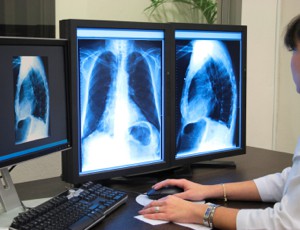
We emphasis the importance of radiological veiw of central vein catheter position just after or at the time of cannulation of central vein, not at some hours later as in our case” Sabzi and Faraji (2015). Abstract: BACKGROUND: Cerebral venous thrombosis is an uncommon disorder in the general population. However, it has a higher frequency […]
Central venous catheter knotted during insertion

Here, we present catheter knotting in a case with solutions for this complication, under literature review” Erkılıç et al (2015). Abstract: A 79-year-old woman, diagnosed for cancer of the ovary, had a central catheter that was placed with difficulty through the right internal jugular vein intraoperatively. After oophorectomy, it was realized that the catheter was […]
Outpatient Parenteral Antimicrobial Therapy with elastomeric pumps

Our study shows that OPAT administered by continuous infusion in collaboration with home-visit nursing services would be a safe and feasible practice for efficient bed utilization and medical cost saving” Hase et al (2015). Abstract: In 2014, we reported the first trial based on outpatient parenteral antimicrobial therapy (OPAT) with continuous infusions in Japan. Following […]
Reducing needlestick injuries through safety-engineered devices

Quantitative information on the effectiveness of safety-engineered devices (SEDs) is needed to support decisions regarding their implementation” Fukuda and Yamanaka (2015). Abstract: BACKGROUND: Quantitative information on the effectiveness of safety-engineered devices (SEDs) is needed to support decisions regarding their implementation. AIM: To elucidate the effects of SED use in winged steel needles, intravenous (IV) catheter […]
Neonatal central line associated blood stream infection

To investigate the effects of hospital wide and unit based interventions on LOS and CLA-BSI in infants born at <32 weeks gestation” Sinha et al (2015). Abstract: Late onset sepsis (LOS) and central line associated blood stream infection (CLA-BSI) contribute towards the mortality and morbidity in prematurely born infants. [ctt tweet=”ReTweet if useful… Neonatal central line […]
Safety and complications rates associated with double-lumen tunnelled cuffed CVC
This study aimed to assess the technical success, safety and immediate and delayed complications of double-lumen tunnelled cuffed central venous catheters (TVCs) at the Sultan Qaboos University Hospital (SQUH), Muscat, Oman” Hamid et al (2015). Abstract: OBJECTIVES: This study aimed to assess the technical success, safety and immediate and delayed complications of double-lumen tunnelled cuffed central […]
Educational video demonstrates intravenous dressing change technique

…to develop and validate an educational digital video on changing the dressing of short-term, non-cuffed, non-tunneled central venous catheters in hospitalized adult patients” Ferreira et al (2015). Abstract: OBJECTIVE: to develop and validate an educational digital video on changing the dressing of short-term, non-cuffed, non-tunneled central venous catheters in hospitalized adult patients. [ctt tweet=”ReTweet if […]
Extravasation injury results in metastatic infection

This report aims at highlighting the possibility of metastatic infection from an extravasation injury with a potentially fatal outcome” Sindal and Nakhwa (2015). Abstract: The authors report a case of a preterm neonate who presented with lid edema, corneal edema, and an inflammatory membrane with whitish exudates in the pupillary area, suggestive of endophthalmitis. There […]
Resources required for pediatric OPAT services

We identified substantial variation in characteristics and resources of pediatric OPAT practices” Banerjee et al (2015). Abstract: We conducted a survey of pediatric members of the Emerging Infections Network regarding outpatient parenteral antimicrobial therapy (OPAT) practices and clinical decision making about OPAT initiation. We identified substantial variation in characteristics and resources of pediatric OPAT practices. […]
Health care professionals attitude to subcutaneous hydration in palliative care

Evidence indicates that hypodermoclysis is as safe and effective as intravenous rehydration in the treatment of the symptomatology produced by mild to moderate dehydration in patients for whom oral route administration is not possible” Cabañero-Martínez et al (2015). Abstract: BACKGROUND: Evidence indicates that hypodermoclysis is as safe and effective as intravenous rehydration in the treatment […]
Which is the best device for intraosseous access?

“The experiments with first-time users applying EZ-IO and FASTR in body donors indicate that both devices may be effective intraosseous infusion devices” Hammer et al (2015).
Vascular access for paediatric trauma patients

These include recognition of the sick child/triage, paediatric drug calculations, awareness of the massive transfusion requirements for children and skills to gain intravenous/intraosseous access in a child” Pearce (2015). Abstract: INTRODUCTION: Considerable evidence has discussed the significant workload and advances in clinical care by UK Defence Medical Services (DMS) during recent conflicts in Iraq and […]
Antimicrobial activity of chlorhexidine IV dressing

The new CHG-containing film dressing delivered greater than 5.0 log10 reduction throughout the 7 days on all aerobic gram-negative bacilli and Staphylococcus species tested” Wibaux et al (2015). Abstract: BACKGROUND: Covering insertion sites with chlorhexidine impregnated dressings has been proven to be clinically effective in reducing catheter related blood stream infections (CR-BSI). Two chlorhexidine gluconate […]
Advanced low-cost ultrasound-guided vascular access simulation

We describe both a step-wise systematic approach and an experimental cadaveric model of vascular access using a simple piece of chicken that can be easily used for trainees” Sanchez-de-Toledo and Villaverde (2015). Abstract: There is a growing body of literature that supports the use of ultrasound for vascular access. Advanced simulation has become a widely […]
Central venous catheter locks with antimicrobial-containing lock solutions

Compared with heparin, antimicrobial-containing lock solutions more effectively prevent CRB and clinical sepsis” Liu et al (2015). Abstract: BACKGROUND: Locking of central venous catheters with heparin is an accepted practice to maintain catheter patency between dialysis sessions. However, this practice may cause other adverse reactions. Although many studies suggest benefits of other catheter lock solutions […]